“Lucky, indeed, are those who have a moment of discovery that shouts out, “This is what I want to do!” That moment when latent and, perhaps, unrecognized, personal strengths and desires are merged with an event that resonates within the very soul of your being. Congruent personal mission aligned with a need that pleads for your company leaves no choice to do anything else. I belong in this community of learners.
Tom Kennedy
The Scene
The lighting was poor, the desks were vintage 1950, and there were pillars blocking the view of some. It was the poster picture of the “before” with no “after.” The scene was a college classroom in the bowels of a hospital in Colorado Springs, Colorado.
Some 20 students, women in their 30s, 40s, and 50s, seemed to be oblivious of their dismal surroundings but instead were focused on the diminutive person in the front. She was a nun not more than 5’4” who was the faculty member, the feature presentation in a different kind of theater.
The subject was a Shakespearian play and the scene couldn’t have been more different than any classroom in my teaching experience.
What made it profoundly different was not the room, the subject, or even the student population. What made it different was that every student was eagerly involved as a participant in the discussion. Each had something to say about the play and could hardly wait to express herself. They were all motivated learners.
In my 4th year as an administrator at the College of St. Francis in Joliet, I had volunteered to observe several off-campus locations, prepare a written report on my visit, and provide college updates for the students. My itinerary was the first of several visits that week in Colorado. As an old high school teacher of English literature and college teacher of writing, I wondered how much true learning could take place with older students who were being taught by local, adjunct faculty members. At that moment, especially after talking with some of the students at break time, I concluded that the desire to learn by adults far exceeded the motivation of any high school or college student I had ever experienced.
I was in love with adult education.
For my remaining years at St. Francis, I sought every opportunity to engage in activities that would lead toward the education of “non-traditional” learners. When an opening occurred in Continuing Education, I jumped at the chance. I would be directing the Graduate Studies program in Health Services Administration (HSA) which was offered in 15 states.
Graduate Studies in HSA was a relatively new addition to the very successful undergraduate degree-completion program in Health Arts. Health Arts students already transferred in their RN courses as their major and St. Francis provided the liberal arts core to complete the bachelor’s degree for adult learners in 23 states. The program was the brainchild of Fr. David M. Clarke and Sister Mary Vincent Kirk back in 1973.
Under the guidance of Edgar Rasch, prior director of the recent program, the HSA program was now expanding to new locations where graduates of the undergrad degree might want to pursue a master’s degree. My role as the new director succeeding Edgar was to oversee the program as well as to market and recruit new students.
While in this position, I saw two more opportunities to serve adult learners. The first was when Federal Express requested a proposal for college courses at their location in Schaumberg, Illinois. Since the College had a flexible adjunct faculty pool and expertise in the logistics to conduct off campus locations, why not offer a management certificate at their terminal or office? A limited set of course offerings, selected by the employees and Fed Ex directors, was scheduled at times that the employee/students found convenient. It could be at 6:00 a.m. or 6:00 p.m., no problem. And, the certificate could be available at any of their locations in the country. Although the Fed Ex program lasted for only a few years, it demonstrated the flexibility that a college could offer to a different population.
The second opportunity was discovered by a St. Francis accounting faculty member. Ann Smith was contacted by Roland Hemond, the long-time general manager of the White Sox. Roland was concerned that so many high school graduates were signing minor league professional contracts only to be released after a year or so. They had bypassed college with the belief that they would be professional players for many years. Now they were deprived of playing baseball in college and the scholarships they might have had.
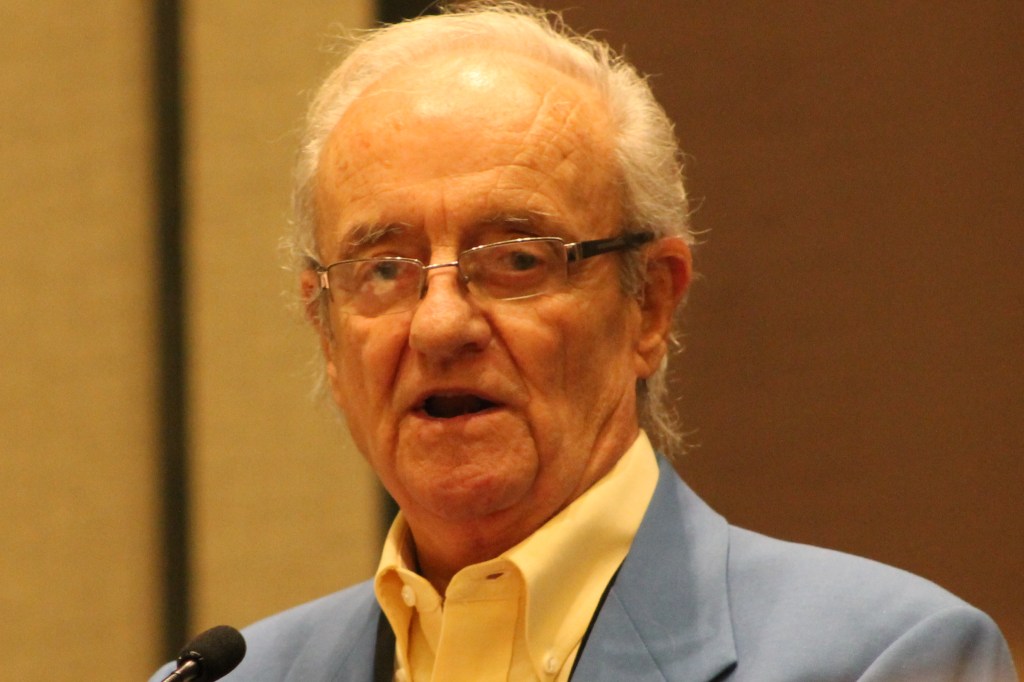
Anne and I proposed an idea to Roland that the College could offer academic courses to these young players while they had home games during their downtime regardless of their teams’ locations. Roland thought that the idea had merit but that the other major league general managers and farm directors should learn more about the proposal. With this in mind, Roland arranged for our presentation to be made in Arizona and Florida during the fall of 1985. Hemond would make the introduction and carry the ball for us. A partnership between Major League Baseball and the College of St. Francis was in the works.
As with any business, personnel changes can occur any time. Before our second presentation to the general managers of major league baseball, Dave Dombrowski, former assistant to Roland, replaced his boss as general manager. We had lost the man whose idea it was for the program and the proposal failed. (Although we had had the chance to speak to the farm directors with Hank Aaron in the audience. Little solace.)
The experience of opening up to new higher education ideas led me to the new opportunity at Regis University in Denver, Colorado. The president, David Clarke, S.J., asked if I would consider taking on an entrepreneurial role at the previously struggling Jesuit college. It was at Regis where I learned much more about adult education and how it could make a significant difference to working adults and to struggling private colleges nationwide. I would also learn how partnerships could be the vehicle for change.
Traditional higher education has had a long history of serving the 18-22-year student population quite effectively. But for those adults who neither started nor finished a degree, attending college and advancing their formal education were nearly impossible commitments. Families, jobs, and geographic locations presented nearly unsurmountable obstacles.
At the moment that I encountered a completely different approach that could eliminate many of these obstacles, I realized that this was an approach that could make a dramatic difference for thousands of learners and citizens. For the remainder of my life, I would be a missionary for helping to remove the educational impediments for those who had previously been locked out of higher education.
For the next 27 years at Regis University, I was given the opportunity to implement many of the ideas that would help transform the lives of adult learners and expand the mission reach for private colleges and universities in and outside the United States. My somewhat accidental taste of adult education had synchronized with my life’s mission.
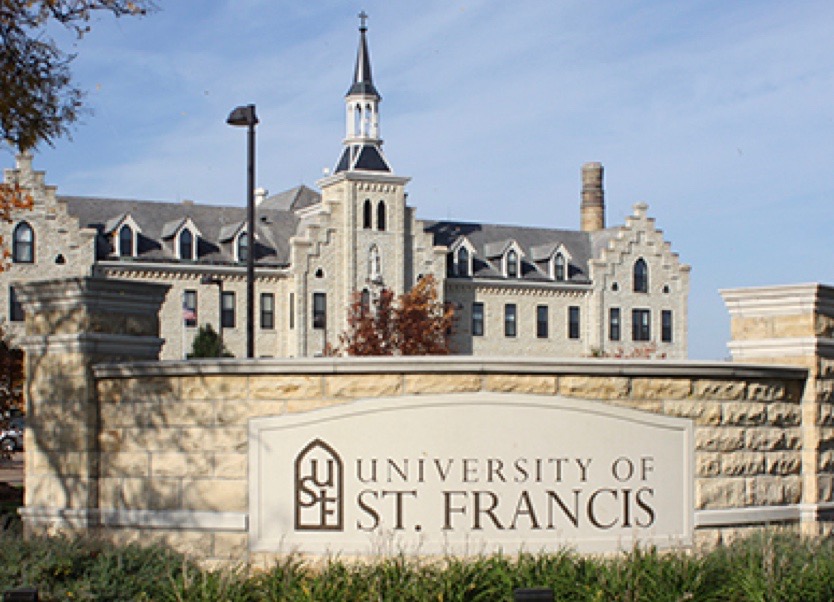
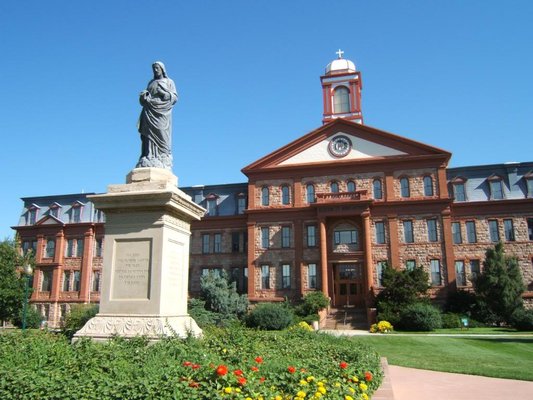
Left: University of St. Francis (former College) and Right: Regis University (former College)

 Braidwood Beginnings