“All writers are vain, selfish, and lazy, and at the very bottom of their motives there lies a mystery.” George Orwell

Because I have written continuously over the past 50 years, I recently asked myself, “Why do I write.” “Who is my audience?” “What is my purpose in jotting things down?”
At first, I assumed that I was committing my thoughts to paper because there was a need to document current thoughts. Debrief after a meeting. Further clarify or reinforce or remember events and people. Some of my writing informed or entertained a certain audience. Some just to communicate my thoughts and feelings in a way that did not need an immediate response or any feedback at all.
Other writing came under a pseudonym so that I could say something that needed to be said without necessarily attributing it to me. There was another “me” who was disguised, an “avatar.” I could be gay, female, young, or black. In some of these cases, I never admitted to anyone that it was I who held the pen. Some of my most satisfying moments came from being entirely free to express myself without assuming either the blame or the credit. The method I used was primarily through the medium of poetry.
“Man is least himself when he talks in his own person. Give him a mask, and he will tell you the truth.”
– Oscar Wilde
Another audience, obviously more public than internally focused, is my legacy: kids, grandkids, and further beyond. While pursuing genealogy, I came across several letters from relatives and friends. Many of these folks have since passed on but their information and thoughts are much valued. They represent a period of time and events that preceded me by decades. Though not being personally here, they provide me with insights and permanency I would never have had.
The handwritten letters from my uncle Ray to his big brother, my dad, reveal pain and loneliness; the letters from grandmother Minnie Becker Ginter to my eloped mother expressed anger and frustration; my mother’s poetry showed her wit, humor, and fear. Re-reading this material leaves me with regret that their stories left thousands more questions that will never be answered.
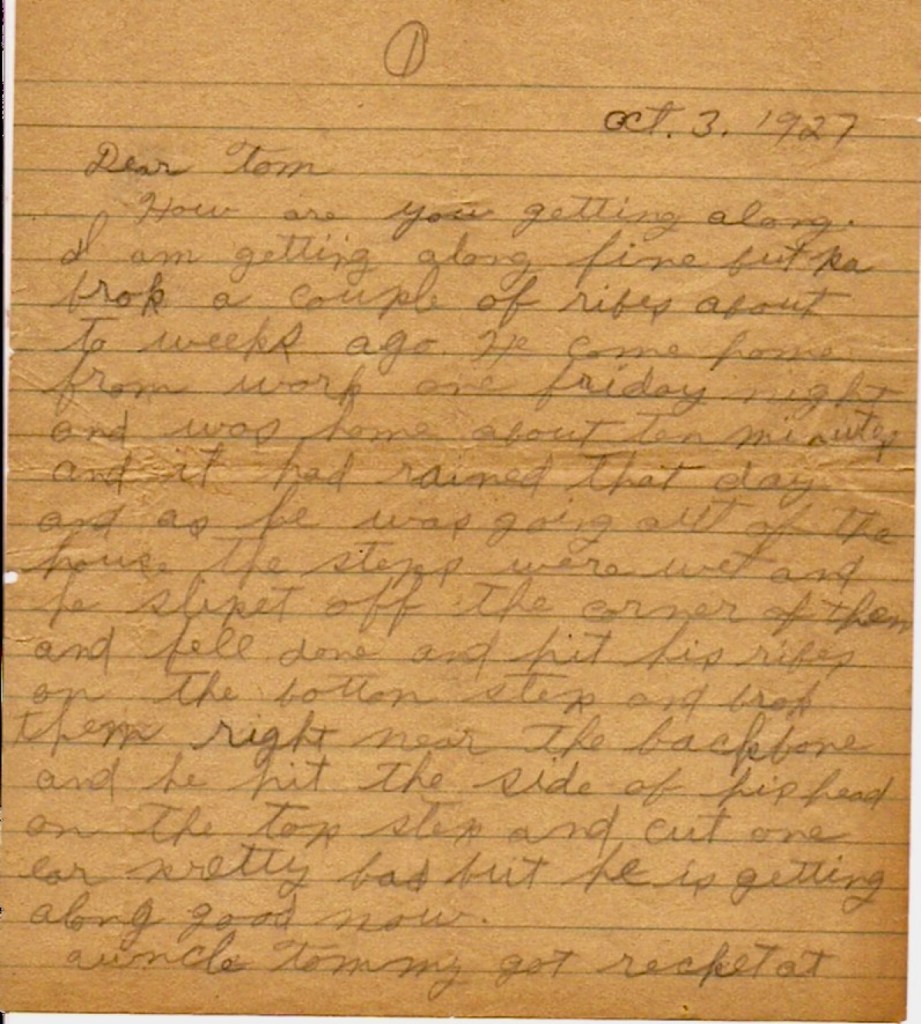
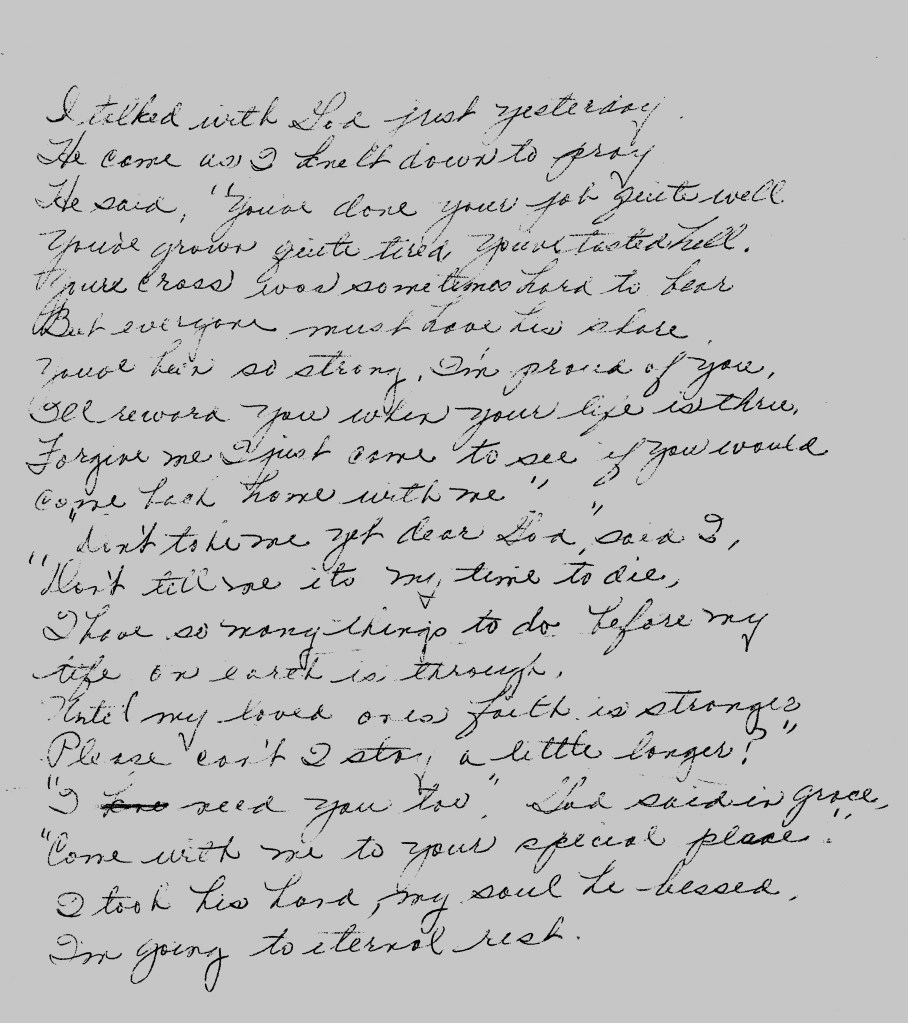
Family history and tradition, formed by oral history with generations and families living within close proximity of one another, has faded away by the mobility we now have. When they are gone, so too are their histories.
I have been asked by my high school and college grandkids, “What were the ‘50s and‘60s like?” “When did you first meet grandma?” “Who were your grandparents and great grandparents?” “What kind of jobs did you have?” “Why did you move to Colorado?” “What’s a telephone party line?” Not that they need to know every detail, but our stories become an endowment and as long as the stories remain oral, there is no way to add some permanency to them unless we write them down.
The legacy audience will be able to glean from an ancestor’s successes and failures, as well as idiosyncrasies and tendencies, that they may resonate with and own themselves. “So that’s why I feel or do things that may be a ‘bubble off’.” It’s because of my eccentric grandfather.” The written word may become the DNA of what he thought.
But the primary audience for my writing has been for me. With so many ideas and feelings flooding through my brain without any sort of logic, reasoning, coherence, or priority, writing has the advantage of making sense in a non-sensical world. Messiness yields to order. Chaos succumbs to reason. Structure leads to critical thinking, planning, and action.
Writing also gives me the chance to create. By crafting a poem, a letter, or just a brief essay, I am able to create something that seeks a way of expressing my individuality in words carefully chosen to inspire or entertain – me or others. Maybe words that express truth that strikes a chord or an emotion that gives voice to new understanding, attitude, or action.
So, writing becomes a conversation with myself. There are several of “me” capable of this conversation including, but not exclusively: the humorous, the factual, the sensitive, respectful, creative, embarrassed, historical, dreamer, and artsy. Why have a conversation with myself? Sometimes, I am the most interesting person available. I can also disagree with myself without becoming excessively defensive.
But why write about Braidwood? Because most of my formative years were lived in this small town. Because my life is actually inseparable from this city: its streets, stores, post office, church, schools, and, most of all, its people. What was it like to grow up in a small town in the 1940s and ‘50s? None of my grandkids will ever experience this kind of life.
My family, my extended family, my Braidwood surroundings: these three circles encompassed me, saturated my very being, and became my reality.
“We accept the reality of the world with which we’re presented.”
from “The Truman Show” movie
“Never forget where you came from” is an expression we often hear. Unfortunately, many people who were raised in Braidwood and left town early in their lives do indeed either try to forget or look back ashamedly. It’s a town that might be labeled “a mediocre town” whose star rose quickly with the discovery of coal, flashed some brilliance with John Mitchell and Anton Cermak, scarred by man’s attempt to despoil the land, and known for coal, pants, and macaroni. But even from a distance of 60 years and 1,000 miles, Braidwood will aways be a part of me.
Writing stories might also encourage more than oral communication, more detail, at a time when younger people are consumed with their games and phones. Start a journal, write names on the back of pictures or in the computer. (I didn’t do nearly enough of this.)
The stories I write are not unique. Almost anyone growing up in a small town could have more interesting and better written stories about growing up during the critical formative years. My stories may be unique only in the fact that I am taking the time to write them and most people do not.
Memories of events and people are colored and flavored through our own eyes and ears. What I remember happening in 1947 may not have happened at all in the way I think it did. My perception of the event probably was altered several times over the succeeding years. Nonetheless, whether true, false, or some gray area between, it is my story to pass on now.
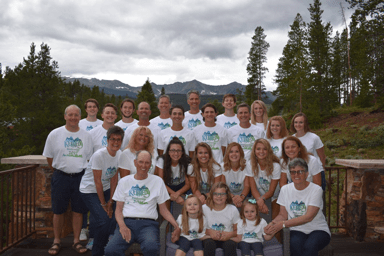
But the Biggest Question May be…
….Why publish something that was merely private conversations with oneself? As a member of the so-called “Silent Generation,” it would seem fitting to keep my voice subdued or to myself. Why open my memoirs to others who know you only so casually or to strangers? Family and friends are one thing. They already know me and aren’t surprised as to what I write about.
Other readers who only know me either casually or not at all may learn more about our mutual friends. If relationships are strengthened because of an essay, my opinion is…wonderful.
Complete strangers who happen across one of my blogs may be entertained to some degree. Good. I like to entertain other human beings. At the latter stages of life there is more freedom to say what you think. What do I have to lose by publishing essays about my history? My friend Allan likes to quote Janis Joplin’s song “Me and Bobby McGee.”
“Freedom’s just another word for nothin’ left to lose
Me and Bobby McGee Lyrics
Nothin’, don’t mean nothin’ hon’ if it ain’t free, no no
And, feelin’ good was easy, Lord, when he sang the blues
You know, feelin’ good was good enough for me…”
And feeling good about writing these words is good enough for me.

 Braidwood Beginnings
Tom, I read your Janis Joplin closing. You probably know the story of her getting a speeding ticket in Braidwood? Happy Thanksgiving to you and your family. I have really enjoyed your writings. John
Sent from my iPhone
>
LikeLike
Thanks, John. I didn’t know about the Janis Joplin story, but this is a good one. Hope your thanksgiving was good. How is your mom?
LikeLiked by 1 person
Hi, Tom!
For some reason, when I copied this to a blank Word document it won’t let me add color to corrections. So-oo, I have to improvise.
Just under your photo on the green bench: I highlighted the word *write? *with a question mark. You had a period.
Under the poem from your mom I highlighted and added commas (*so, too,*) to the last sentence.
Under, “From The Truman Show movie, last sentence, I corrected the spelling from *aways to always*.
That’s it!
Dee
LikeLike