“The dash between dates holds the essence and spirit of the deceased. It doesn’t take long for memories to fade. Precisely why every family needs a historian to capture and relate stories of each member.” Sharon Mosier, Educator*
It was my last visit in the hospital before Dad had surgery for throat cancer, a result of a lifetime of smoking along with too much alcohol. He had had a tough life and, although he was very tired that night, he wanted to talk about his days on the road as a farm and ranch hand in the Dakotas when he was in his teens. I, too, was tired that night after putting in a long day and eager to get back to my family. Although he would survive the surgery, he would never be able to speak again except through handwritten notes while in the nursing home for a few weeks before he died.
He had wanted to tell me more about his life, a life that might be condensed on his grave marker as a “dash” between two dates. And I would never be able to learn more from him except for my 41 years with him.
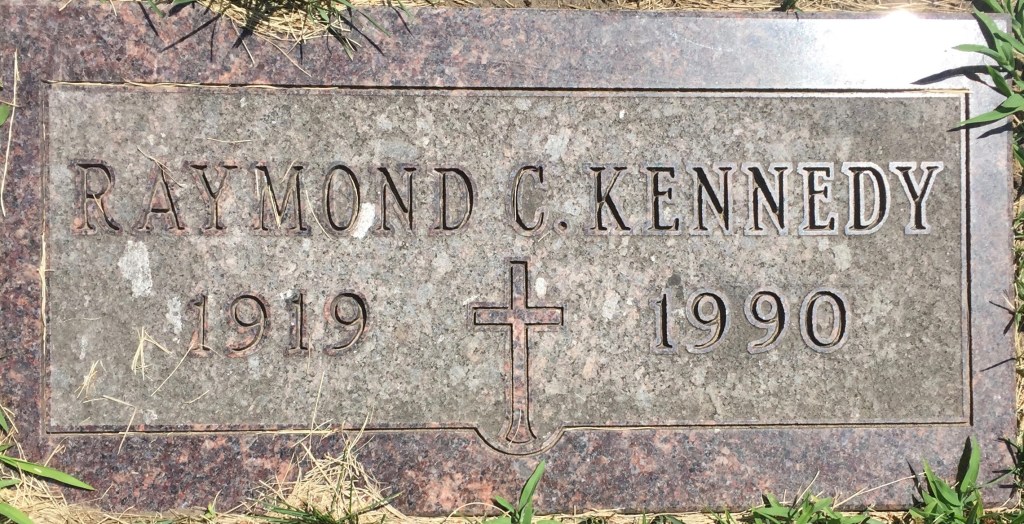
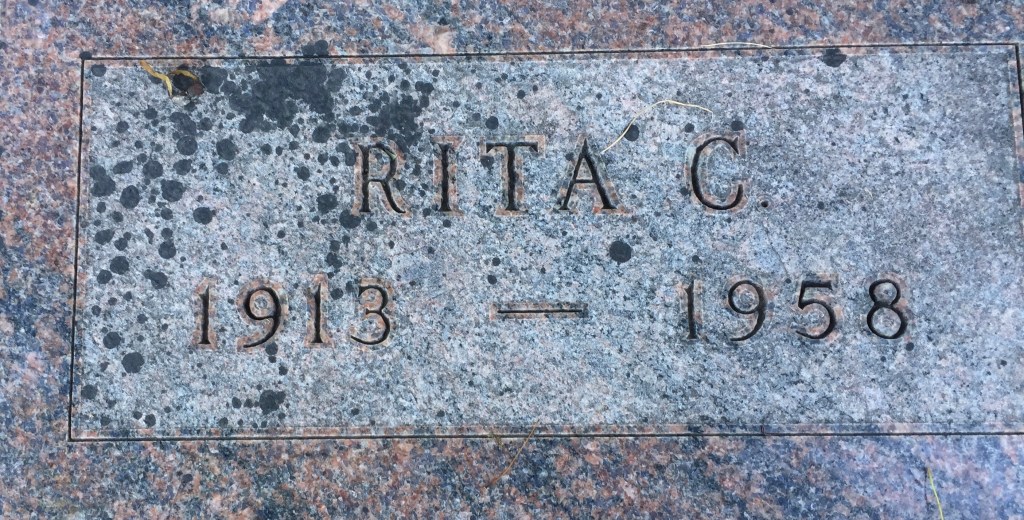
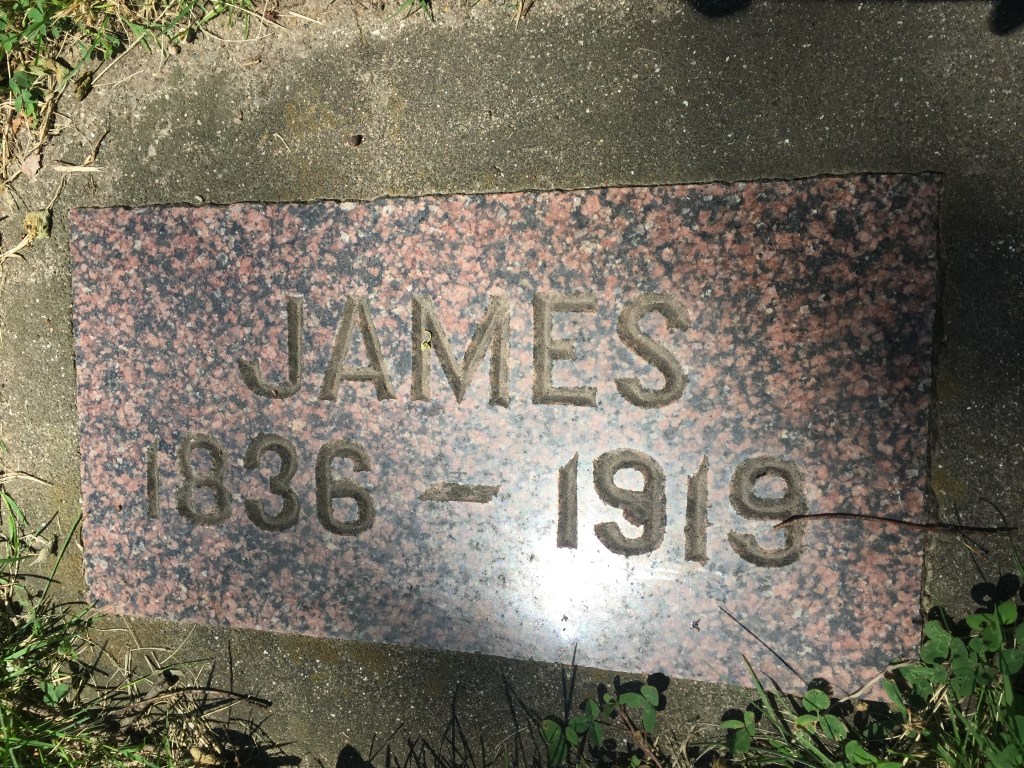
Can a man’s life be simply represented by a dash? The dash hardly seems right when, in fact, times between those important dates, covering a period of 67 years were filled with all of life’s events including births, marriages, family, jobs, and deaths. Even sunrises and sunsets.
At age 10, he had witnessed his mother’s death while giving birth for the fifth time in the Symerton farmhouse. At age 12, he was already living for periods of time on local farms to help support the family. Then, in October,1929, the stock market crashed to mark the beginning of the Great Depression that would last until WWII.
The Kennedy farm, like thousands of other farms, was another bankrupt victim which meant that Dad would go on the road to Minnesota, Oklahoma, and the Dakotas to work as a farmhand and send money home. Somehow, he made enough money to get married in Missouri and then return to Illinois where he worked as a truckdriver and started a family.
He would witness his oldest child at age two survive being run over by a car and then the birth of two more children. Then for the next 30 years Dad would drive trucks, operate heavy equipment, add an addition to the house, help neighbors and friends, and scramble to survive.
It would be like running a marathon through a maze-like obstacle course for those 67 years.
Was it a dash between those two dates? There had to be times when he was dashing to make ends meet but other times when relaxing with his buddies at McElroy’s tavern, watching a baseball game, or burying his father. Later in life, when the end was near, he probably did have the feeling that life had gone by so quickly that it indeed would appear to be a blur, a “dash.”
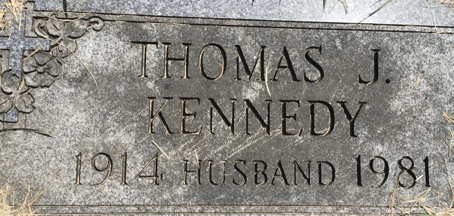
But the inscription on his gravestone could hardly be represented by an abbreviated straight line between birth and death. It would be longer and thicker, with ups and downs, bolded by joyful or tragic events. Instead of a “dash between dates” in might be better described as a “meander midst milestones,” not a dash (-) between 1914 and 1981.
Years later, when I wandered through the cemetery in Wilmington, his last words back to me from that night in the hospital and echoed off the gravestones surrounding his stone. All the names and dates hyphenated by a simple, short line: a dash.
As I gazed before his gravestone, Dad’s last words seemed to say more. “Tell my story to all who might hear and learn. That I really loved your mother and you kids. How much I appreciated my father and mother, brother and sisters. That I tried to be a good father in the only way that I knew. Please tell my story, son.”
“I will, Dad, and let my kids, grandkids, great grandkids know about you and what you meant to me. I didn’t tell you how much I loved you, Dad.”
As I was about to leave the cemetery, I could hear other voices calling out to me from other gravestones. “We have stories, too, Tom. We are also your ancestors and your reason for being alive. Tell our stories, too.”
“I will do the best that I can, mom, grandma, grandpa, aunts, uncles, great grandparents. I will do what I can during the short time that I have.”
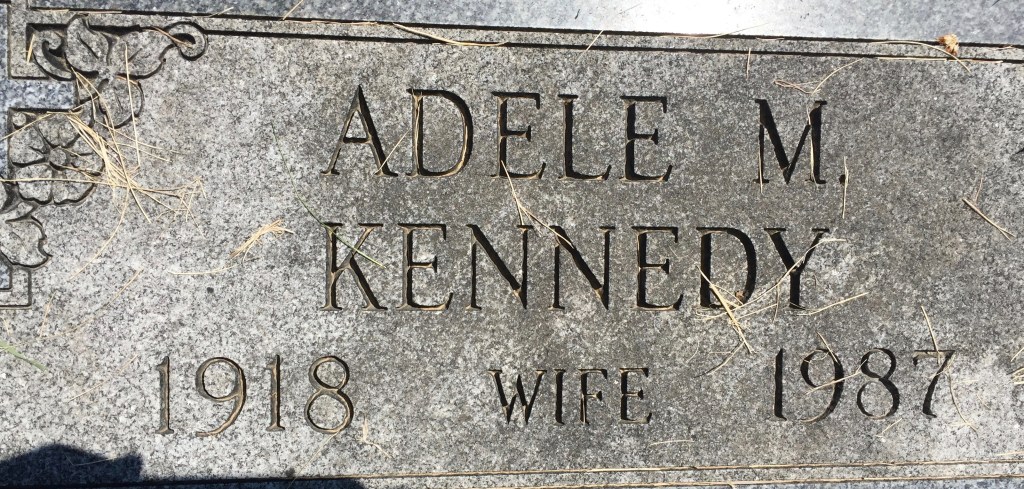
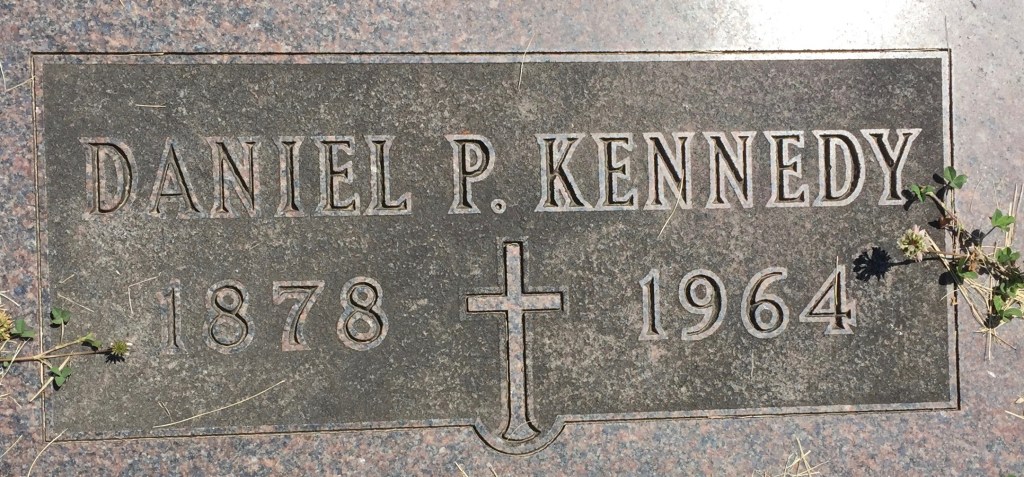
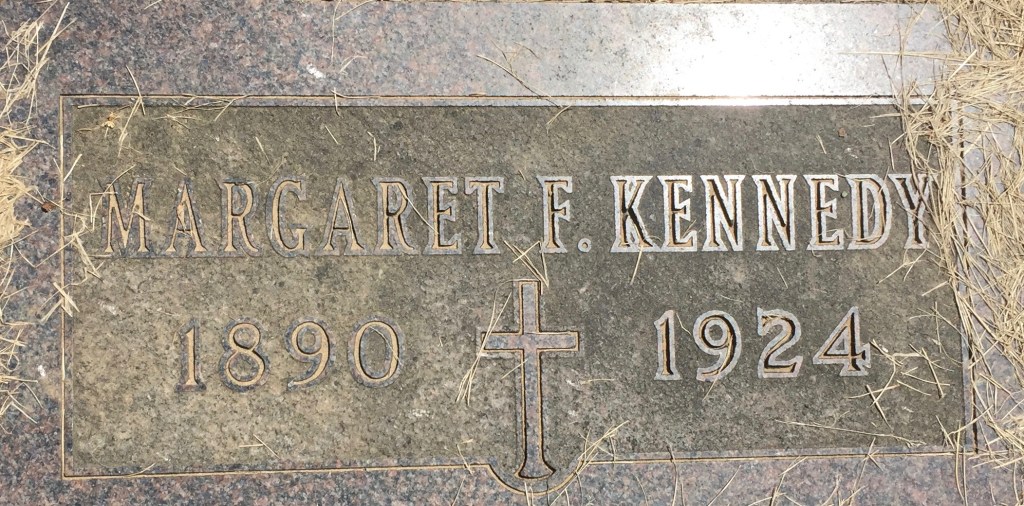
*Sharon Cosgrove Mosier is one of the finest teachers that I know. She taught many children in the Wilmington, Braidwood, Coal City area, including my own, and has a deep interest in genealogy and history.

 Braidwood Beginnings
Thank you for this thoughtful story. I hope you don’t mind if I publish it in my newsletter.
LikeLike
Thanks, Mary. Use anything that you would like.
LikeLike