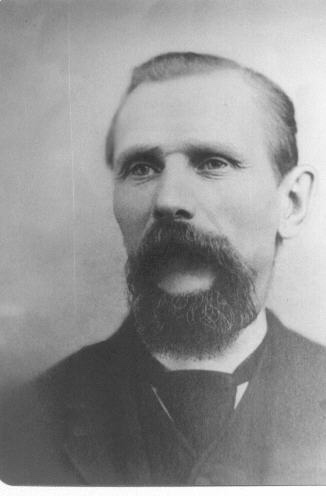
C.C. Augustus Ginter II (b. 9/28/1837 – d. 9/19/1892)
Growing up in the 1940s and 1950s, I don’t remember my mother or her siblings talking about the Ginter family history or the fact that their grandfather had served in the Civil War. Mom’s parents, Oscar and Minnie (Becker) Ginter, were virtually unknown to me. Minnie had died in 1940 and Oscar wouldn’t speak to our family, perhaps he was still furious that mom eloped with my dad when she was 17. An alcoholic, he may have been just an angry old man when he died in 1958.
Mom’s siblings, except for those who had moved away, would get together occasionally on Saturday or Sunday evenings. Helen (Van Duyne), June (Ong), Kate (Calkins), Mary (Holman), George (Ginter), and mom all lived in the area while Bess (Johnson) was in California and Alice (Williams) was in Washington. Their kids, local Ginter cousins, formed relationships while the parents were visiting.
In all, there were 14 of us cousins. They were: Benny, Sandra, and Billy (Mary); Ronnie, JoAnn, and Nicki (Helen); Peggy and Janet (June); Bobby, Patsy, and Jackie (George); and Carole Ann, Kenny, and me (Adele). In all our times together, I cannot remember ever hearing about our Civil War ancestors. Maybe it was just that we were kids having a good time.
As I began my genealogy research some 40 years ago, I found that the Kennedy family history was fairly easy to find and document. Mom’s family, the Ginters, was more of a challenge. It was only after I contacted Ginter family members, C. M. “Gus” Ginter, Ron Genter, and Dan Haynes, that a more complete picture could be drawn. All had conducted extensive research that started in 1700 in Germany. Ron’s Historiography, “Genter/Ginter Family History” (2011), was extremely helpful.
My great grandfather Augustus Ginter and his brother Henry were among nearly 1 million Germans who came into America during the 1850s. It was an era in the United States that was struggling with the slavery issue, states’ rights, and anti-immigrant groups such as the “Know Nothings.” But because Germany had its own turmoil, America with its expansion westward presented new opportunities for these immigrants.
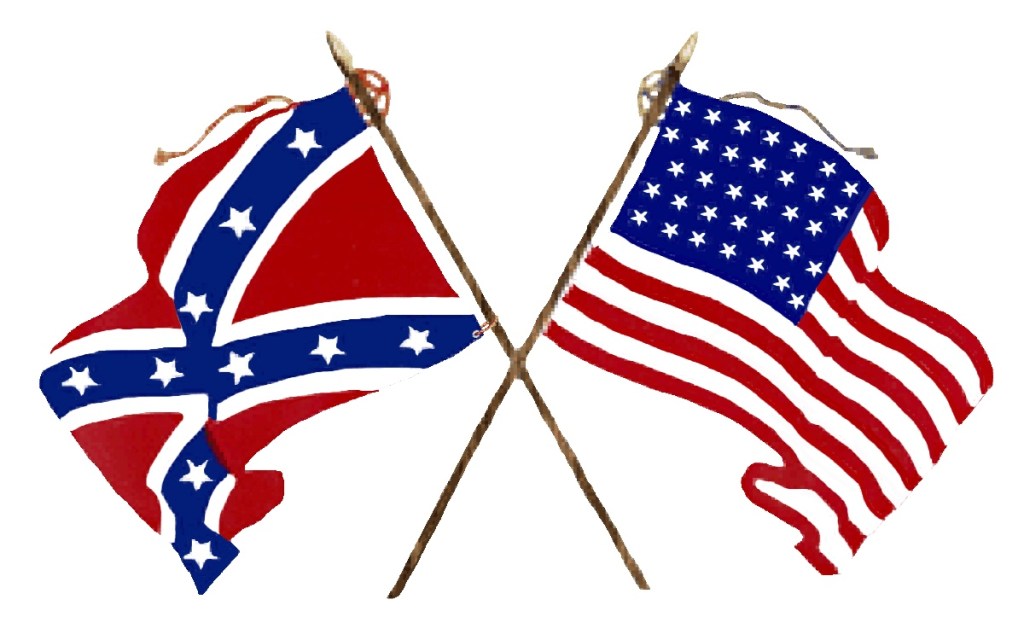
What motivated Augustus to join the Union Army in September of 1861? Was it an opportunity to make $15 ($440 current) per month or to become a hero? Could it have been his desire to keep our country intact after having left a German scene that was in the throes of agricultural and political crises?
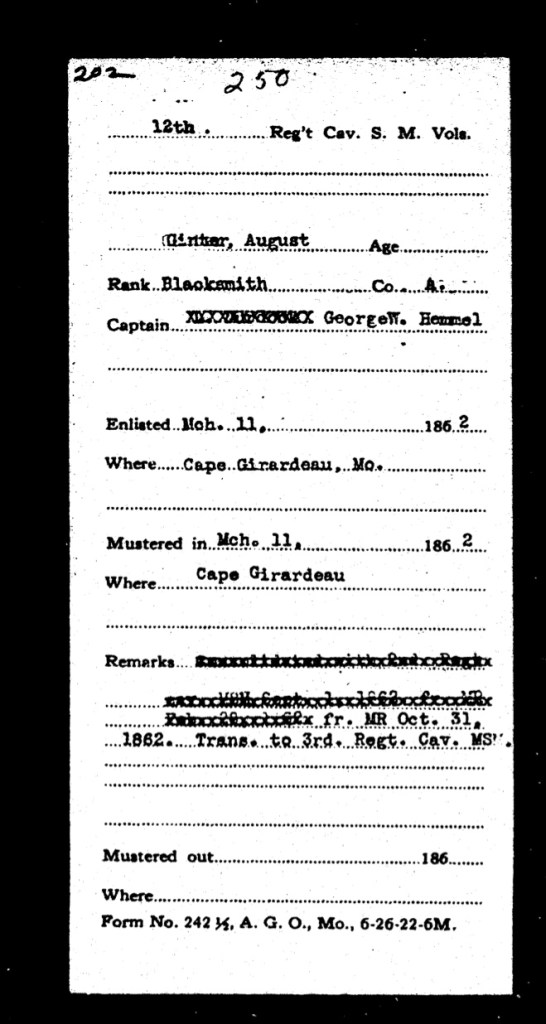
Whatever his reason, the young German immigrant seemed eager to enlist. Having arrived in New York and settling in Peotone, Illinois only 4 years before, Augustus was 24 years old when he joined the Union Army in Cape Girardeau, MO. His rank: Corporal, blacksmith; 1st Cavalry, Missouri.
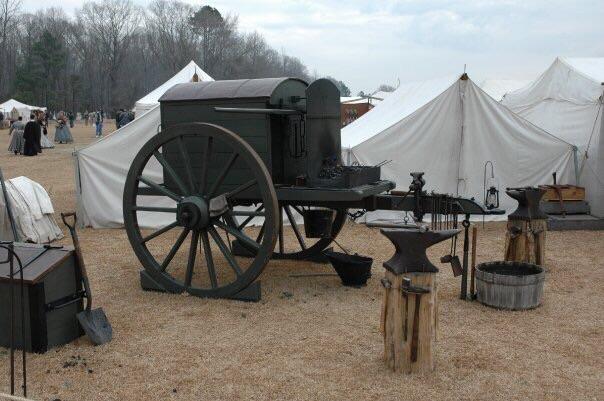
During his time in the service, Augustus may have been involved in as many as 25 battles and skirmishes including Sugar Creek, Pea Ridge, Neosho, and Pleasant Hill. At the conclusion of the war, he was mustered out September 1, 1865, paid a re-enlistment bounty of $400 ($6,334), and returned home to Peotone.
Brother Henry had enlisted in 1862 joining the 101st Infantry Regiment of the Illinois Volunteers. He was captured at one point, exchanged as a prisoner, wounded during one of many battles, and hospitalized in Nashville for a year. Henry recovered sufficiently to march in the Grand Review in May 1865 in Washington DC that marked the end of the war and was mustered out in June of that year.
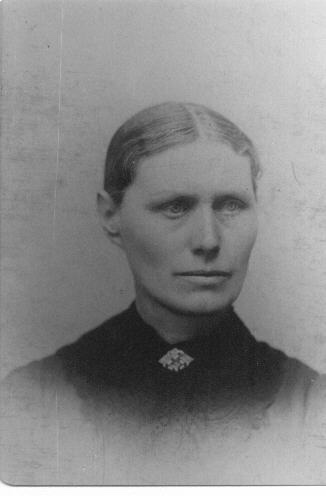
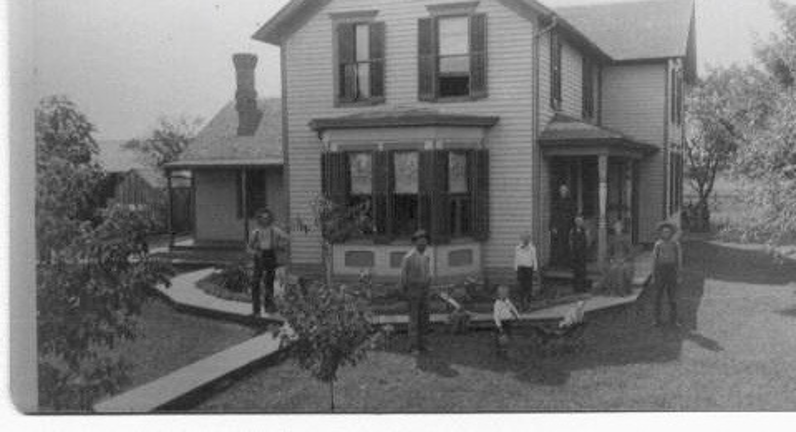
In 1866, Augustus married Dorothea Bierman and soon purchased a farm northwest of Peotone. In all, he and Dora had 6 children, the youngest being my grandfather, Oscar.
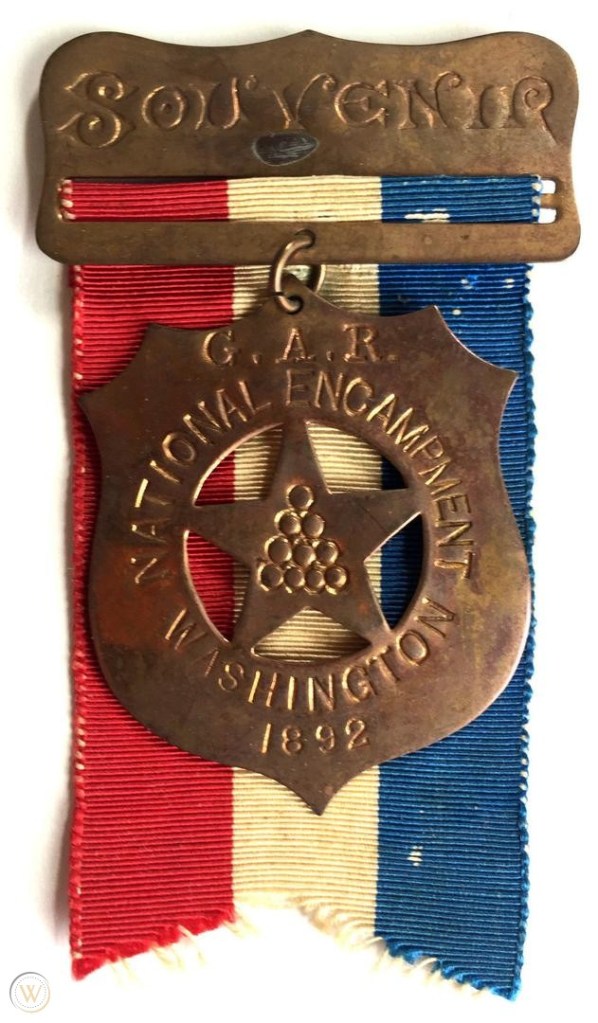
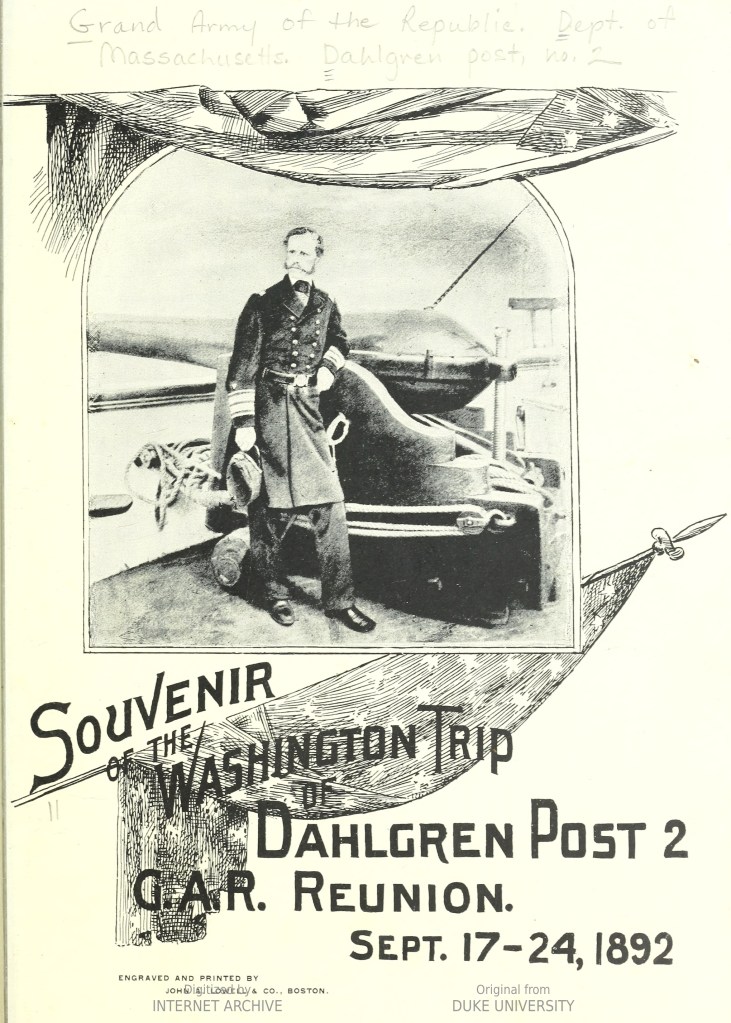
By 1890, family fortunes appeared to be fine, and it was at this point that the army war veteran decided to travel to the Grand Army of the Republic (GAR) encampment to be held in Washington D.C. in 1892. His brother Henry accompanied him, probably departing from Kankakee early in September for the event scheduled for September 20-23.
Then came the tragedy.
Press Release, Charlottesville, Va. Sept. 1892 “Veteran Killed While on His Way to Washington”
“A very distressing accident occurred at Ivy Depot at about 8 o’clock this morning resulting in the death of Mr. Augustus Ginter, of Peotone, Will County, Ill., a veteran of the late war, on his way to the G.A.R. encampment in Washington.”
“Augustus Ginter, 54, was on his way to the 1892 G.A.R. encampment in Washington D.C. when his eastbound passenger train was sidetracked in order for a westbound train to pass. Ginter, along with fellow veterans, was standing outside their train viewing the countryside when the speeding train’s hand railing struck Ginter’s head and arm. The wounded man was placed on a stretcher and taken to Wright’s Hotel in Charlottesville VA where he died. Augustus’ brother, Henry witnessed the accident and made train arrangements to have his brother returned to Peotone, Il.”
A Story of Augustus Ginter: Remembered
The demise of Augustus Ginter II may have been tragic in 1892, but the failure to pass on his story – and the story of an immigrant ancestor family in the mid 1800s – would also be heartbreaking. Augustus wasn’t a war hero in the true sense. He was a man who followed his instincts, tried to make a life in America, and survived any way he could. His contribution to the war represented a very small piece of the outcome. He was a blacksmith, fixing wagons and weapons, moving from place to place, all during the bloodiest conflict on American soil. For this, he should be remembered by the Ginter descendants.
The task of writing Augustus’ story was simple compared to the tons of research, writing, and pictures that was accomplished by Dan Haynes, Ron Genter, and Gus Ginter. Thanks to all of you for the materials in my files that will be useful for interested family researchers in the future.
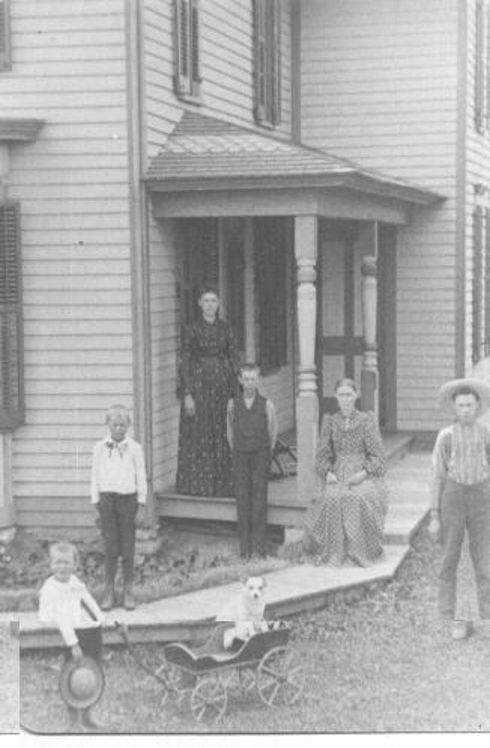
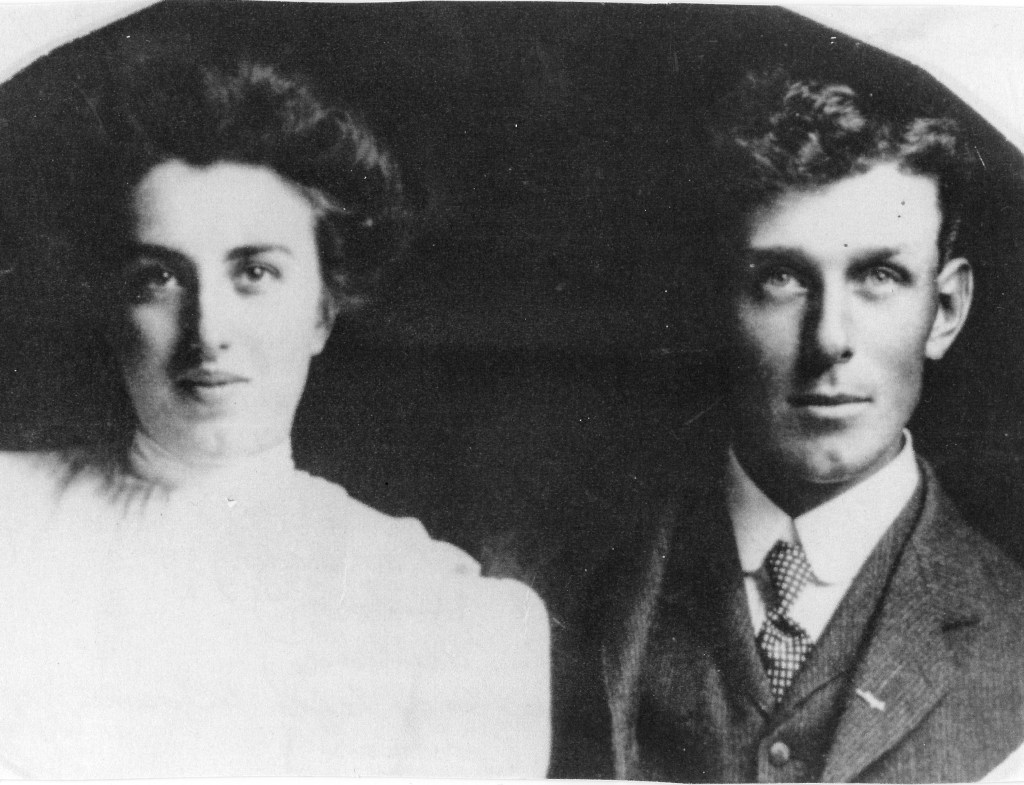
Left Picture: Asa, Frieda, Oscar, Dora, Alfred. Right picture: Minnie Becker Ginter and Oscar Ginter

 Braidwood Beginnings