“I was still water, held by my surroundings. I am now a river, carving my own path.”
Scott Stabile
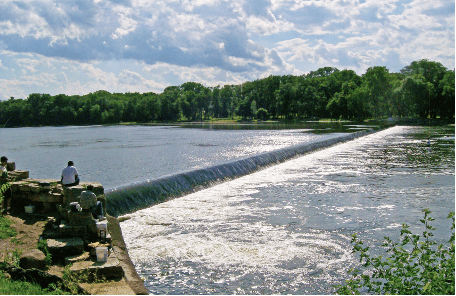
From my earliest days I was aware of two bodies of water: the strip mine pits (lakes) in Braidwood and the Kankakee River in Wilmington. My whole world revolved around these two towns from birth through age 13 and when I wasn’t in school, the lakes were the source of recreation and adventure. The river also had its entertainment value especially when the early spring ice jams caused flooding and spewed spectacular mounds of mini glaciers across the baseball field.
The similarities of the lakes and the river are clear. Both are the habitats for fish and vegetation, and both have fresh, clean water. One has a determined distant destiny, the other is satisfied to stay at home. Although very much alike and unalike, both have personalities much like my own.
Strip Mine Lakes
The strip mine lakes are examples of the devastation that human beings can perpetrate on the earth, and then can be reincarnated with beauty and new life. Fed by underground springs, the lakes are calm, stable, and deep; relieved that the mammoth digging machines are distant memories.
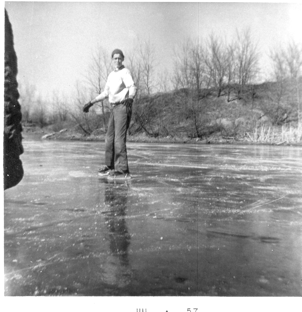
Freezing in the winter, they graciously welcome humans without taking offence or demanding contrition. During the late spring through early fall, they invited us to swim, bathe, boat, and fish. During the winter months, their hard surfaces seemed not to care that our skates left scratches and scuffs. With levels that remain consistent, they are content staying in one location while being regenerated by earth’s deep springs. Nor are they afraid of the immigrant rain or snow showers that fall from the sky.
Unlike the river that is continuously rolling over new rocks in its journey toward assimilation with the Mississippi River, the lakes value long-term relations with their surroundings and inhabitants.
Kankakee River
Only a few miles away, the Kankakee River echoes the temperament wrought by changing seasons and climate. Early summer rains swell the river above the banks with water rushing over the dam only to be succeeded by dry August heat that bares previously hidden rocks.
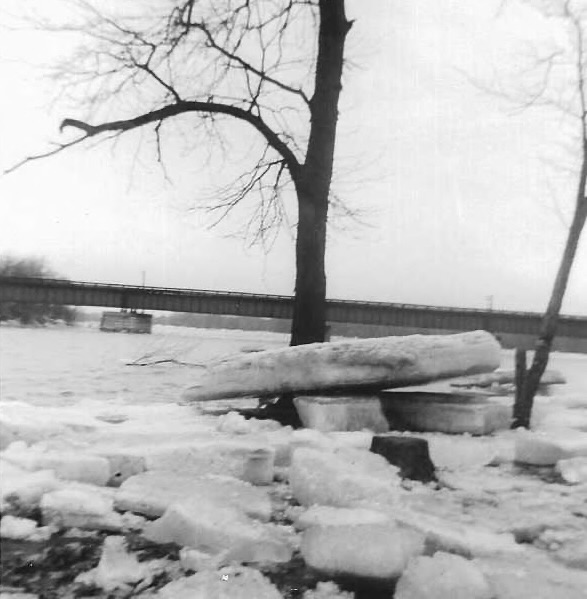
Autumn waters slow in order to better mirror the clouds and colorful displays of neighboring foliage that wave and toss leaves onto the current in appreciation. Winter waters cool, then form ice that in olden days supplied frozen blocks that would ultimately be distributed for preserving food. Then in a show of muscle, the river created dams of its own, flooding the shores with huge cakes that yield only to the sun’s rays.
In my latter six years of grade school, a bus carried Braidwood kids like me to St. Rose Grade School in Wilmington. During those trips, my window would flash a continuum of scenes that included hills – remnants of shaft mines with their steep incline followed by their slowly descending slope – and the placid lakes partially secluded by trees and bushes. Then, after a detour toward Coal City, the bus would continue to Wilmington, over the bridge that spanned the river.
Polluted Waters
After grade school years, another bus would carry me from my hometown to Joliet Catholic High School for four years. This trip replicated my grade school route but then journeyed on to a new educational and cultural experience. My bus companions were adolescents with whom I had known or had known about. They were my age, three years older, and then three years younger as I progressed from freshman to senior year.
On these trips during moments of solitude, two new watery scenes dashed past my window. The first was Prairie Creek near Elwood that lay neath Route 66A and the other was the Des Plaines waterway. Different from the pristine water that I knew, the creek contained gold and red pollution tints from the adjacent Army Ammunition Plant and the waterway carried a stench and foreign objects that seemed unnatural. The creek and the waterway had rather disgusting personalities.
The Waters within Each of Us
I now can attest to the powerful watery influences that helped form me: from the placid, deep, and consistent waters that produced the strip mine lakes and the exciting but temperamental Kankakee River; to the creek and the waterway that characterized human nature in its most disgusting aspects.
Like my 10-year captivity on buses, I might contemplate the comforting thoughts of strip mine waters, and other times to challenge old ways through the fresh flowing, self-renewing river waters. My life has been a series of moments: relaxing in the placid water; floating downstream in swift rivers; and even, in my best moments, paddling upstream against the current of tribalism.
“Rivers, ponds, lakes, and stream – they all have different names, but they all contain water. Just as religions do – they all contain truths.”
Muhammad Ali

 Braidwood Beginnings