
“You cannot undo the damage of the past.”
Dr. Joe, my Dermatologist
During the 1940s and 1950s, my days under the sun at the Braidwood Recreation Club, my baseball playing and coaching career, and workdays outside the cab of my truck: all of it damaged my skin badly enough that pre-cancerous eruptions are now a common occurrence.
I didn’t recognize that I had the problem until later in life but realized that other white people like me also had the same issue.
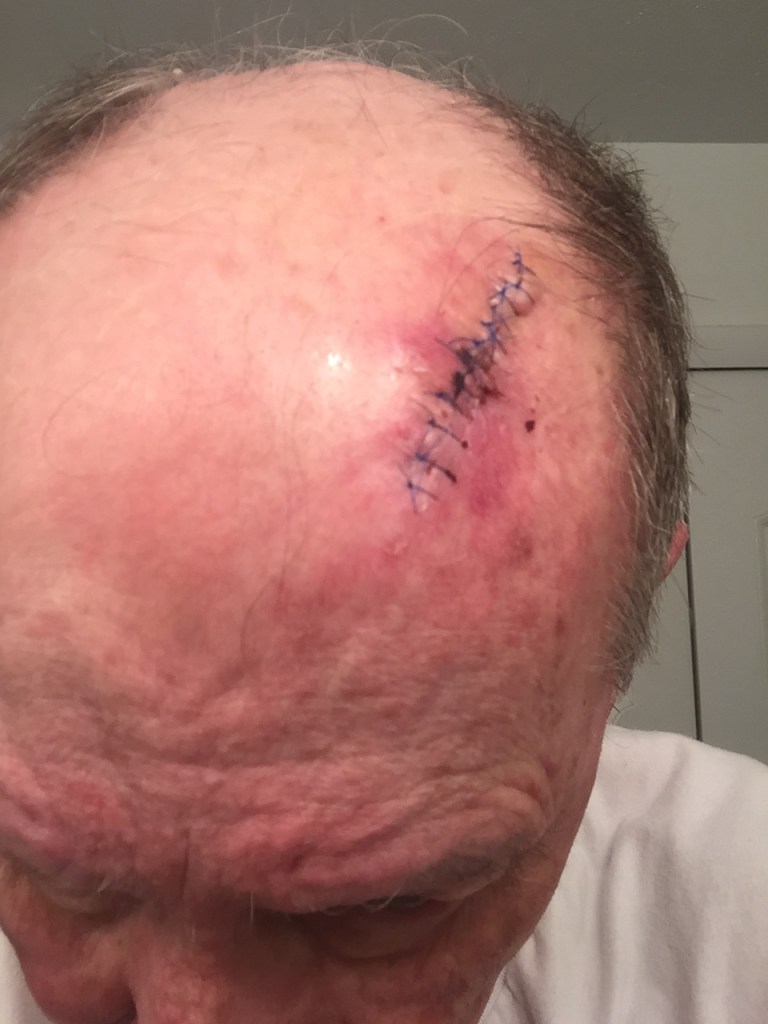
The only treatment now possible revolves around periodic removal and learning how to take precaution in the daylight. Every four months I visit the dermatologist who briefly assesses the latest pre-cancerous spots on my head and then proceeds to spray a dry ice blast on those locations. For the next hour or so, I experience a burning sensation and then it subsides. But for the next week, the spots dry up and peel off. If it is more serious, Joe excises it
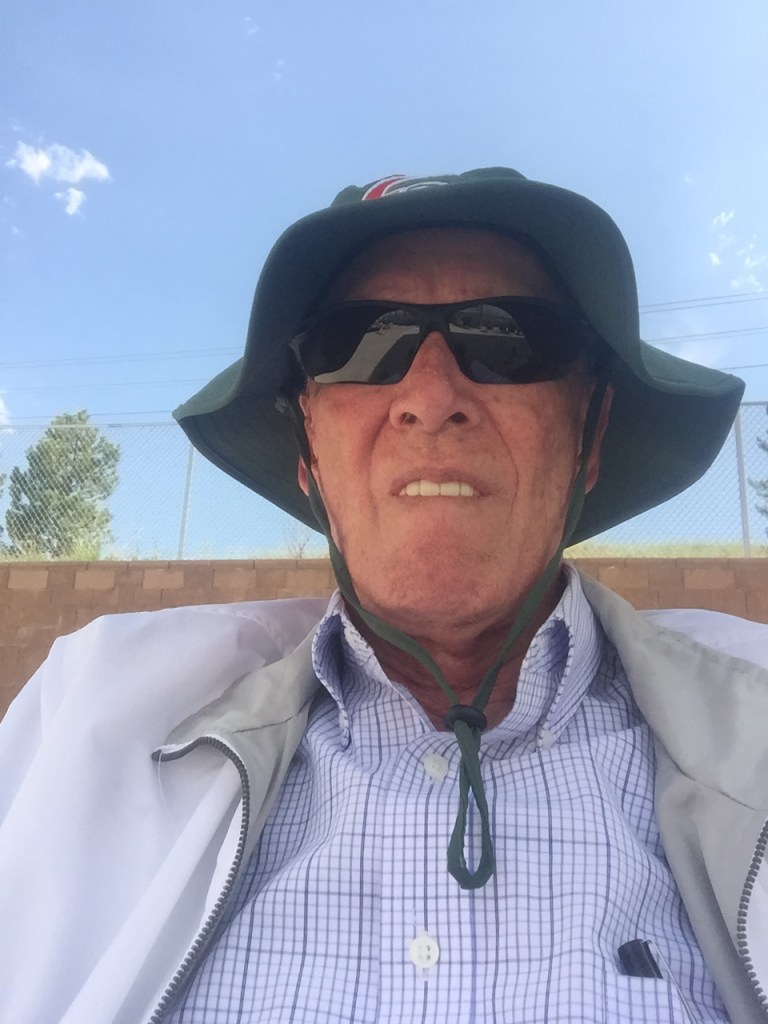
My precautionary activities include a wide brimmed hat, covering other bare skin, sunscreen, and avoiding my walking/standing activities during the high ultra-violet rays of the sun. I check the UV numbers and feel safe when it is at 0-1. Anything higher could be a problem.
Regardless of how I now deal with the years of permanent damage, I can do nothing to eliminate that damage. But as I learn more about it, I can prevent further damage and perhaps be an example to others.
Another “Skin Cancer”
The other “skin cancer” also came from the 1040s and 1950s. The cause? Repeated exposures to “subconscious racism.” Through movies, magazines, parents, peers, and authority figures, Black skinned people, when pictured at all, were portrayed as lazy, unintelligent, and more prone to violence. They were cast as entertainers, athletes, and criminals.
These stereotypes were subconsciously ingrained in my mind but tended to be less permanent because I knew African American families in my hometown of Braidwood. These families contradicted the labels placed on them, at least in my small world. The positive qualities that I saw in Buddy and Danny, as well as the other families showed me that our differences were only in skin shades. Most of my white contemporaries were not as fortunate as me.
But the damage done through my white background, and the media, did have a lasting effect on me. There was no way to avoid the fear that was intuitively because of the cultural racism damage that plagues every white person in America. How might that insidious, ingrained plague be moderated and shrunk in me? Although it could never completely evaporate, there would be several paths for me to understand and confront this “skin” cancer.
Be a witness. During college I saw firsthand the ugliness of racism and could empathize with my African American teammates and friends. I knew that I was treated differently by white people when I was with my Black friends. Over the course of my life, I witnessed other situations that white friends disrespected Blacks and to verbalize their racist views. Mostly behind their backs.
Educate myself. During the 1960s and 1970s, confrontations between Blacks and whites were common and sometimes violent. My coaching and administration years at Lewis constituted a laboratory for race relation situations. One recourse was to learn as much as I could about the root causes of racism in America. I entered a graduate program at Governors State University where some excellent faculty became mentors for me. My degree was in “Cultural and Ethnic Studies” but most of my knowledge has been from the 25+ books I have read over the last 15 years.
Discuss with Black Friends. I am fortunate to know some key African American friends. Never easy to talk about, thoughtful discussions have been indispensable. My colleagues and students at Lewis between 1967 through 1978 provided the best dialogue and discussion. (Thanks to Kathleen, Charles, Michael, and Yvonne.)
Regardless of how I now deal with the years of permanent damage, I can do nothing to eliminate that damage. But as I learn more about it, I can prevent further damage and perhaps be an example to others.
Both Cancers Need Treatment
Both types of skin cancer are serious for me and for other white skinned people. In both cases, I had to first recognize that it was my problem, and that the damage has already been done. The second step was to do something about it as best that I could. In one case, I had to avoid the light; in the other case, enlightenment is possible for me and people who look like me.
“How can we struggle together against an evil that harms us all, though in different ways? The wounds of racism are real and deep, but healing is possible.”
Fr. Bryan Massingale, Catholic Priest
“…most of us are unaware of our racism. We do not recognize the ways in which our cultural experience has influenced our beliefs about race or those occasions on which those beliefs affect our action.”
Charles R. Lawrence III

 Braidwood Beginnings