“It’s not so much about seeking the other but to find yourself in the other.”
Jesuit Priest Fr. Gregory Boyle
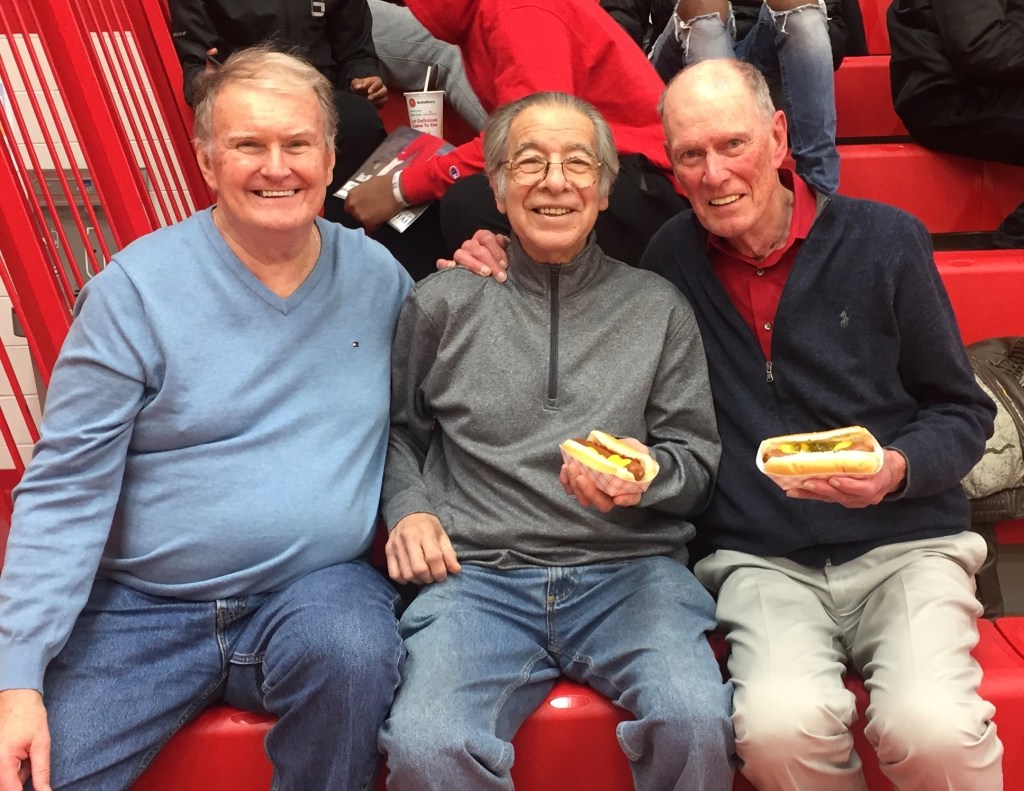
Pat Sullivan, Tony Delgado, and I have had many discussions about the merits of team sports and the impact they make on player development. Conditioning, work ethic, competition, mutual respect, and collaboration contribute to the development of young athletes. (Likewise, there are downsides to athletics when programs fail to guard against abusive practices of coaches.)
Pat was raised on the multicultural south side of Joliet and Tony grew up in the Pilsen neighborhood in Chicago. Both played sports with Black, Brown, and White segments of the population. My “old Braidwood” background afforded me regular interaction with African American families. Each of us developed early relationships with people who looked different than us.
The three of us, all former athletes and coaches, can speak about race relations from a unique perspective and the positive impact that team sports can have. I will be asking Pat and Tony to share their insights in the future.
Team Membership
The composition of a team is most interesting to me. Teammates form a special bond that goes beyond the execution of game plans and wins and losses. When people work together toward a common goal, we gain a better understanding of one another while helping each to succeed. We see each other as fellow humans who struggle with the same issues, and who, regardless of our physical and mental differences, seek similar lifelong goals: life, liberty, and pursuit of happiness.
If team composition includes teammates who have a variety of backgrounds, I can learn more about the broader spectrum of humanity. Unfortunately, most athletic teams are comprised of players coming from similar backgrounds. From my vantage point, teams that include diversity promote a healthy foundation for the mutual respect and understanding sorely needed in American society.
My point of reference in making this statement comes from my involvement in playing and coaching basketball and baseball. Several college basketball teammates at Lewis were Black. My semi-pro baseball team (Nielsen’s) had several Black players. I coached the Joliet Junior College basketball team that was quite diverse. And my brief time with the NBA Chicago Zephyrs included both Black and white players.
Unique Perspective
Of course, I had the advantage of being born and raised in small town Braidwood where I served as paperboy to Black families and played sports with their kids. This may have been the foundation for future race related problems I faced in the late 1960s and 1970s.
Unlike many other people who lived in their white ghettos, my experiences might be reduced to the fact that I had opportunities to develop both short and long-term relationships with those who looked different from me. In the nakedness of the shower room, there were no pretenses of difference other than skin shade. We were tall and short, skinny, and otherwise, but no barriers between us. We had sweated together, we won or lost, and we were together as a unit. Individual differences vanish like water down the drain.
I saw racism through the eyes of my Black roommate and teammates when my basketball team played other schools. And I learned about the obstacles they had faced as youngsters in contrast to the privileges I had growing up and living in this country. Empathy and understanding are the byproducts of diverse teams working together. We get to know one another and see through others’ eyes.
Defeating Racism via Team Sports and Work Settings
Involvement on diverse teams night serve as an antidote to the ugly racist fears of other folks like me. Unfortunately, many of my friends and relatives have not had the experience of working, playing, living with, laughing, and breaking bread with people racially different. I have been labeled as a “N-lover” and other epithets. Meanwhile, as soon as they leave the house, my Black friends are assessed on a daily basis, a process that is foreign to me.
My hope is that my unique background might serve as another perspective for those who have missed some of these experiences.
Another hope is that my kids and grandkids will have had similar racist-shattering experiences. A good example is that some grandkids have had the educational opportunities, such as attending a very diverse secondary school in Colorado. Smoky Hill High School is diversely populated with national and international students and faculty. In addition, their economic status levels are wide ranged. Experiences like this form the basis for a life of understanding and empathy.
Beyond the world of sports, I had diverse colleagues/teammates from the Lewis University Student Affairs Office and from my 25-year working relationship with Puerto Ricans. Both groups had diverse racial backgrounds. This experience from this non-sport world was similar to the athletic world.
Segregation Yields Racial Ignorance
Many of us older folks have scant opportunities to engage with populations that are different. Our cities and churches are products of geographic racial boundaries that constrict us to our segregated lives and suffocate us with myopia. Fortunately, the arts via movies, music, and books can serve as a tonic that nurtures our thirst to grow and learn more about the American disease called racism.
All of us are blessed and burdened by our early formative years, those years between birth and adulthood. Blessed because of the fundaments goodness of learning how to live. But burdened because of misinformation, cultural biases, and imprinted racial stereotypes that defy facts.
The jaws of the racial beast will continue to bark loudly in the future, but by defanging it we can anticipate only a whimper. Sports can play a decisive role if we have diverse teammates.
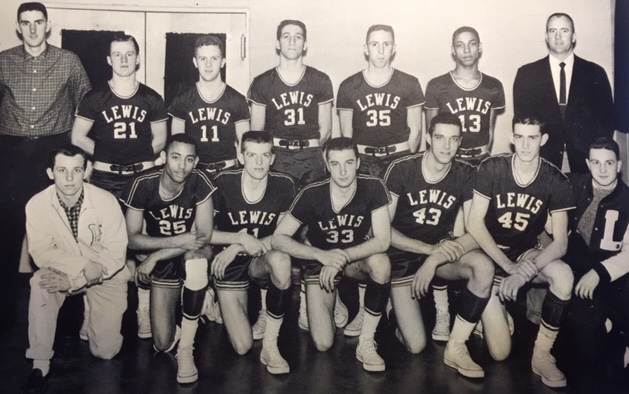
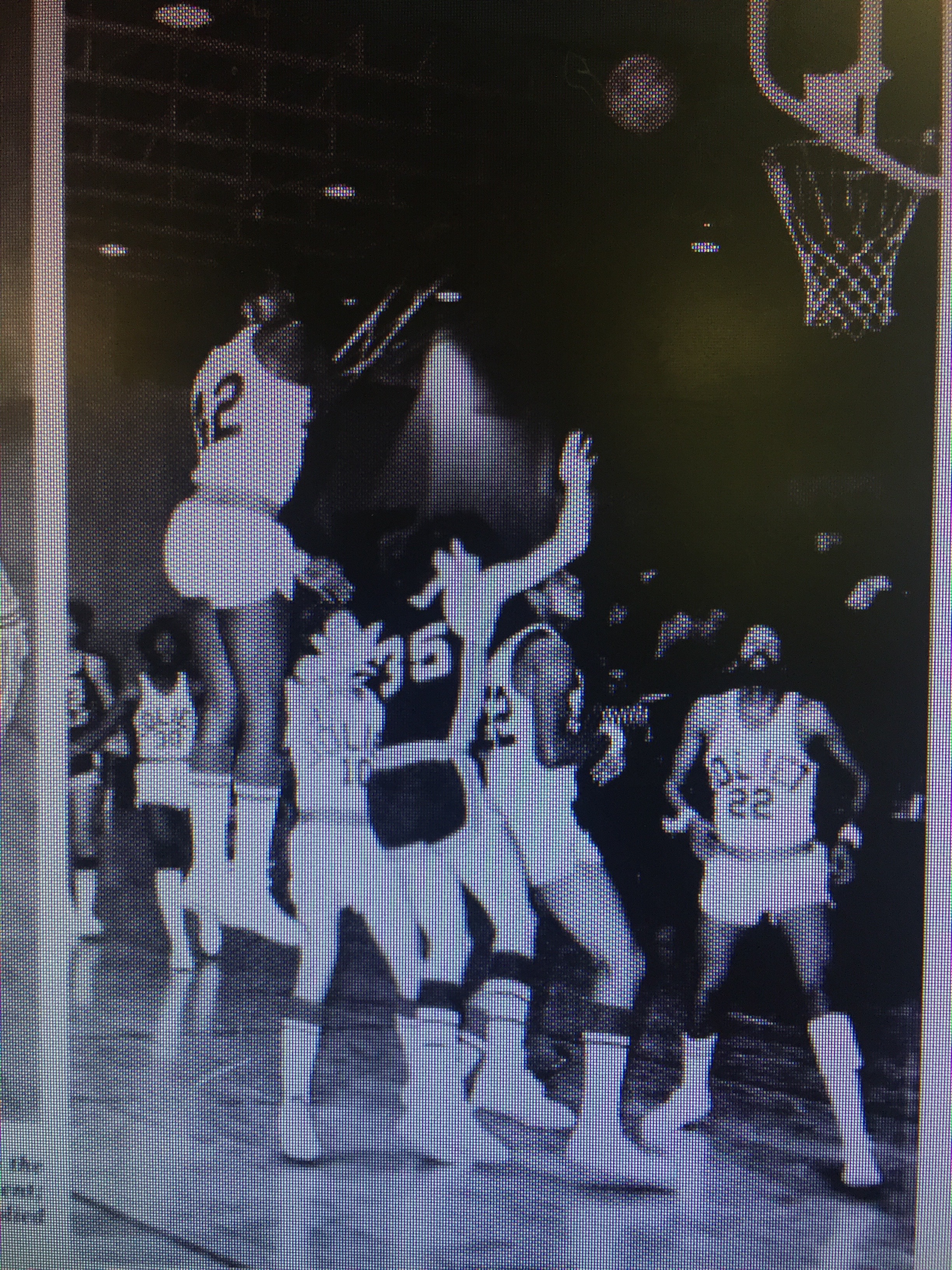
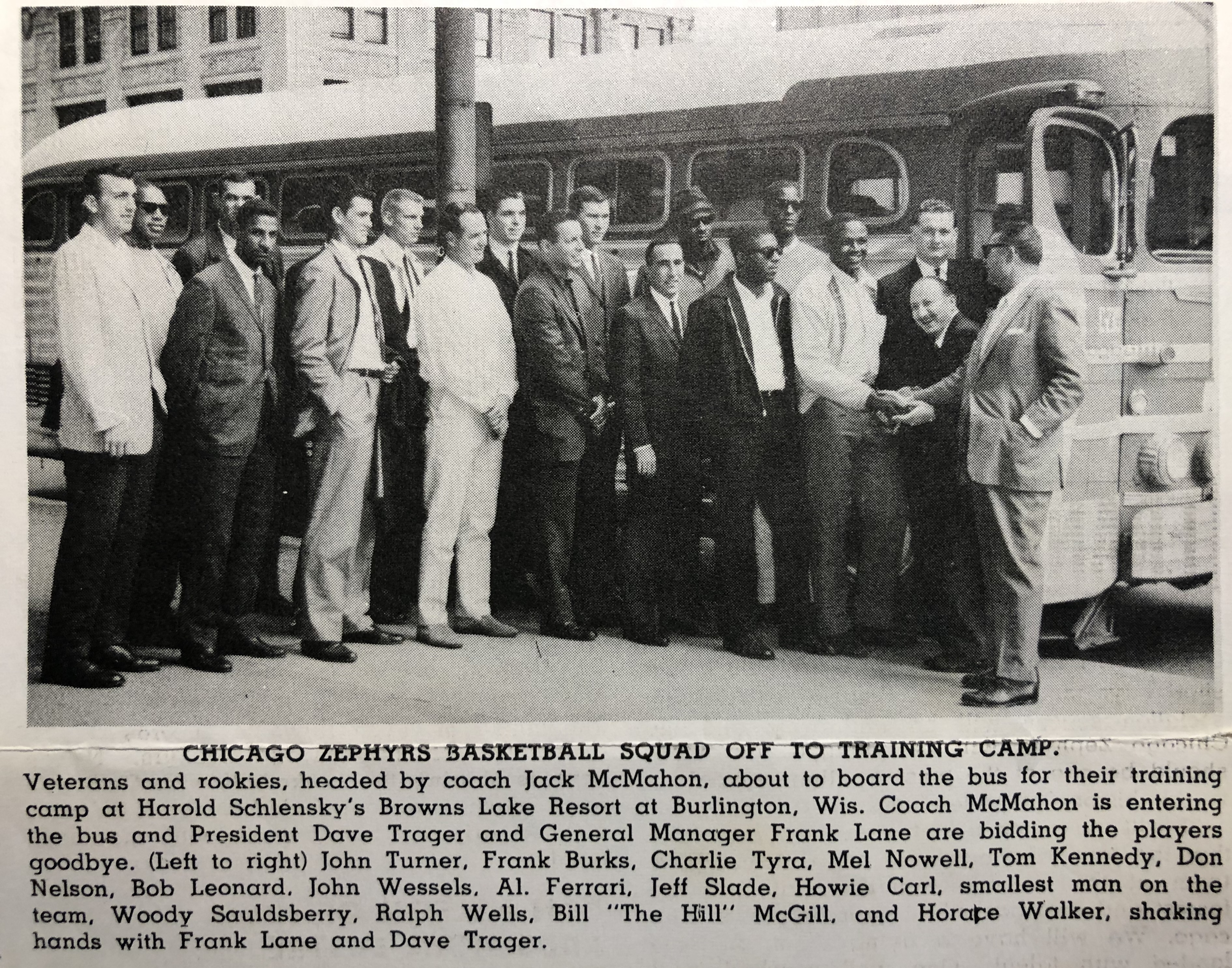
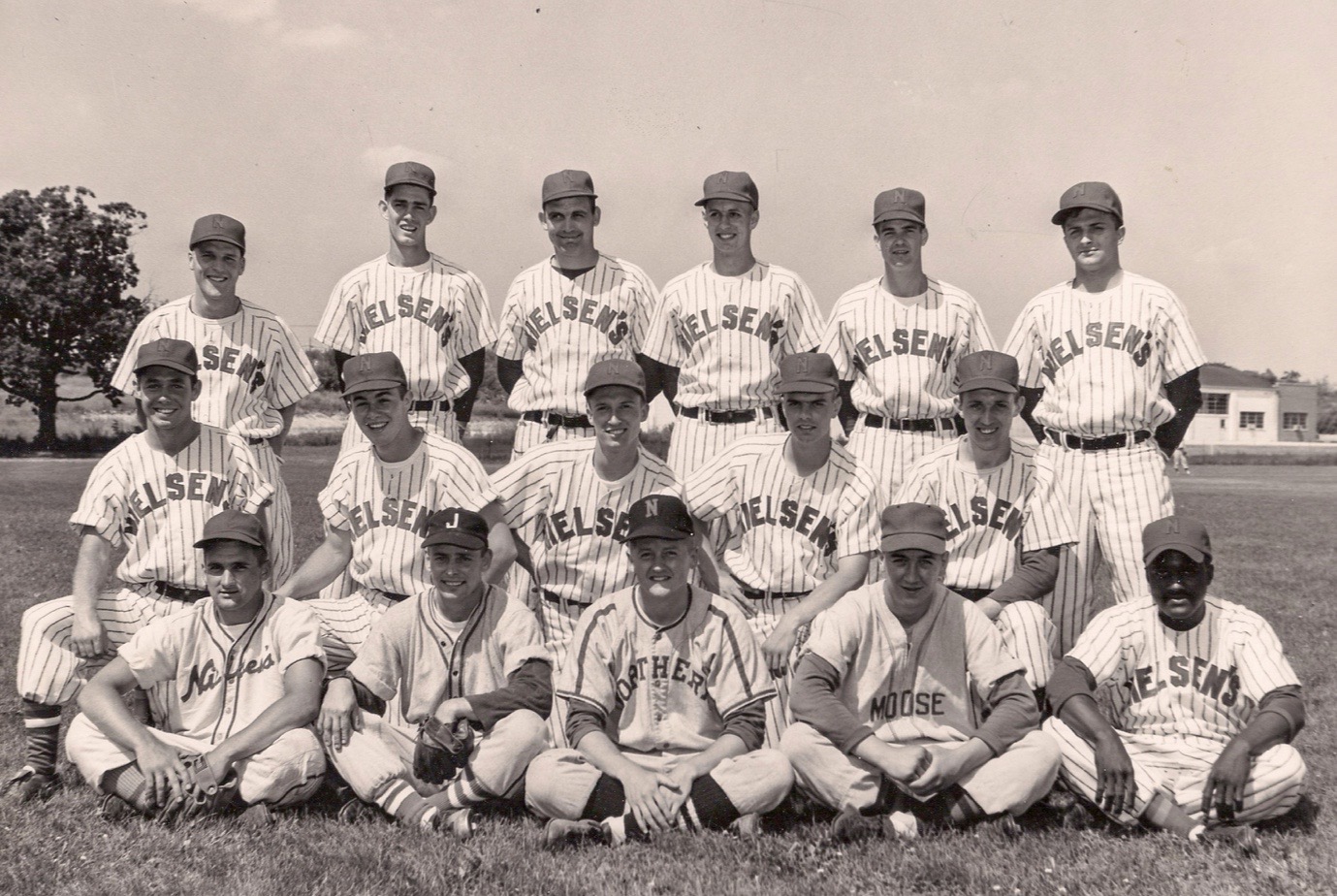
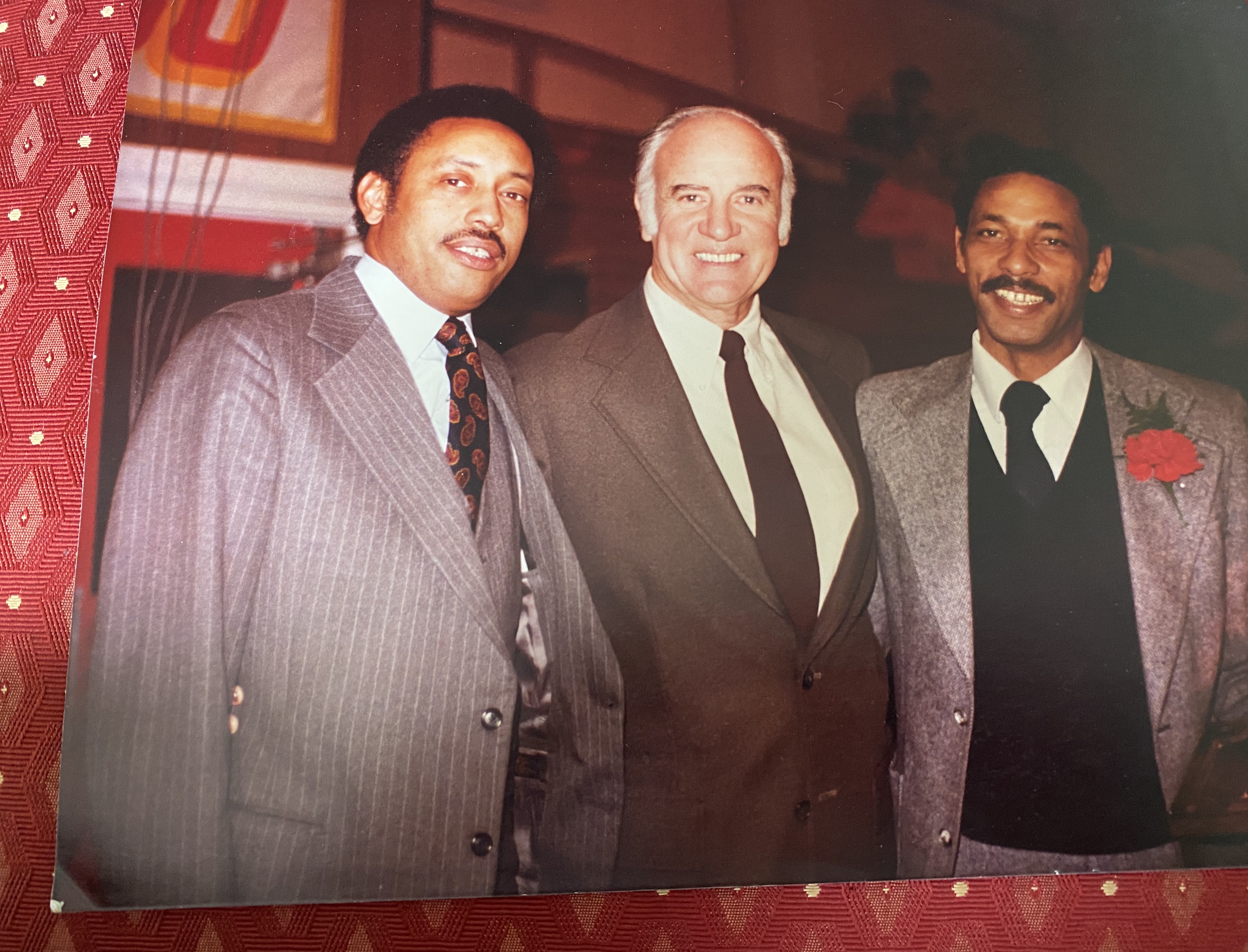
Top left: 1959 Lewis College basketball team; top right:1981 Joliet Junior College team action; bottom left:1962 Chicago Zephyrs NBA; bottom right: Nielsen baseball team and Gordie Gillespie with teammates Gordie Kendall and Bob Thayer.

 Braidwood Beginnings