“I really don’t like that man. I must get to know him better.”
Abraham Lincoln
Lincoln was right. It is amazing how much we can dislike and fear others when we don’t know them. Especially if they look different and are from different groups or tribes.
Sports and Music
Years ago, when I was coaching young boys in summer baseball programs, the Coal Valley Pony Baseball league was comprised of teams from Wilmington, Coal City, and Braidwood. Many of the Wilmington kids didn’t know kids from the other towns except to compete against them. It was easy to dislike them. Gradually, as they got to know them it turns out that many became friends. The same happened when our kids played against Joliet teams.
It is a normal, somewhat tribal, instinct to dislike or fear “others.” Differences can become irrelevant when humans become familiar with each other. (Familiar: from Latin familiaris “domestic, private, belonging to a family.” As in the human family.) And differences can also add meaning and spice to our lives.
The environment in which I was raised – along with subsequent travels and life experiences – have made me hunger for the value and beauty of differences.
You might compare it to music played by various instruments playing different harmonious notes. Only the tempo, rhythm, and basic melody or theme are the same. How boring and dull would it be to have everyone playing the same note with only the trumpets.
The Absence of Diversity
So it is with racial and cultural diversity. I underestimated the importance that racial diversity plays in my life until I moved to Colorado. Not that my second hometown, Wilmington, was the model for ethnic and cultural variations, but my original hometown, Braidwood of the 1940s and 1950s, had a history of African American presence. Plus, nearby Joliet and Chicago are diversely populated.
Since moving here in 1986, the absence of black Colorado inhabitants became more evident as the years passed. Arvada, Colorado has been my primary residence since 1986. My town is overwhelmingly white (79.8%) with Hispanics (14.3%) and Blacks at 1%. The populace doesn’t come close to mirroring the United States demographics. The local Catholic churches, as reflective of the geographics, are even more segregated.
Personally, Why Diversity is Important
It is increasingly apparent that I see things differently from my peers of (old) white men because of my views on American societal issues. This is not a political statement but rather my understanding of the history and status of minorities. I don’t see blacks and browns through fearful, threatened eyes. The environment in which I was raised – along with subsequent travels and life experiences – have made me hunger for the value and beauty of differences.
Skin color and cultural differences should not be the criteria with which we judge and castigate one another. And if you happen to be a church goer, this behavior challenges the essence of a person’s affiliation. Until we can learn more about one another, we will continue to undermine – through animosity and hatred – the expressed United States’ constitutional intent and the moral fiber of the country.
The United States has more diversity in its 332 million people than any other country in the world, both a challenge and a potential advantage. If we can make democracy viable with such diversity without any one segment being dominant, our country could be the model for the world. The human potential lying dormant within women and minorities has yet to be tapped.
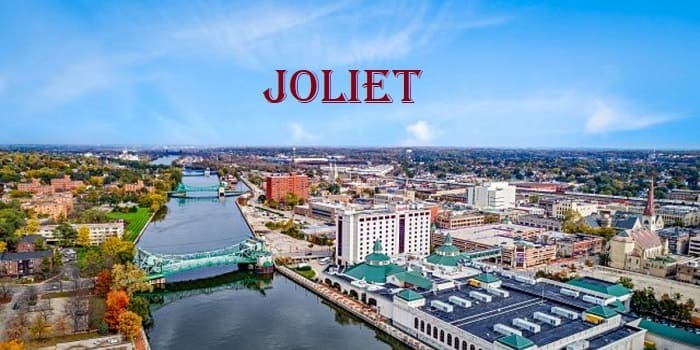
What is it about Joliet? Diversity.
Joliet has a racially and culturally diverse environment where daily exposure to white, black, and brown people is commonplace. The city of 150,000 is currently comprised of white (64%), black (16.7%), and Hispanic (32%). Regardless, Joliet roughly reflects the national statistics. (White 76%; Black 13.4%; Hispanic 18.4%) Chances are that most residents don’t even think about it.
Without a doubt, there are sections of the city that are predominantly one color … as are the churches. (So much for “love thy neighbor.”) And with this kind of diversity comes some conflict and dissonance. But overall, racial harmony usually overrides contentious behavior.
Because I live in Joliet at various times, I witness racial harmony that is absent in Arvada. Black, Hispanic, and white people mingle, work together, eat at McDonald’s, and shop at Jewel and other stores on the west side. For religious services, I attend mass at Sacred Heart on the south side where the attendees are quite diverse.
I believe in an America where Black, White, indigenous, Asian, and Hispanic folks will ultimately understand each other and will embrace the notion that diversity and harmony can exist.
“The diversity in the human family should be the cause of love and harmony, as it is in music where many different notes blend together in the making of a perfect chord.” Abdul-Baha
Abdul-Baha
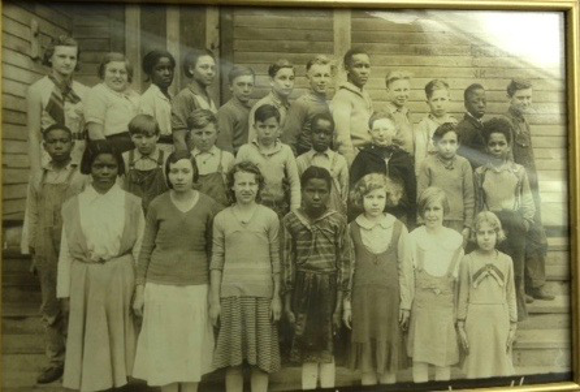
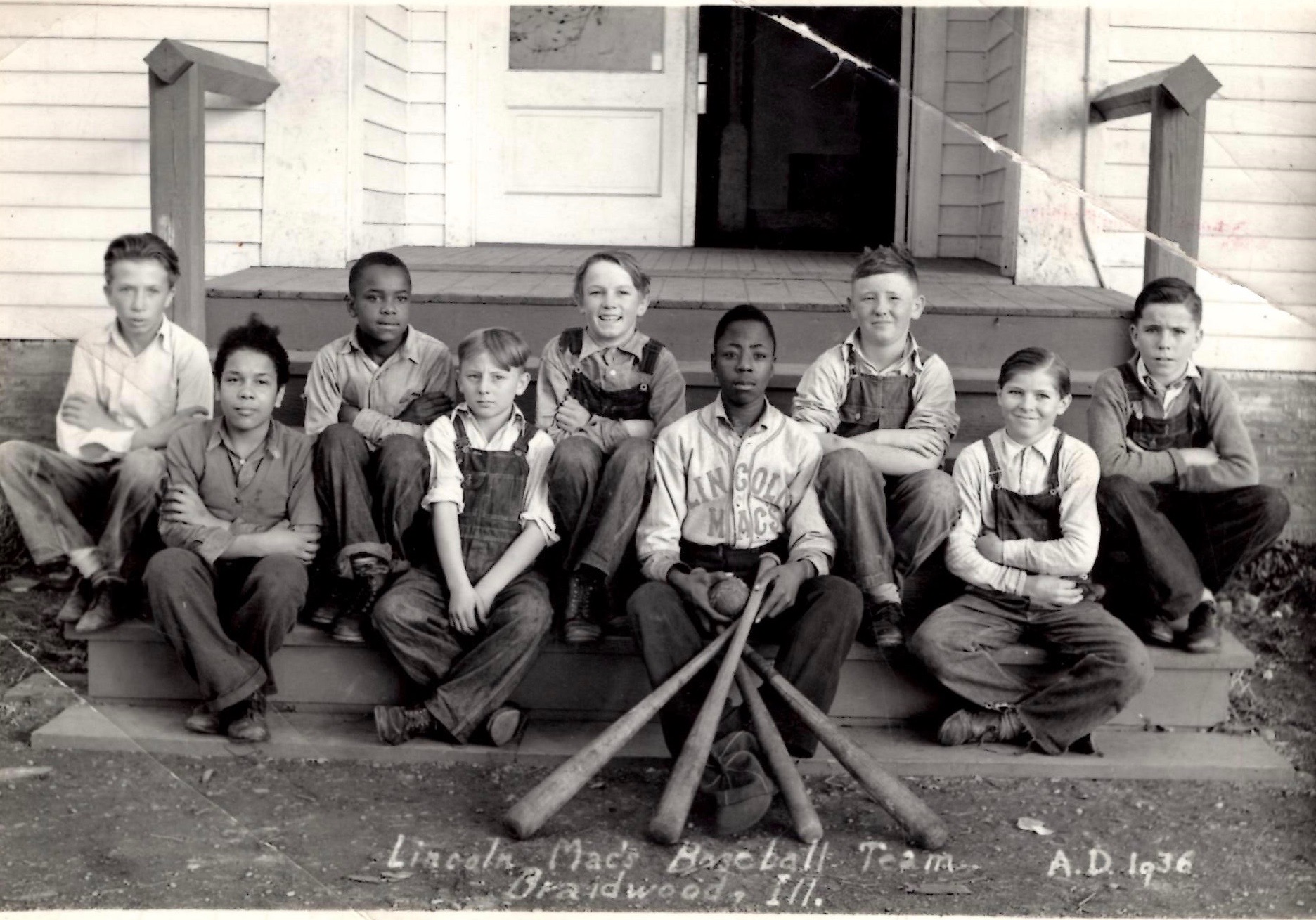

 Braidwood Beginnings