“There are these two young fish swimming along and they happen to meet an older fish swimming the other way, who nods at them and says, “Morning, boys. How’s the water?” And the two young fish swim on for a bit, and then eventually one of them looks over at the other and goes “What the hell is water?”
David Foster Wallace
“What is Water?”
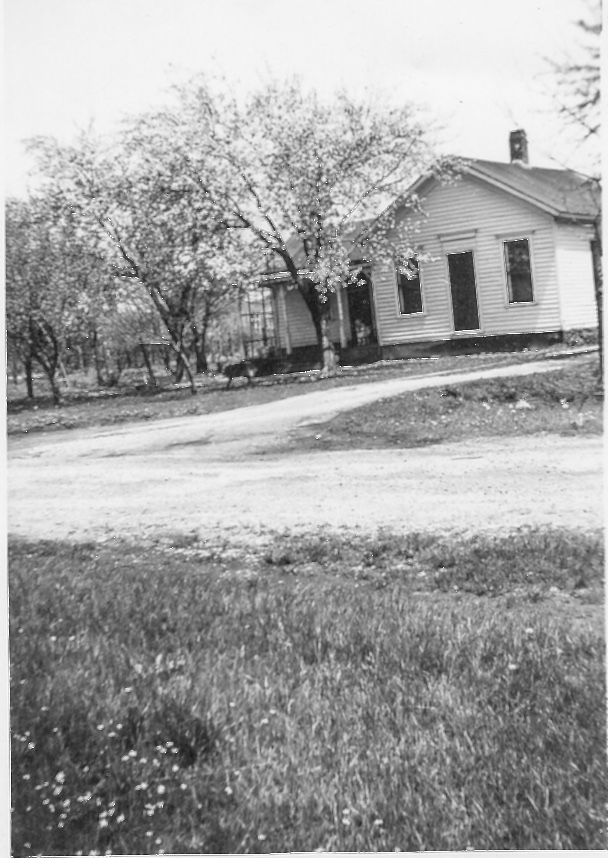
For the first 12 years of my life, my parents, my sister, brother, and I lived in a small, rented house on the east side of Walker Street half a block south of Main Street. If I walked out of the front door and took 100 steps to my right, I might have touched home plate. Across the graveled street was my Grandma Jeffrey’s house.
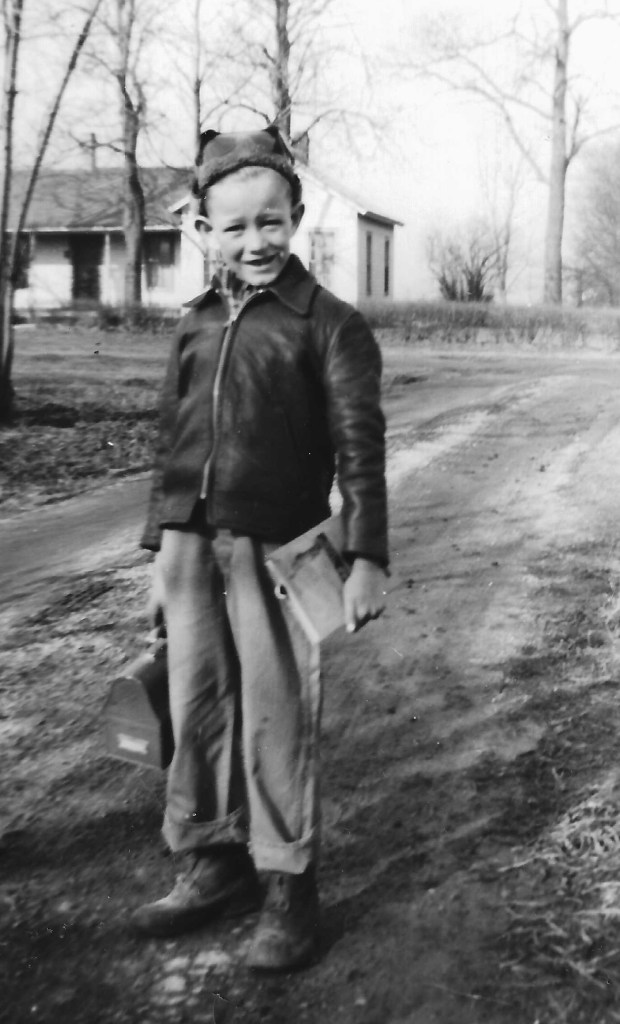
Until I was 7, if someone would have asked me what it was like to live in an 1100 square foot house with an outdoor toilet near the barn in the back yard, I would have been lost for words. This was my reality, a reality that was normal because that’s all that I knew. Like the two young fish, I would have been puzzled by such a question.
At least until I was 18, my five senses delivered an environment that was shaped by everything that I consciously and subconsciously absorbed. I was informed (and formed) by conversations, schooling, emotions, movies, books, magazines, newspapers, and television programs that flooded my brain with images and ideas that produced a reality that I thought of as “normal.”
Flooded with Misinformation
Gradually, the information that nurtured my sense of reality faded as I learned that my idea of normalcy and reality was peppered with misinformation and selected fabrications. That:
- Men were superior to women
- Women’s place was in the home
- White people were smarter, more trustworthy than African Americans
- Except for Tonto, Indians were devious
- There were no black cowboys
- There was one true religion
- Non-Catholics would never go to heaven
- God favored America
- Slaves were happy on plantations
- Etc.
My uninformed, unquestioned reality presented a framework of normalcy that had to be challenged through the pursuit of truth, information, and new experiences.
Later Life Experiences
Consider that my hometown, Braidwood of the 1940s and 1950s, had enough of a Black population that white and Black people knew one another as neighbors in our small (1,200 population) town. Certainly, racism and prejudice existed and was acted on, but we did know one another. Few area small towns had this situation.
Attribute it to the way I was raised and the experiences I have had over my 81 years on earth. My comfort zone and environment became most complete when surrounded with people and cultures that complement mine. The contrast with my whiteness enlivens and enriches my soul in ways difficult to describe.
- Attending Lewis College gave me the opportunity to know my Black teammates and a roommate.
- Working at Lewis provided ample occasions to build relationships with Black students and Black colleagues.
- Observing racial conflicts during the 1960s and 1970s both at Lewis and in Chicago.
- Having a 25-year working relationship with Puerto Ricans.
- Enjoying a multi-year working relationship with Filipinos.
Cumulatively, this transformed me into someone different from many of my white peers. I had evolved from accepting an early false reality into a fundamentally more factual understanding of history and fellow human beings.
Old Realities Never Completely Go Away
The specter of my old reality, however, would never totally evaporate, but rather would recede to the backwaters of my heart. It would lay stagnant and occasionally compete with rational thinking. Fortunately, my brain conducts a series of “checks and balances” that ultimately override early misinformed realities.
But this is not to say that I don’t continue to embrace vast harmless elements of my old reality with traces of fantasy and nostalgia. I do this with fondness and a smile as I write.
I understand my own and subsequent generations’ unwillingness to part with old realities. It is comfort food for those of us who hunger for an era that was a façade, an illusion that preserves ignorance and serenity of days gone by. Behind that illusion lay graveyards of inequality and injustices that we don’t want to resurrect. But unless we acknowledge it and conduct an autopsy, our country will continue a path to ignorance and avoidance, unwilling to face hard truths.
“We accept the reality of the world with which we’re presented. It’s as simple as that.”
Christoff, The Truman Show
This is not an apology for the culture that engulfs my family and my friends. Rather, it is a way of witnessing and embracing the beauty and our differences while enforcing the belief that we all can contribute to the unique American landscape. The “normalcy” of early years needs to be challenged.

 Braidwood Beginnings