Allegiance is: “…the obligation of a feudal vassal to his liege lord; the fidelity owed by a subject or citizen to a sovereign or government; the obligation of an alien to the government under which the alien resides: devotion or loyalty to a person, group, or cause.”
Merriam-Webster Dictionary
In a world/country divided into many subparts, allegiance may be to the White Sox, close friends, family members, political parties, my country, my religion, or my college or high school. These allegiances flow easily and plausibly.
My questions: “Do these various allegiances preclude us from empathizing with the strangers with whom we share the earth? Shouldn’t the natural human bond be stronger than anything else?”
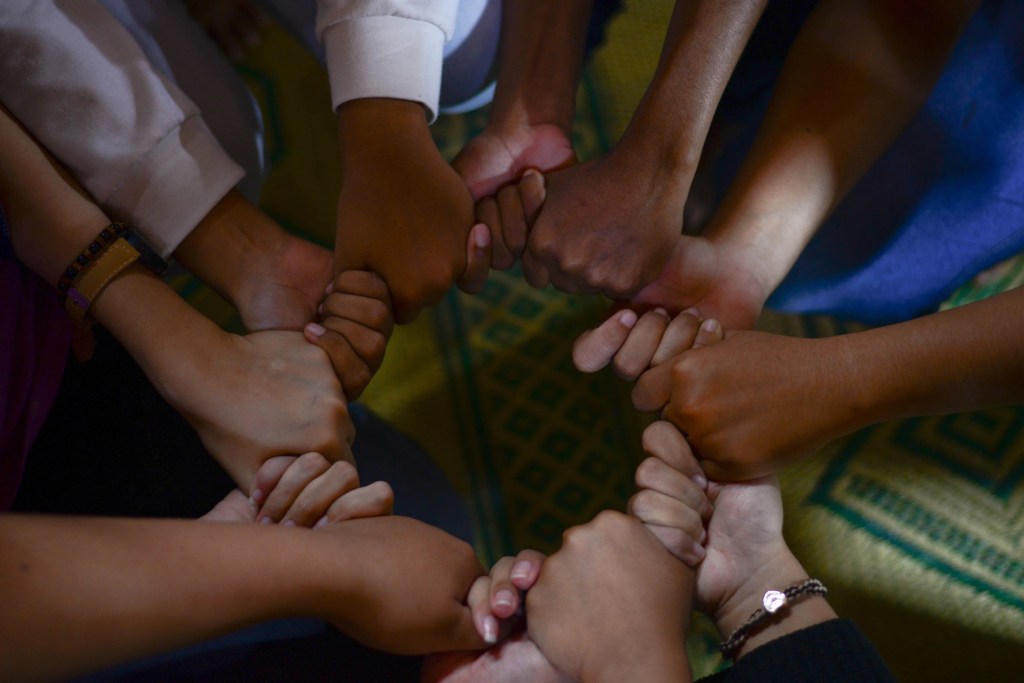
What about first allegiance to fellow human beings?
Who among us wouldn’t help someone who has fallen? Empathy for our fellow man or woman is built in us because that is what keeps our specie intact and evolving. Only a damaged, self-centered person might enjoy seeing another human suffer. Contrarily, it is common to witness heroism, regardless of differences, on behalf of disaster victims, human or otherwise.
To make a positive difference in another’s life gives us a sense of gratification and completion.
Competition in sports will give rise to behavior that verges on antipathy/hostility for the opponent. It’s normal to cheer a victory even when that victory depends on another’s failure. But most of us realize that it is only a game and that no one was injured or died. After the game, the winner celebrates but gives credit to, and respect for, the worthy opponent. That is sportsmanship.
In actual life, empathy can overrule indifference or antipathy. But empathy, to understand and share the feelings of another, is much easier if I can see myself in the other.
“If you feel pain, you’re alive. If you feel other people’s pain, you are human.”
Leo Tolstoy
Personally…
As an old white male who has similar life experiences with many other old white males. I can more easily relate to these people. It is less easy to relate to, and empathize with, people who are different from me. Especially if they are of different genders, darker skin, non-English speakers, or have widely different cultures and perspectives on life.
Fortunately, my jobs in higher education involved extensive domestic and international travel. Trips to the Philippines, China, and Central and South America provided opportunities to work with people in cultures vastly different from what I had known. Having been in all 50 states, I also became aware of the many differences even within our own country. (Braidwood and Wilmington also have their own cultures.)
Relating to people who are different from me – and why/how they are different – is not easy. If I never have the occasion to meet them, talk with them, or learn more about them, I am less likely to find kinship with them. I may even take pride in my ignorance.
Working on my family tree, I find it amazing how many blood relatives that I have. People that I have not met. They are 2nd, 3rd, and 4th cousins. Yet, because we share DNA, I feel a kinship exists. I also feel an affinity with many folks who not blood relatives because I know them as former students, fellow athletes, colleagues, and just plain friends.
I still have a lot to learn from those who are different from me. Even though I am physically isolated from them, I can conduct my own research via the computer, books, and television documentaries that challenge my isolated self. All it takes? Curiosity, humility, questioning, and critical thinking.
And the will to do it.
Therefore…
Before any other “allegiances,” I pledge allegiance to my fellow human beings, regardless of our differences. You, you, and you. And Lord only knows that I am not without prejudices. One cannot escape the imposed cultural conditioning during our lives. Beginning at childhood and continued through adulthood.
“I really don’t like that man. I must get to know him better.”
Abraham Lincoln

 Braidwood Beginnings