“Preach the Gospel at all times. When necessary, use words.”
St. Francis of Assisi
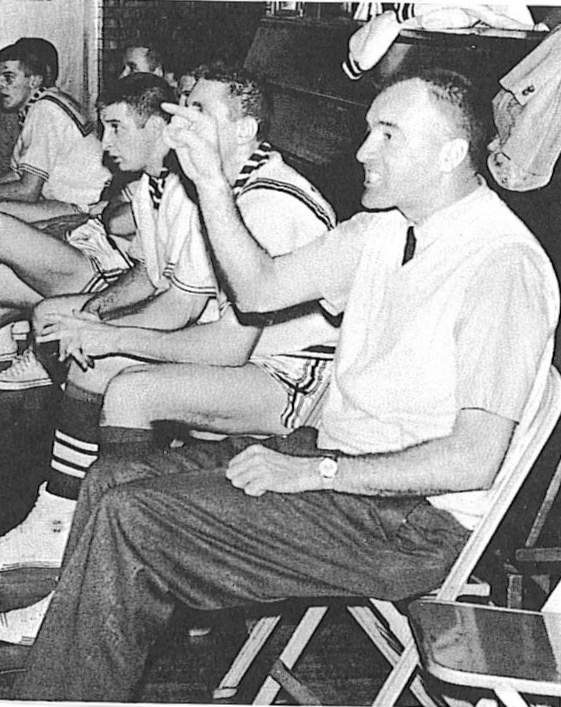
In prior blog articles, I have written about lessons I learned from the greatest coach/teacher a person could have. I played basketball and baseball for Coach Gillespie for four years and then had the opportunity to be his assistant coach for another five years. After that, I remained in contact with him until he passed away in 2015.
Most of the lessons I learned from Coach came through his actions rather than words. I would observe and emulate as much as humanly possible. Several of my close friends and teammates picked up lessons that I had not first noticed, but upon reflection I found that they saw and heard things that I overlooked. These lessons were then added to my notes about Gordie.
“You don’t have to go first class, to be first class.” Coach Gillespie.
We travelled in buses, vans, and cars that were not Greyhounds or Cadillacs. The buses would break down periodically and the cars might be owned by two of the players and coaches. If Gordie volunteered to drive one of the cars, all of us would encourage him to be a passenger. If he drove, he might be having a conversation with someone in the backseat while the rest of us would have our eyes frighteningly on the road. (Most of us have one guardian angel, Gordie had two.)
But regardless of our transportation mode, we conducted ourselves in a professional, respectful manner. It was important to Coach that we represent our team and Lewis in the best possible light. Our personal appearance, likewise, was always presentable despite the long trips. Our uniforms might be old, but they were worn with pride.
To this day, I find myself “dressing up” even on long flights. It might be a jacket, tie, and polished shoes or less formal, but never jeans and tee shirts. “Act as if you respect yourself, and others will treat you the same way.” In airplanes today, you will appear to some folks as “overdressed” but again, you are representing not only yourself but your employer or family.
Never Quit Learning.
We marveled at how Gordie became a better coach every year. He not only adjusted to the newer generations of kids, his practice and game coaching improved with each passing year. When lecturing at coaching clinics, Gordie would share everything that made him successful, even while some of his coaching opponents were in the stands. Why would he tell all? Two reasons come to mind.
Gordie was always concerned that the sport he was coaching could be improved only if he shared the secrets. In this way, the student/athletes from other schools could become better players. It would help upgrade the level of the sport by sharing the wealth.
Secondly, by the time the opposing coaches figured out how to implement the upgrading of skills, Gordie would have learned more again during the next year. He was always becoming a better coach year after year and stayed ahead of the pack.
Remember that Gordie was an outstanding football coach on the high school and college levels despite the fact that he had never played the sport. He often spoke of his mentors, football coaches at Lewis in the early 1950’s as well as outstanding coaches at Joliet Catholic where he was an assistant for several years before becoming head coach. Once again, he demonstrated to all of us that continued LEARNING, year after year, was critically important. I am sure that he was still in the learning mode when he retired.
Show Optimism When Down, Caution When Ahead.
Overconfidence when the score is to your advantage can be a game changer. Up by 6 runs in the ninth? Don’t put the bats in the bat bags. Up by 20 at half time? You better play harder the second half. Early optimism in anything can easily set you up for failure. You can’t be fired because you are too valuable? That has been a sad tale for many employees.
By the same token, Gordie showed optimism and cheered us on when we were down. By down, I mean as a team and individually. Sure, I have struck out 3 times in a game and coming up again for a fourth time can be stressful. But, somehow Gordie would show confidence in me that I would get a hit next time. Missed my first 8 shots? Yup. Gordie would still believe that I will make the next 8 in a row.
His confidence and optimism, although tempered by the reality of the situation, was contagious among our team, even in defeat. “We’ll get ‘em next time.” We believed that we never lost a baseball game. We merely ran out of innings.
Don’t Show Emotion…When Doing Something Well… Or Poorly.
Celebrations are going to happen when your have accomplished something that is meaningful. Scoring a basket to win the game or getting that big hit? Don’t show up the other team by a flamboyant display on the court or field. Don’t act as if it was the first time you have gotten a hit. Celebrate as a team, but show a little restraint, please.
Conversely, keeping your head up after making a key error or striking out with the tying run on third can be deflating both to you and your team. Profanity will not yield a replay. Blaming the umpire won’t reverse the call.
The few times when Gordie did show emotion usually involved defending his players. As a first baseman, there was a time when a runner intentionally stepped on my heal as I stretched for a throw. In basketball while going for a layup, a defender might “undercut” the shooter. In either case, the player is in a vulnerable position for a serious injury. Gordie would waste no time in exploding from the bench and rushing out on the field or court in defense of his player.
You Can Measure Speed and Strength, But Not the Heart.
How fast does he get down to first? What does the radar gun say? How much can he lift? How high does he jump?
We have measurement instruments for all of these categories, and coaches base their judgments on these statistics. Less measurable are game instinct and smartness. But there is no known radar gun or stop watch for “heart.”
Intensity, focus, and desire are all attributes that overcome many of the so-called “deficiencies” and can inspire the rest of the team. Coach Gillespie had a unique talent for seeing the hidden gem within his athletes. He could observe and assess “heart strength” quickly and unfailingly while other coaches seemed to have blind spots. He could also find untapped talent in the most unlikely raw athlete.
Final Comment
Anyone who has been coached or taught by Gordie will have stories about the Coach. He taught us by what he said and how he acted. Yes, all of us have attempted to style some of our behavior and attitude after him. In this attempt, we usually come up short as there has been only one Gordie. I am consoled in the reality that if I can merely emulate just a few of his remarkable gifts, I will have been a much better coach, leader, teacher, parent, and grandparent. His gift to us has been himself.

 Braidwood Beginnings
Well written Tom! You really captured Geordie in these additional notes. Was transported back in time reading it👍
LikeLike
I never play for him but I clearly remember beingat a football pracice and him saying, “You play like uou practice.” That has stayed with me since 1958
LikeLike