
“Preach the Gospel at all times. When necessary, use words.” St. Francis of Assisi
Over the years, a lot has been written about Coach Gordie Gillespie. I decided that most of these short articles should be put into one document in order for my grandkids, young coaches, and aspiring leaders in any field to contemplate the comportment standards that Gordie stood for.
Then it struck me that my perspective was only one of a myriad of Gordie players and students who likely have different, but equally important views of lessons learned from this great mentor and role model. There are literally hundreds of “disciples” of Coach Gillespie who will attest to the profound difference he made in our lives.
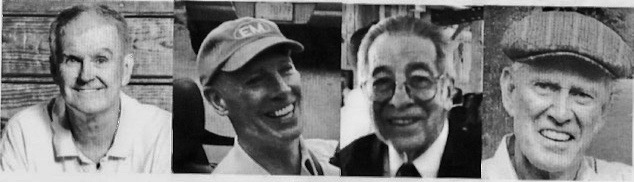
Four of these “disciples” who have written and spoken extensively on “Lessons We Learned from Coach Gillespie” agreed to combine their efforts by articulating briefly some of their lessons by stating key ingredients of leadership, coaching, teaching, and personal conduct. All four have dedicated their lives to teaching, coaching, and mentoring at the high school and college levels. These disciples have played for and/or coached with Gordie and were teammates at various times. Their lessons are in their own words.
The “four Disciples” in this post are: Pat Sullivan, Tony Delgado. Tom Kennedy, and Ray Coughlin.
Gordie Gospel: According to Pat
Something about Pat: https://coachpatsullivan.com/home-2/about-pat/

Humility: Gordie could very well be considered the greatest coach in the history of American sport. I worked with him for 25 years at St Francis. Never ONCE did I ever hear him talk about his coaching ability, record, or prowess.
Be in The Moment: We could have a meeting where Gordie was quite angry – very angry about some upcoming decision to be made at St Francis. Immediately after the meeting, Gord would run into an athlete in the hallway and his whole attitude changed. No anger – just a heartfelt greeting to that athlete! He was so glad to see him. He was completely in a different moment.
Eye Contact: There could be 1000 people in a room, but the person Gordie was talking to was the ONLY person in the room and his eyes were locked into that person! He gave his full attention to that person.
Humor: Gord had a great sense of humor and an infectious laugh. We had a certain female faculty member who gave athletics a hard time through the years. I’ll never forget the day he told me her daughter was going to marry a BASEBALL player! He thought that was pay back and loved it!
Love: I’ll never forget the day he spoke to about 200 coaches at one of our basketball clinics. Paraphrasing, he began by saying, “Coaches, do you love the kids?… What time is it? 6:00pm. Please do me a favor… If you don’t love the kids, quit coaching at 6:05!” Does that sum up his coaching philosophy and his philosophy of life!
Anger: Just like Jesus in the Temple, Gordie could get extremely angry, most especially at our meetings. But his anger was righteous and just. It emanated from his PASSION for the beliefs he held.
“Give me your eyes:” Gordie used this expression constantly, especially with his football players when he wanted to make a special point. I took it to mean if he had your eyes, he would have your brain and your full attention. I stole this expression from him and used it often at the conclusion of time-outs. Al McGuire once sat next to our bench during the championship game at the National Catholic Basketball Tournament. I must have used this expression a number of times because Al used it the next week in an NBC telecast explaining to his listeners why coaches said this during time-outs
Failure: I will never forget Gordie’s attitude when I failed our team. I came into a game as a relief pitcher in a tournament game in the CCAC, a tournament Lewis almost always won. I came in in the 7th inning, got 8 outs in a row, only to give up 3 straight hits in the bottom of the 9th to lose the game. This was my sophomore year, so it happened 50 years ago, but I still remember Gord after the winning run scored. He was at the mound before I could leave it and said, “You walk off this mound with your head high. You will win more games for Lewis than you will ever lose.” I hope I treated our basketball players the same way at the game’s end when they erred.
Work Ethic: Most of us coaches coach one sport. When the year is over, for the most part, we are exhausted. The seasons are long and hard! Where did Gordie find the physical and mental energy to coach three sports all those years while completing his AD duties! Could anyone match his work ethic?
Listening: Gordie was a superb listener! When the Chicago Tribune identified the best football players ever to play in Illinois high schools – Butkus, Grange, etc., – they elected to name a coach for that group and, of course, they named Gord. Now I’d like to take you to a Joliet Catholic football half-time. It was the Socratic Method. Gord would name a play, the players would tell Gordie how the opponent was guarding it, he would listen intently, then make an adjustment in the play for the 2nd half. So, here is this famous coach LISTENING to 15-18-year olds to make game adjustments.
Gordie Gospel: According to Tony
Something about Tony: http://www.naia.org/ViewArticle.dbml?DB_OEM_ID=27900&ATCLID=211786016

More than a Coach: Playing for coach G and coaching with him for a number of years, he became more than a coach. He became a second father offering help and sage advice as needed.
Counselor When Needed: When you did something you should not have done coach G did not berate you, he counseled you.
Friend and Supporter for Life: When you were done playing for coach G. he was not done with you. He willingly supported and helped his former athletes with the career choices they made.
Color Blind: Before the civil rights movement got into full swing, coach G in the late 50’s and early 60’s was already recruiting dark skinned athletes to play with light skinned teammates’ and he treated them all the same.
The Gift: If I had not played for coach G, I probably would not have known him. That thought always reminds of what a privilege and gift I was given. I am sure that almost anyone who has played for coach G feels the same as I do.
Integrity: Coach G once went out to argue a call and an umpire named Grimes said, “Gordie, do you want the call in your favor, or do you want the correct call?” Coach G withdrew to the bench. The lesson his coaches and players learned is that the game must be played with integrity.
Motivation: In my freshmen year we were waiting in a hotel lobby in St. Paul, Minnesota before leaving to play an afternoon basketball game. While waiting to depart we were watching a Big Ten game involving Illinois and Indiana. Both teams had some outstanding D-1 players. I heard coach G say to coach Ruddy just loud enough for me and my teammates to hear, “I wouldn’t trade any of our players for any of the Illinois or Indiana players. I don’t know how my teammates felt, but I felt pretty good.
Treat Men Like Men: Coach G would never question a player’s manhood. He would never say things like you’re a quitter, or you don’t have the guts to compete. Nor would he ever question a player’s injury.
Win or Lose, When the Game is Over, It’s Over: the course of a game, coach G heatedly and vociferously might be making some strategic comments to a player, players, or the entire team. Yet 45 minutes after the game when the players and coaches were having dinner, you wouldn’t know it was the same person. He would be joking and laughing with the players.
Responsibility and Giving Back to the Community: the mid 70’s I had two nephews 8 and 9 years old who were playing little league baseball. One day their mother, my sister, said to me, “guess who is speaking at our little league banquet?” Coach Gillespie. There was no fee involved and coach G was already a very successful and highly regarded collegiate coach. I know he felt it was his responsibility to give back to the community and especially young athletes. I know he has spoken at many, many banquets when asked to.
Modesty: Coach G as a player had an outstanding career in basketball and baseball. He played some minor league baseball. In basketball he was selected by Ray Meyer, the longtime DePaul University coach, as one of the ten best players to have played for him over a forty-year career. Yet never did I hear coach G talk about any of his athletic accomplishments.
Don’t Pass the Buck on to the Players: During a basketball game I was coaching at Lewis University I was off the bench screaming and yelling at my players about the mistakes they were making on the court. A few days later I was having lunch with coach G and he said, many times when a coach is publicly yelling at his players, he is trying to say to the fans’ it’s not my fault it’s the player’s fault. Coach Gillespie didn’t mention my name, but I got the point.
Gordie Gospel: According to Tom

It’s Not about You! “If you don’t like kids, get out.” Those of you who have heard him speak will recognize this as modeled after his patented locker-room speeches, full of Gordie zeal, heart, and emotion. If you make it about yourself, you should exit the coaching ranks.
Leave the Locker Room Cleaner than When You Entered: The locker room is where athletes dressed, undressed, showered, and strategized. After the game, it would have been easy to walk out leaving garbage on the floor, towels tossed around, and water being wasted, especially at away games. Most other teams would have done that.
But the locker room can be a metaphor for life after sports: at home, in the workplace, our community, and the world. Can we truly say that our living, working, and environment will be “…cleaner than when we found it when we entered?”
Don’t show emotion: Celebrations are going to happen when you have accomplished something that is meaningful. Scoring a basket to win the game or getting that big hit? Don’t show up the other team by a flamboyant display on the court or field. Don’t act as if it was the first time you have gotten a hit. Celebrate as a team, but show a little restraint, please.
Conversely, keeping your head up after making a key error or striking out with the tying run on third can be deflating both to you and your team. Profanity will not yield a replay. Blaming the umpire won’t reverse the call.
The few times when Gordie did show emotion usually involved defending his players. As a first baseman, there was a time when a runner intentionally stepped on my heal as I stretched for a throw. In basketball while going for a layup, a defender might “undercut” the shooter. In either case, the player is in a vulnerable position for a serious injury. Gordie would waste no time in exploding from the bench and rushing out on the field or court in defense of his player.
You don’t have to go first class to be first class: We travelled in buses, vans, and cars that were not Greyhounds or Cadillacs. The buses would break down periodically and the cars might be owned by two of the players and coaches. If Gordie volunteered to drive one of the cars, all of us would encourage him to be a passenger. If he drove, he might be having a conversation with someone in the backseat while the rest of us would have our eyes frighteningly on the road. (Most of us have one guardian angel, Gordie had two.)
But regardless of our transportation mode, we conducted ourselves in a professional, respectful manner. It was important to Coach that we represent our team and Lewis in the best possible light. Our personal appearance, likewise, was always presentable despite the long trips. Our uniforms might be old, but they were worn with pride.
Never quit learning: We marveled at how Gordie became a better coach every year. He not only adjusted to the newer generations of kids, his practice and game coaching improved with each passing year. When lecturing at coaching clinics, Gordie would share everything that made him successful, even while some of his coaching opponents were in the stands. Why would he tell all? Two reasons come to mind.
Gordie was always concerned that the sport he was coaching could be improved only if he shared the secrets. In this way, the student/athletes from other schools could become better players. It would help upgrade the level of the sport by sharing the wealth.
Secondly, by the time the opposing coaches figured out how to implement the upgrading of skills, Gordie would have learned more again during the next year. He was always becoming a better coach year after year and stayed ahead of the pack.
Remember that Gordie was an outstanding football coach on the high school and college levels despite the fact that he had never played the sport. He often spoke of his mentors, football coaches at Lewis in the early 1950’s as well as outstanding coaches at Joliet Catholic where he was an assistant for several years before becoming head coach. Once again, he demonstrated to all of us that continued LEARNING, year after year, was critically important. I am sure that he was still in the learning mode when he retired.
The Most Important Person is the One You are Talking With: Although Gordie never said this directly, his actions said it loudly. He was always intent on the other person, their family, their world. Despite the fact that he was the most “decorated” coach (18 halls of fame, most coaching wins of all time, etc.) that graced the world of athletics, he refused to talk about himself. He would consistently and persistently reverse the conversation away from himself.
If humanity is roughly divided between people who are “self-centered” and those who are “other-centered,” Gordie was 99% “other-centered.” By being totally engaged with, and listening to, the other person, Coach remembered almost everything the other person said. Throughout the years, he would not only recall the names of his athletes, but also their spouses and their children. How many of us can say this?
Whether you’re Coaching at Notre Dame or at Boys Club, it’s Teaching Young People: Gordie said this many times, and not many coaches really get it. Because of his reputation, the Coach had many opportunities to “move up” in the coaching profession. Instead he chose to work at small, less prestigious institutions where the focus is on the student-athlete. Which is more important? “Neither,” Gordie would say.
Always Respect Your Opponent and Your Players; Don’t Embarrass Anyone: As a player, I was subjected to being called names that were meant to hurt and distract me. My physical appearance – being extremely thin – in a loose-fitting uniform seldom caused opponents and their fans to shower me with glowing remarks. Some of the least offensive words described me as being able to “take a shower in a shotgun barrel” or described me as a “refuge from the Vic Tanny Spa.” But these remarks were mild compared to some of the racial epithets targeting my African-American teammates.
Coach Gillespie, however, was adamant about the integrity of good sportsmanship and collegiality. The act of name-calling or showing up your opponent or teammate in any way was forbidden. Unlike many coaches who would verbally attack, ridicule, and blame even their own players, Gordie always treated us with respect and dignity. This is not to say that he didn’t raise his voice and chew us out when we deserved it, but he never did this in the public. On an individual and private basis, he would “sandwich” his criticism between compliments and personal strengths.
Show Optimism When You are Behind, Caution When Ahead: Overconfidence when the score is to your advantage can be a game changer. Up by 6 runs in the ninth. Don’t put the bats in the bat bags. Up by 20 at half time? You better play harder the second half. Early optimism in anything can easily set you up for failure. You can’t be fired because you are too valuable? That has been a sad tale for many employees.
By the same token, Gordie showed optimism and cheered us on when we were down. By down, I mean as a team and individually. Sure, I have struck out 3 times in a game and coming up again for a fourth time can be stressful. But, somehow Gordie would show confidence in me that I would get a hit next time. Missed my first 8 shots? Yup. Gordie would still believe that I will make the next 8 in a row.
His confidence and optimism, although tempered by the reality of the situation, was contagious among our team, even in defeat. “We’ll get ‘em next time.” We believed that we never lost a baseball game. We merely ran out of innings.
You can measure some abilities with radar guns and stop watches, but there is no instrument to measure “heart.” How fast does he get down to first? What does the radar gun say? How much can he lift? How high does he jump? We have measurement instruments for all of these categories, and coaches base their judgments on these statistics. Less measurable are game instinct and smartness. But there is no known radar gun or stop watch for “heart.
Intensity, focus, and desire are all attributes that overcome many of the so-called “deficiencies” and can inspire the rest of the team. Coach Gillespie had a unique talent for seeing the hidden gem within his athletes. He could observe and assess “heart strength” quickly and unfailingly while other coaches seemed to have blind spots. He could also find untapped talent in the most unlikely raw athlete.
Gordie Gospel: According to Ray
Something about Ray: https://math.temple.edu/cgi-bin/get_person?uid=coughlin

1. Teach your Teammates – Pass it On
Gordie had a knack for encouraging upper classmen to teach the young’ins—so Stretch talked with us as if we were peers. Gordie encouraged me to talk with Chiggy and others…..fascinating how those experiences convinced me to become a teacher. In fact, I hire undergraduate assistants and do the same thing; I encourage them to talk directly with the students in class.
2. Be Supportive, Even in Tough Times
The most vivid memory I have of our 8 seasons with Gord is when I was on second, one out, Tony on first; ground ball to third, he bobbles it, bobbles it again, I see Tony on second—-Huh!?? “What’re YOU doin’ on second? Oh, I was supposed to run on a ground ball—the third baseman finally picks it up, smiles at me and trots over to force me at third — a mental error you’d scold an 8-year old for making. What happened next has fashioned my life dramatically. I felt miserable. I knew I had to trot past Gord, who was going to let me have it, and then face my teammates who’d really let me have it……..INSTEAD, I ran by Gord, he patted me on the rump as he turned his attention to Joe, the batter, and yelled, “C’mon, Joe!! You can do it! You can do it!” I was puzzled-I deserved a reaming! But I knew I still had to approach my teammates. I felt like running to the parking lot or the showers. Every one of them came over and commiserated with me in some way, punching me on the shoulder, patting the rump, or something.
Why? I learned SO many lessons in that episode. I think I see what he was doing. What’s the primary lesson? Well, if a player didn’t concentrate, didn’t work hard every day, they might have not been “let off” so to speak, but because he knew I (usually) gave 100% he let me off—he was supportive; I should have been reamed, and I wasn’t, not even by my teammates. Because of the way Gord treated me, we ALL became an even closer team. He did things like this all the time. I use the same idea (not nearly as effectively, I’m sure) in my large classes.
These two lessons have a common thread: Teamwork!!
3. Teach the Kid at the End of the Bench
As a freshman, I was the 12th man on our 12-man basketball team, and early on Gordie kept me after practice (I was dead tired and desperately wanted a cool shower) and he told me to go near the basket with the ball, jump up and flip it over my head. I thought he was crazy. He kept after me to keep trying but I felt it was foolish. He then told me it was a “jump hook,” invented only a few years ago by his teammate at DePaul, George Mikan’s brother, who didn’t want to shoot the hook shot the same was as his brother. When he got my attention, he said let’s play one-on-one (with an old guy!?! Huh!!) He beat me 10-0 shooting only jump hooks. I was hooked.
He took the time to give me something I could call my own – the jump hook. I have no idea if he actually thought I’d ever use it in a game, I think now that he was telling me I’m special even though I’m the kid at the end of the bench, who, at the time, was the kid most likely to never get in a game. Then in baseball he did something similar; even though I was not the “kid at the end of the bench” he nevertheless taught me something special. He taught me (again, I went kicking and screaming when he introduced me to the idea) how to catch the low, outside corner pitch glove-up, not glove-down, to give the umpire a better look at it as it hit the corner, giving the pitcher a better chance to have it called a strike. It seemed impossible at first (he kept throwing pitches to me there and I couldn’t move my mitt quick enough and they’d glance off and hit me all over the body), and then it clicked and, like the jump hook, it became my signature talent.
I heard Gordie say, many times, if you make the experience a good one for the kid at the end of the bench, you will reach everyone on the team. Gordie gave everyone a “signature.” This is the antithesis of what too many coaches do – teach mostly the prima donnas.
4. Give Praise When Due
Kenny Nelson tells this one best. Kenny said he had a great game but was exhausted. He walked by Gordie after the game when, with his back to Kenny, Gordie talked with several scouts. Kenny overheard him say loudly, “Are you kidding? Does Nelson have a good curve ball?!? Did you ever see Marichal’s curve, or Kofax’s, or Spahn’s curve? Nelson’s is as good as any of them.” Kenny says he was so pumped by the praise, and motivated to live up to it, he went to the outfield and ran 20 sprints.
5. Praise Effort, Not Necessarily Results
We were playing Illinois Normal. They had just announced they were changing their name to Illinois State, moving to the “big time,” and had no place for little Lewis in their schedule. Oh, how we desperately wanted to whip them!! We had a one point lead, were stalling with seconds to go, I caught a pass, turned sharply and whacked my elbow into the opponent’s chin! Ugh! I just gave them free throws to tie or go ahead. Sure enough, the whistle blew and the ref called a foul – on him, not me. They called time. Gord said, “OK, if Ray misses the first……” What?! Me—miss? I was so nervous I think I missed the rim. They came down and missed their last shot. We won, but not because of my free throw “prowess.” Gord took me aside and said very quietly, “Watch—next time you won’t be anywhere as nervous.” In one short, almost silent sentence, he sent me a huge message, a lesson I’ll never forget.
6. There’s Always Something to Learn; a Way to get Better
Gordie once said to me, “I never played a game for fun.” I thought he was nuts; of course you play, sometimes, just for fun. Then he explained. In every game he ever played there was some skill, some talent, he wanted to improve. I realized he had passed that on to me and I have used it in my entire life. I remember when Sully and I played semipro ball for Nielson’s after graduation. We were in the Illinois championship, about to win and go to Pittsburg for the national tournament and we lost—to a team we were much better than—we hit the ball all over the park….right at them. I shook hands with them after the game and it hit me—I’ll never play baseball again…it’s all over.
I didn’t understand that until many year later Gordie said that and my dejection over losing that game was understandable. “Baseball” was, in part, about getting better, but after losing that game there was no more reason to “get better.” I’ve used that in my career forever, especially in writing where there is always something to learn and many ways to get better. If it’s worth doing, then it’s worth getting better at it.
7. “Practice Makes Perfect” is Wrong: Practice Makes You Better
This is like Gordie teaching us to break our comfort zone. As his success grew he was able to recruit better players, many all-staters, who felt they had little to learn. He told me once about how he had heard Bobby Orr interviewed, and when asked what one part of his career stands out the most, (as everyone expected him to name his Stanley Cups or MVPs) Orr smiled and said, “When I realized that my mom was wrong!” The startled announcer understandably paused, and then asked him to explain. Orr said, “She always said ‘practice makes perfect’ but when I realized there’s always somethingto learn, I realized there is no ‘perfect,’ only ‘better.’ “
Gordie would raise the bar for all of us, just enough so we could do it if we tried, and then you’d hear him screaming, “C’mon, Ray, you can do it! You can do it!!” I‘ve heard him yell that at me my whole life.
8. A Great Leader is First a Servant (This one is illustrated by Mike Spinnozi)
“What specifically did I get from Gordie? A great leader is first a servant; you should serve, not be served. If you have set everything up correctly, provided all the right resources for success, then the effective leader can get out of the way and let the team perform. This means your program is centered on integrity, honesty and character. Most of this philosophy is simple for me; it has its roots in what I first learned from Gordie – compassion, preparation and resilience.The most graphic example I can think of to demonstrate this happened last summer.
I was coaching my son’s 12-year old baseball team. We were playing a key game and we had a 2–1 lead going into the top of the sixth, the last inning. Our opponent was batting with the bases loaded and two out. The batter swung and dibbled one in front of the plate. It looked like we had won the game. Our catcher, Austin Smith, one of our best players, a great kid and team leader, pounced on the ball and had an easy throw to first to seal the victory. All of a sudden his throw sailed over the first baseman’s head and rolled forever down the right field line. All four runners scored and we went into the bottom of the sixth trailing by 3 runs.
As we were getting ready to bat I saw the little catcher all by himself at the end of the bench. He kept his mask on, probably because he didn’t want his teammates to see him crying. I knew I had to be like Gordie. Should I approach him now or wait till after the game? I muttered to myself, “Help me, Gordie; what would you do?”
Even though I wasn’t sure exactly what to say, I knew I had to try to comfort him somehow. As I took a step toward him I saw my son, Michael, sit down next to Austin. He almost whispered to the distraught catcher, “Austin, so what, you made an error, we all make errors, but now we need you. You’re our best hitter.” He handed Austin his bat. “Here, we need this. We need you to hit for us. Let’s win this game.”
The catcher slowly lifted his mask off and took the bat from Michael. He smiled at my son, jumped up and started cheering for his teammates. We started a rally. We scored two runs with two outs and had runners on second and third. Up came Austin. He had a spring in his step. After he looked over at Michael with a smile brimming with confidence, he lined a shot into left field and both runs scored. We won the game.
I gathered the kids for a short meeting as I usually do. I praised them for a wonderful game and told them when our next practice would be. I then asked them if they learned anything from this game. The little catcher almost screamed, “Never give up, Coach.” His comment gave me a chill.
Gordie taught us that we never lost a game; sometimes we ran out of innings, but we would never give up. My son had passed that message on to our catcher. Somehow I had passed onto Michael what Gordie would have said and done, and then he passed it on to Austin. It was one of my proudest moments as a father.”
9. Become a Mirror—Praise your Players, not Yourself
Gordie and Rudy (Dan Reuttiger) had just finished talking to 1000 coaches in Las Vegas. When they left the stage a sinuous line formed to get an autograph from Rudy. A smaller, yet still impressive line was forming to get to talk to Gordie. I was in the front row. Two young volleyball coaches tapped me on the shoulder. As I turned they said, “It seems like you know Mr. Gillespie. We’d love to meet him for a few seconds and tell him how inspiring his talk was, but we have to dash out to speak in the volleyball section of the clinic. Is there any chance you could introduce us to him? We’ll be really brief.”
I was impressed with their enthusiasm so I said okay but I had an idea; I told them, “Tell you what. I’ll make a deal with you. I’ll call Gordie over if you agree to use the introduction as a learning experience.”
They looked at me like I had horns. “What do you mean?” they replied.
“That’s all I’ll tell you. But if I call him over I promise you’ll learn something important. Is it a deal?” Sure, they said.
Gordie gave them his two-fisted handshake. He looked each one in their eyes with that penetrating, loving stare of his, and said, “You are going to be a GREAT coach. I know because you are here, you are learning, you are passionate, and you are going to do great things. It is so blessed of you to come to this clinic, to give of your time to be all that you can be.” He gave them little chance to honor, compliment and praise him. Gordie had automatically clicked into his motivation-mode.
Then one of them cut him off and said, “Gordie, your talk was the greatest … “
He in turn cut them off and turned toward me and screamed, “Now this guy here, this is Ray Coughlin! He caught for me back in the sixties; he was the greatest catcher you can imagine and he had the best jump hook you’ve ever seen and – smart!?! – he’s the head of the math department at Temple University and … “
They burst out laughing!! Gordie was stupefied. What was going on? Why were they laughing? Are they mocking me? What did I say?
I then explained to Gordie the deal I made with them. “I would call you over, Coach, only if they agreed to learn something.”
I turned to the coaches. “What did you observe?”
They bubbled over. “He dislikes praise. He deflects it. He didn’t even let us utter a word of the adulation we feel for him. When we did get a word in, he talked about you, one of his players.” (I silently thanked them for not adding, “Of all people – YOU!!)
“How would you describe what Gordie did?” I asked.
“He became a mirror. When praise came his way he deflected it. He didn’t accept the accolades; he turned to us first and then to you and praised US!”
“So what did you learn?”
“To be a mirror. It’s not about me, the coach, it’s about my players. He uses the energy that others bring to him and he deflects it to lift up his players. We’ve got to do the same thing.”
10. Teach How to Overcome Fear of Failure
This one I’ll put in Gordie’s words: I can think of a dozen examples of when he did this for me.
If you love your athlete, not only will you show him it’s OK to fail, but you’ll show by your example that it’s important for the entire team to pick up your teammates; let him know it’s just a game. It takes discipline; discipline and love. And sometimes it’s hard to do. You feel dejected at the loss, but your love of your kids must come first. That’s how you teach them how to come to grips with fear of failure.
Here is where you’ve got to be smart. Sometimes your player is loafing or not paying attention or not giving his best effort – sure, then you have to get on him. Do what you can to wake him up. But I cringe when I see a kid in a tough, do-or-die situation, who fails and the coach berates him even though the kid gave him his best effort. If you’re that kind of coach, get out!! You have the power to destroy a young person’s self-esteem forever with that kind of loathsome behavior. Use these precious moments of success-or-failure to boost your athlete’s confidence even if; no, especially if, they fail.
We coaches can do this. We can turn kids’ lives around. So many of them are fearful of so many things in their lives – and they shudder away from handling them well. We can show them how to overcome that.

 Braidwood Beginnings
Tom,
This is just terrific! In a certain sense, the volume and quality of each set of memories tells the reader all he needs to know about the great man. You and your three teammates did a fine job.
I think that with some modest editing (mostly to reduce redundancies) you and these men could turn this into something to be published by Lewis in their magazine or as part of an “exhibit” about Gordy. Just a thought.
Be well, Stretch.
Allan
Allan L. Service, Ph.D. Provost Emeritus Regis University allanse@regis.edu 303-883-1589
LikeLike