“It is true, son, but it was only for a little while.”
A little explanation is needed.
I lived in Braidwood my first 21 years with the last four of those years being mostly on the campus of Lewis College (University). After Dolores and I were married in June of 1962, we lived in Joliet at 1107 Kelly, then Crest Hill, and finally Moran and Prairie Street. Our five children were being born between 1963 and 1969 while we were living in Joliet.
In the Spring of 1969, we got word from the owner of the house at Moran and Prairie that her son needed the house and we would have to leave quickly. At that time, I was still coaching baseball and soccer as well as co-directing intramurals at Lewis. Our travel schedule for baseball was very intense and my summers were committed to construction work. The following year, 1970-71, I would be interim head basketball coach at Joliet Junior College while continuing my duties at Lewis.
Dolores’ uncle Tony came to the rescue on such a short notice. Tony was the executor of a vacant house, just outside the city limits, on the corner of rt. 53 and Caton Farm Road. He graciously offered it to our family for no rent for as long as we needed it. How could you beat this?
Uncle Tony did admit that there was a slight water problem and he would try to straighten it out. At this stage, the well water flowed fine, but it was not potable. Not good for drinking or cooking. For the short term I had an easy solution. I would load up two large containers and carry water from Lewis, only two miles away. We didn’t envision that water would be transported in this fashion for two years.
We moved in and found the water situation to be worse than we thought. No chance for potable water for some time but we could manage in the short term. But we would be needing to buy a house in the future despite our skimpy financial resources. In the meantime, we could save some money.
There were other problems with the house and location. It was located within close proximity to Stateville Penitentiary which presented no immediate problem except the one time when a prisoner escaped, and the kids were told by guards to stay in and lock the doors. We also discovered that rats had infested the basement. After several boxes of d-CON, we had the rodent situation under control.
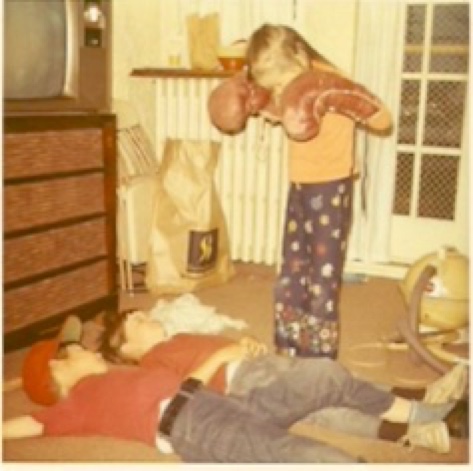
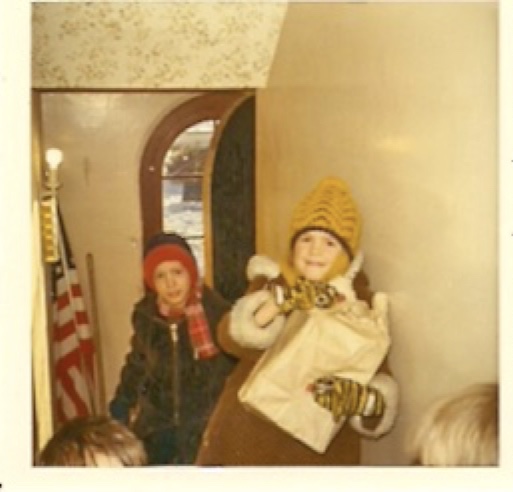
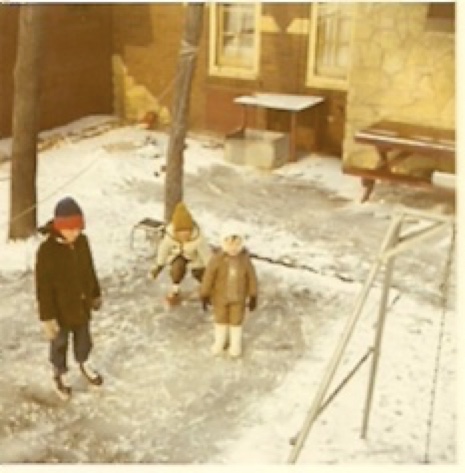
O, another thing that uncle Tony had failed to inform us – a fact that we only learned years later – was that the house, a beautiful house at that, was well known as a house of prostitution. “Elsie’s Place” was quite popular from the 1930’s until 1948 when the proprietor went back to Chicago or New Orleans, as the story was told. Nonetheless, it was once a “famous Joliet area landmark.”
Regardless, in June of 1971 we bought a house in Wilmington directly across the street from St. Rose church and grade school, an ideal town and location for our kids between ages two to ten. After living for two years in house with a shady reputation on a busy highway, we had a decent home in a community surrounded by wonderful people. Because my mom and dad had lived in the Wilmington area since they were born, half the town 2,000 was comprised of relatives.
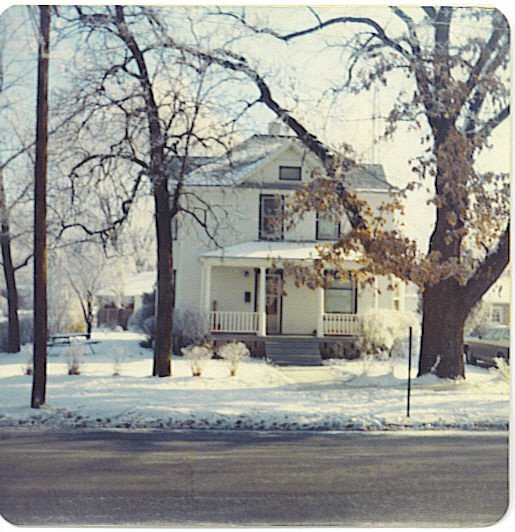
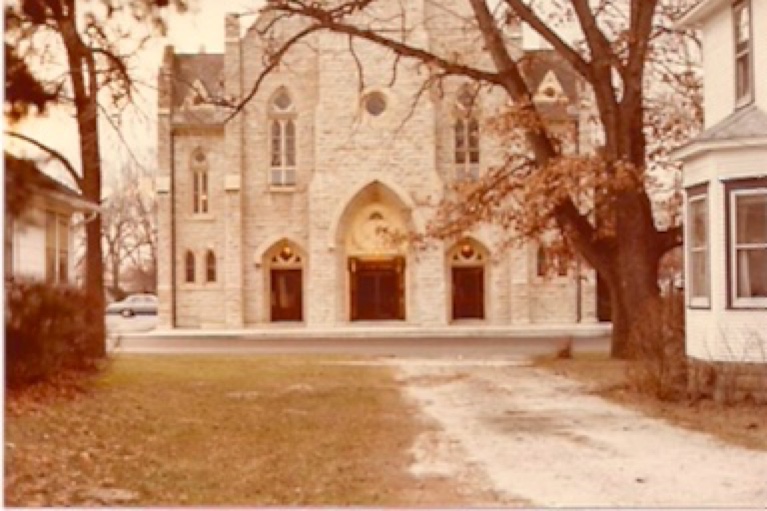
Even after we moved to Colorado in 1986, Wilmington is still considered home for our kids, the place where good memories abound.
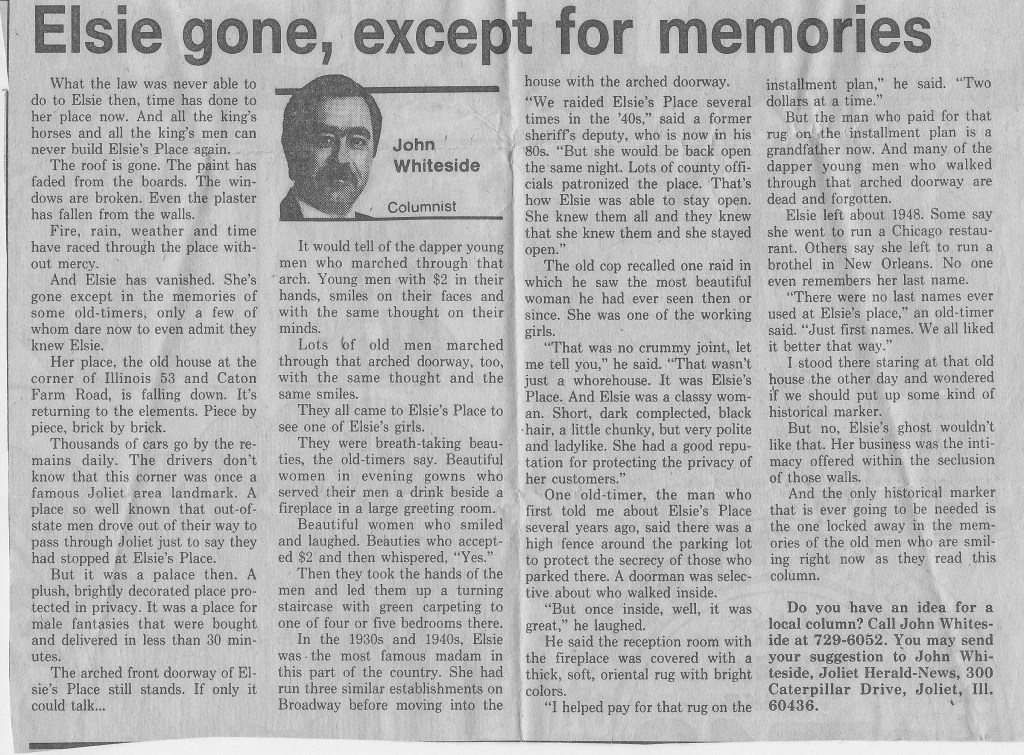
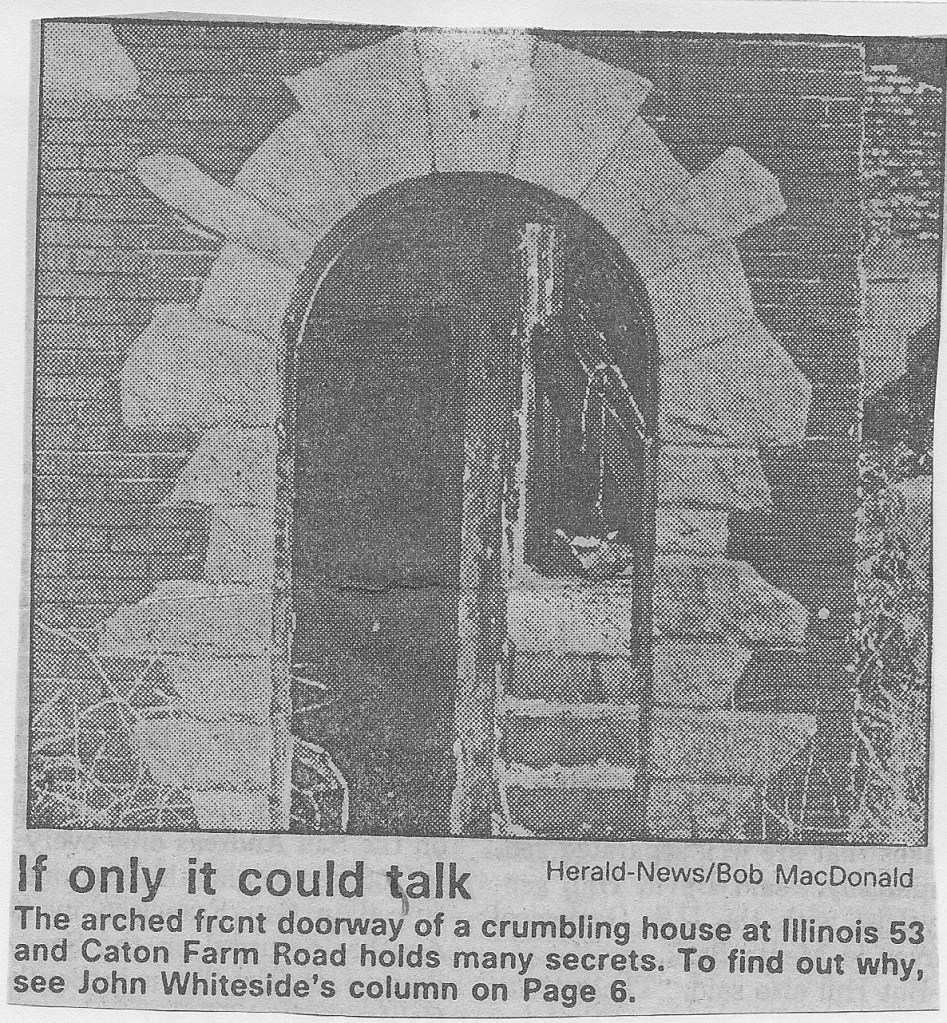
It was also in June of 1986 when a newspaper article was written by the late, great columnist John Whiteside, on the topic of our house on route 53 and Caton Farm Road. “Elsie Gone, Except For Memories” was the headline of the article, with a picture of the house now in shambles. The picture was captioned: “If Only It Could Talk.”
According to the article, in the 1940s…”it was a palace then. A plush, brightly decorated place protected in privacy. It was a place for male fantasies that were bought and delivered in less than 30 minutes.” (More of John Whiteside’s Columns, by John Whiteside, Joliet Herald-News. 1991)
In retrospect, the year that we lived in that house was the most challenging for our family, but primarily for my wife. My work and travel schedule – coupled with the racial unrest on campus that required an “on-call” status for me – placed a terrible strain on Dolores. With five little kids and one car, how she managed everything is beyond my comprehension. I guess neither she nor I had much time to think about it.
In contrast, moving to the community where my ancestors once lived – and where the river’s regenerative waters flowed – proved to be the elixir for my family to bloom. We were far from wealthy but had all the amenities we could hope for.
In the evenings at the house on rt. 53, now that I think of it, I do faintly recollect voices during my dreams. Or were the walls talking?
“Yes, son, it is true. But perhaps you are a little tougher because you spent two years being raised in a (former) whore house.”

 Braidwood Beginnings
Fascinating and full of history as usual. Thanks
LikeLike
Thanks, Karen. We are all lucky to be in the position we’re in. Tough families endure somehow.
LikeLike
How I remember that house! You owe Dolores – I don’t know how she put up with that! If you are smart, you won’t let her read this, maybe she forgot???? Your favorite sister
LikeLike
Now, it wasn’t that bad. But really, Dolores was the real hero throughout our ordeal at that house.
LikeLike