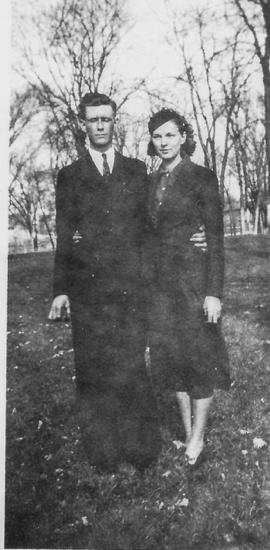
“Your grandparents came of age in the Great Depression, when everyday life was about deprivation and sacrifice, when the economic conditions of the time were so grave and unrelenting it would have been easy enough for the American dream to fade away.” Tom Brokaw
Tom Brokaw
The best way to study history is to start with our parents. Who were they? What were their lives about? What were their most significant moments and years? And what was happening in history during their time? Then, go back one generation further, and so on.
Their history made them what they were, and your life was guided, inculcated, and enculturated by them.
This is why genealogy is so interesting. Through the search, I now have a better recognition and appreciation for the hardships that my ancestors endured. Each time that I discover new information, I am astounded by the adversities they overcame in order to give their children the start they didn’t have. I also have a better understanding of myself.
My hope is that my kids and grandkids, through the medium of my blogs and other documents, will also gain insights and knowledge about their ancestors. The few letters and pictures I have from my ancestors have been the basis for any success I have had in my search.
Starting with my parents, Thomas James Kennedy and Adele Margaret Ginter, I am stunned at their early lives. They started with almost nothing. When mom and dad began their life together, all that they inherited was their good looks and personalities. There was no social security, no health insurance, no Medicare.
Adele M. Ginter (aka: “Grandma Gooch”)
Mom was born in 1918 and raised in a house on rt. 66 between Elwood and Wilmington. Her parents were Minnie Becker Ginter (1891-1940) and Oscar Ginter (1880-1958). Mom had 6 sisters and one brother. Their former home sits on the west side of rt. 53 (formerly rt. 66) as one of four similar houses. (The yellow painted one.)
By most indications, it was not a happy household. Letters from grandmother Minnie repeatedly complained about the drinking habits of her husband, Oscar. He worked at the former oil pumping station near their house but spent after work hours in Wilmington taverns. I would remember Oscar as a cranky, old man walking downtown in Wilmington and who never talking to us.
Over the years I learned that the eight kids couldn’t move away from home soon enough.
Thomas J. Kennedy (aka: “TJ”)
Dad became motherless in 1924 at the age of 10 and by the time he was 13, he was already on loan to various farmers as a laborer to help support his dad, brother, and sisters. His travels later took him periodically to several out of state locations in his efforts to find work during the Great Depression and send money home. His brother, Ray, at 8 years old, was already working on a neighbor’s farm for $30 a month.
Dad’s immediate family was devastated with my grandmother’s early death during childbirth. The new infant, named Margaret after her mother, was given away to another family. Dad’s brother, Ray, was only five and was given to a neighboring farmer but dad refused to accept that decision. Dad walked several miles in his mission to bring his brother back home. The two brothers formed a bond that was strong throughout their lives.
I have a few letters from Ray written to dad that especially illustrate that early bond. The first letter, dated October 3, 1927, was written by Ray at age 8 to my father who was 13 and living and working on farm away from home.

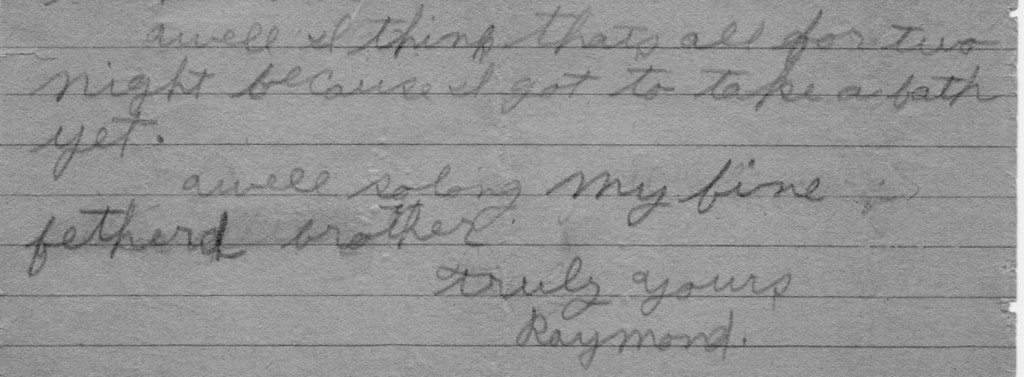
Two older sisters, Florence and Rita, became the women of the family. My despondent grandfather, Dan, apparently lost his spirit to a large degree and the farm quickly declined as the Great Depression hit hard.
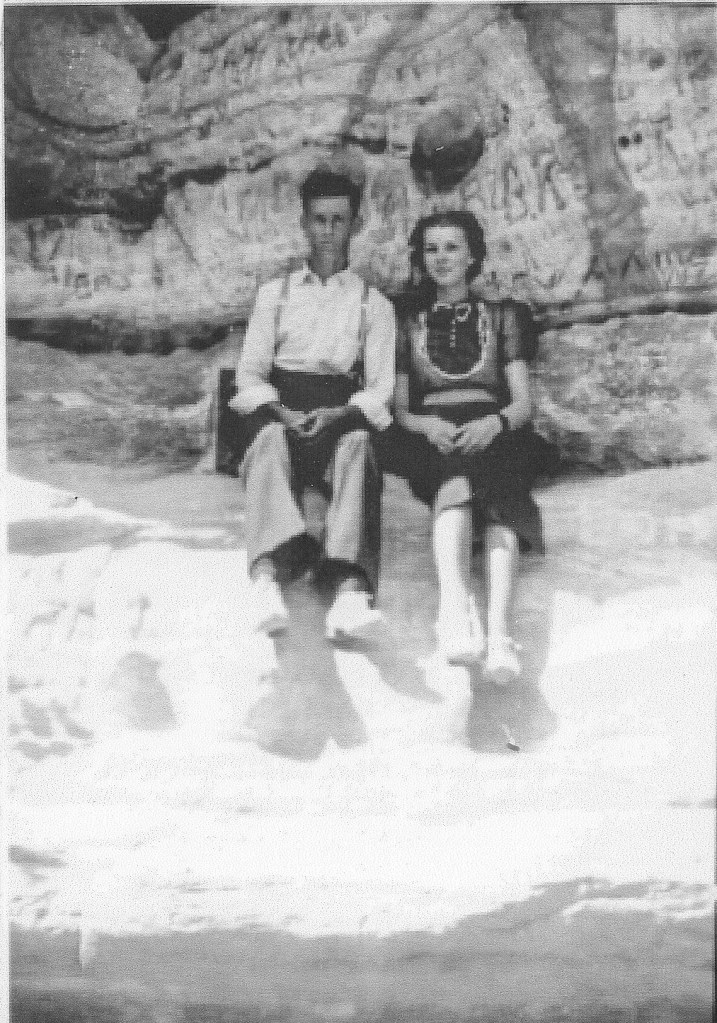
Two Desperate Youngsters: Adele and Tommy
It’s estimated that more than two million men and women became traveling hobos. Many of these were teens who felt they had become a burden on their families and left home in search of work.
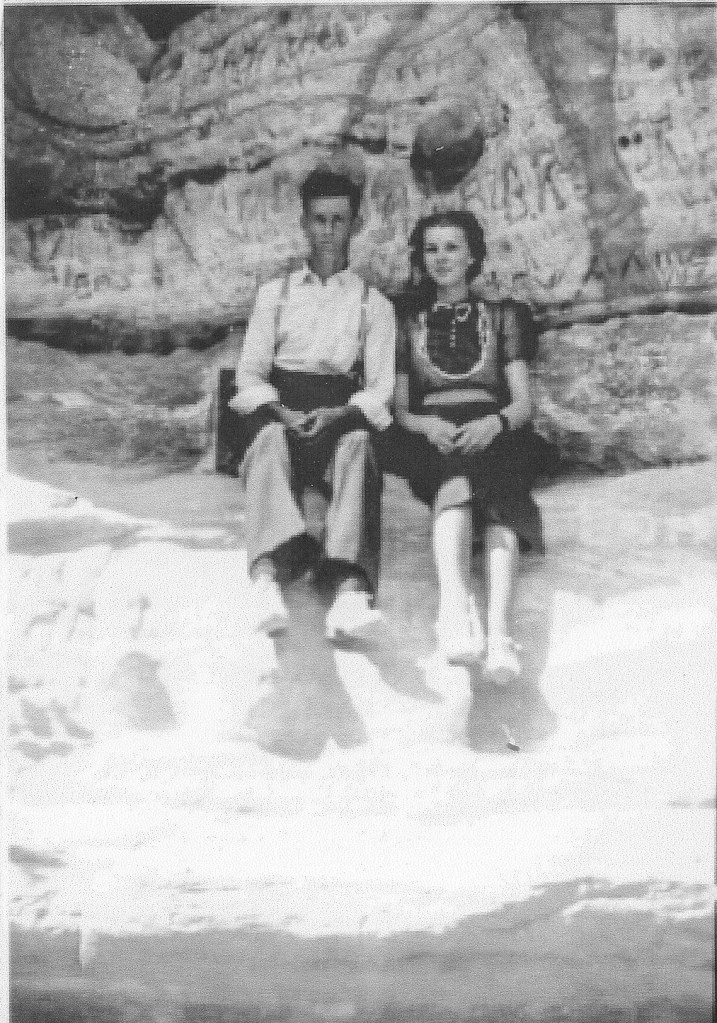
Both would have gone to dances in Wilmington where they met, and the relationship took hold. By 1937, dad was working on the pipeline in Oklahoma, but it was in Sheldon, Missouri where their marriage took place on July 26thof that year. Dad was 22 and mom was 18. All that they had was each other and a car bought for $65.
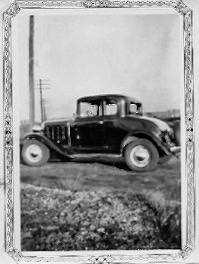
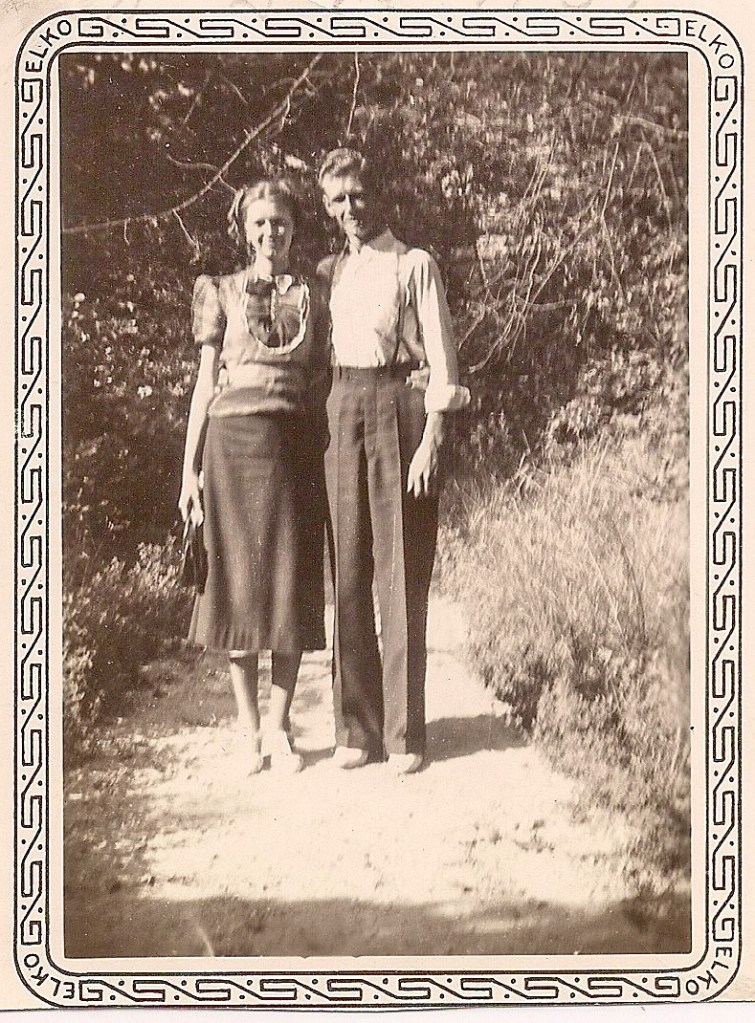
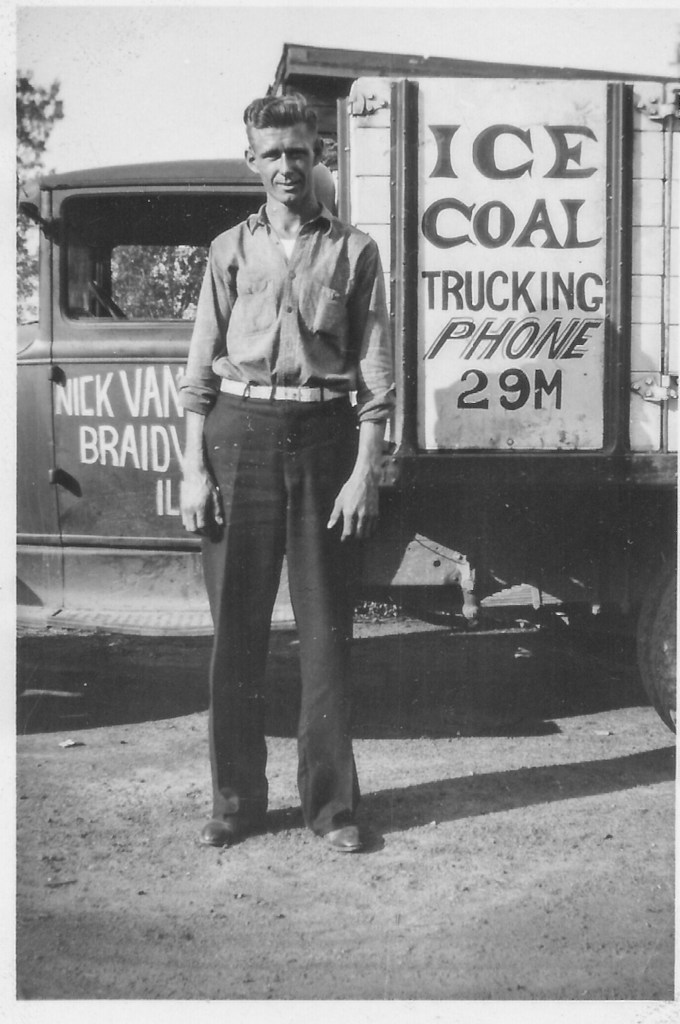
As a young couple, they returned to Illinois about 1938 and established residence in a Braidwood upstairs apartment owned by Verna and Craig Kilpatrick and located on Roundhouse Street. One of dad’s first jobs was to drive his brother-in-law’s ice delivery truck. Owner Nick Van Duyne was married to mom’s sister, Helen.

And it was in Braidwood where I was born on October 8, 1940. My sister was born on January 3rd, 1943. By this time, our family of 4 probably needed to re-locate and we rented ($15 per month) a small house on Walker Street in Braidwood in March of 1943.
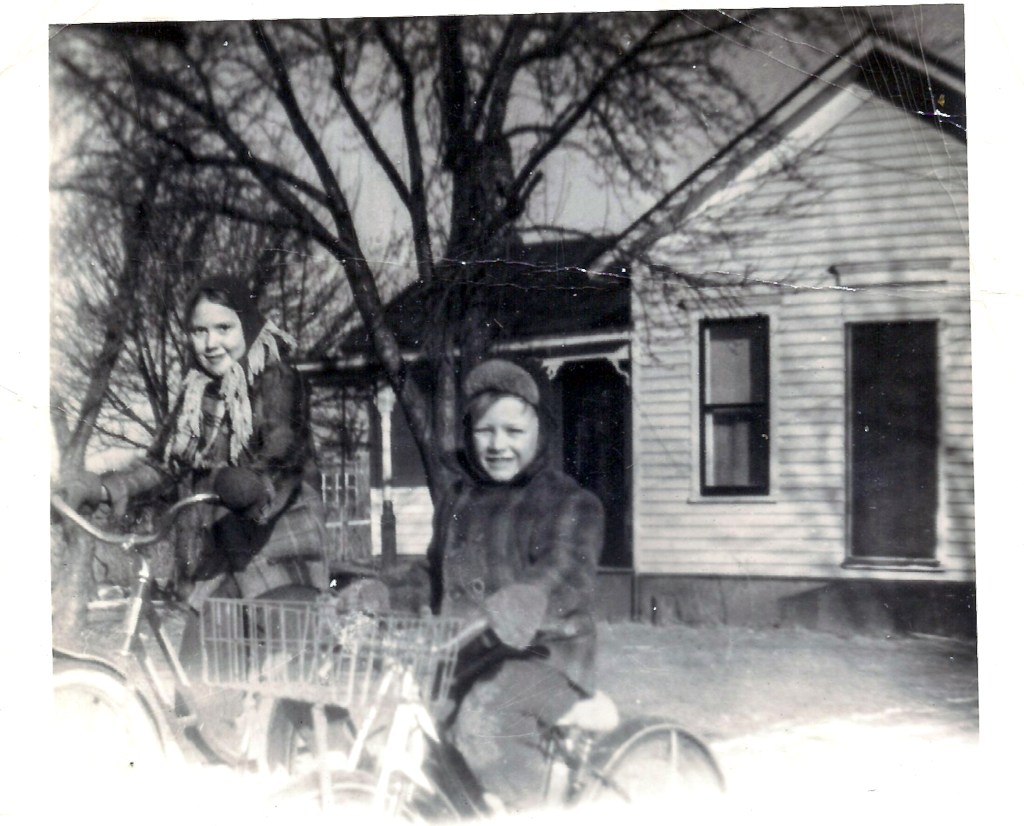
The location and house suited our family verywell. Facing the west, it was behind the high school and adjacent to the baseball field. In the back was a large barn with big double doors and a hay loft, and a chicken coop. A few feet from the coop was our toilet facility, an outhouse.
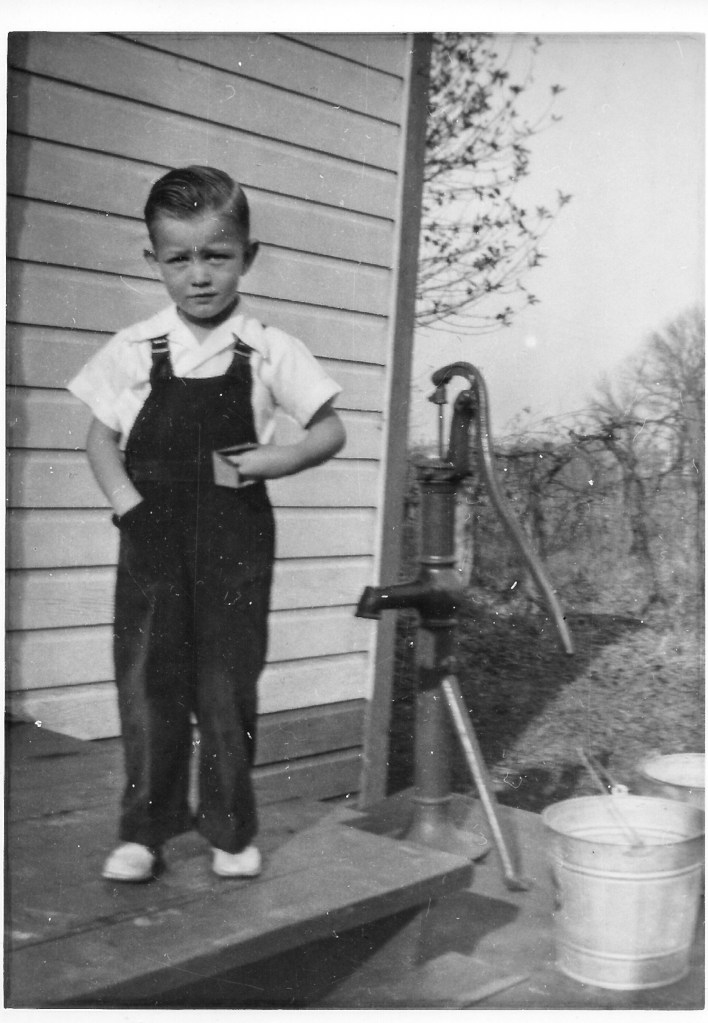
My brother was born in 1949, so our family of five was in dire need of living space. The Walker Street house had only two bedrooms, a kitchen, and a living room. No bathroom. Only about 700 hundred square feet of living space. No central heat other than a stove in the living room and a kitchen stove. Well water was pumped in the kitchen and near the back porch.
We used the outhouse and a chamber pot in one of the bedrooms, a round metal tub for baths, and a coal-burning stove for heat. As we got older, we would take a “sponge bath.” As mom said, “One day, we wash down as far as possible; next day, we wash up as far as possible; third day, we wash possible.”
In retrospect, what seems now to be a trivial decision to move across the fair city of Braidwood was, in fact, a major turning point for mom and dad. Both had endured the Great Depression when employment rose as high as 20% and renting was the only option for many people like us. In 1953, buying a house for $8,000 was risky at best, with dad being in business for himself, driving his truck to various job sites, and the weather dictating work days.
According to my neighbor and adopted grandmother, Mrs. Sarah Jeffrey, the east side of Braidwood was for more elite city residents. I’m not sure about the rationale for this label, but I didn’t recognize my new neighbors as being “above the rest.” (I am not sure what they thought about us, however.) With a gas station and the Rossi Macaroni factory minus any taverns, the east side people were like us. Yes, Henry Rossi, the Barnett’s, and the Weitz family lived there, but I saw this as just another part of my town on the other (better?) side of the tracks.
Our new house on East Main Street was not a big improvement as far as living space was concerned. I doubted that one bedroom, a dining room, kitchen, front room, and bathroom would be adequate, but dad immediately planned to add two bedrooms off the front room. In the meantime, we three kids would establish our sleeping arrangement in the dining room, with a big picture window facing the south.
Within two years, Kenny and I had one of the two new bedrooms, my sister had the old bedroom, and mom and dad had the other new bedroom.
Dad was the big winner in this move. In addition to having a one-car attached garage/utility room, there was a block building in the back that would serve as the garage for his truck and enclosed work area. He also had plenty of room for parking the truck and a tractor.
Gratitude for Our Parents
“There are only two lasting bequests we can give our children – one is roots, and the other, wings.” Hodding S. Carter
Reflecting on my parent’s beginnings and their long trail of seemingly overwhelming challenges, I am left stunned and humbled. Adele and Tom never expressed any anger or regrets about their past lives, but they were irrepressible in their quest that their three kids would have the head start that they never had. Beyond any question or doubt, they were eminently successful as parents and models for each one of us.
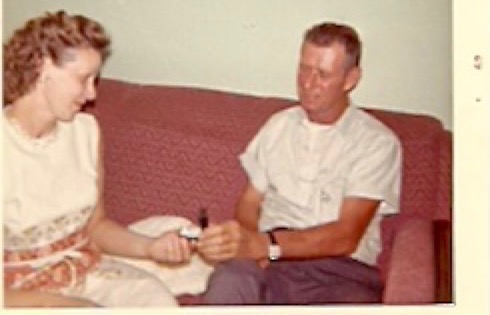
Talk about heroes. There is no doubt that any success that I have enjoyed in my life was minimal compared to what they accomplished in their lives. My only hope is that everyone of us might have the opportunity to learn about our parents – their rugged paths – in order to understand how they sacrificed for us.
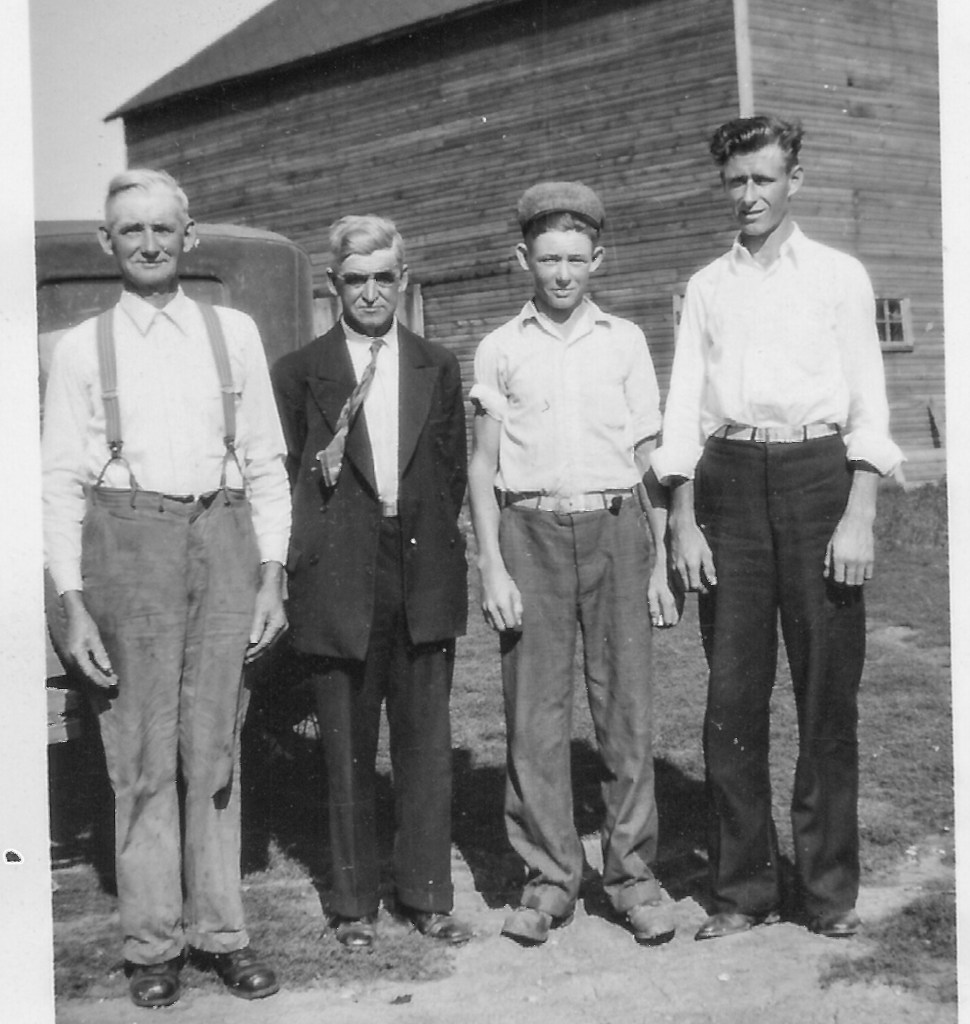


 Braidwood Beginnings
Thank you for this story. It brought back memories of our own parents, for me, Tony Delgado, and the rest of the family. Although we grew up in the city, the framework was the same. We are grateful for our parents also and what they achieved to inspire their children’s successes. (you’ve still got to work on that proofreading though! ha ha)
LikeLike
Hey, Mary. my writing staff consists of me. As you know, proofreading your own work isn’t fool proof. Help me, please. Give me some feedback and I will correct mistakes. Please.
LikeLike
Ha ha! I was a typing teacher and a student not marking an error meant your grade drops for every error not caught, so I kind of have an eagle eye for it. I will certainly let you know in the future.
LikeLike
This is wonderful, Tom!
LikeLike
Thanks, Mary. It is fun writing about my ancestors.
LikeLike
You can read all 43 blogs at trkennedybeginsinbraidwood.com
LikeLike
Thanks for sharing. Heartwarming. Almost time for our Birthdays!
LikeLike
When is your birthday, Karen?
LikeLike
Make sure your plan covers your needed drugs. Each Part D plan has a list of covered drugs, called a formulary.
LikeLike