
By the time I was 10 years old, my childhood had been thoroughly indoctrinated by baseball. Living within a few feet of a baseball field in Braidwood surely contributed to this state of mind since the town team and high school games ensnared me every spring and summer. It was evident from my lanky frame that I was well suited to be a first baseman or pitcher, but when the neighborhood kids gathered on the field, you learned to play every position.
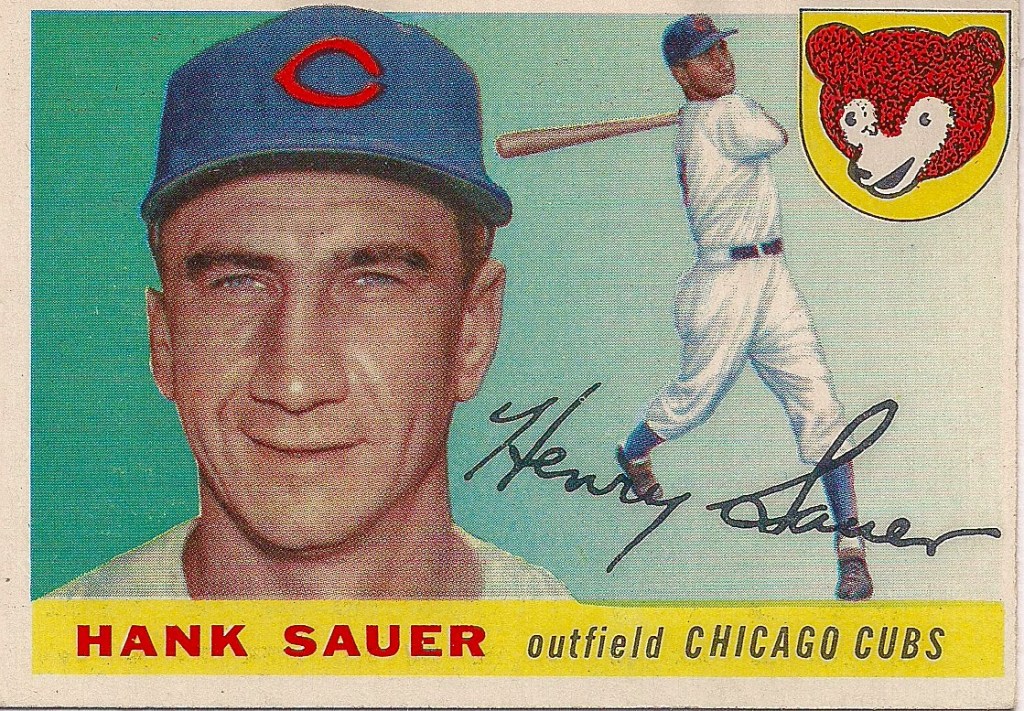
Of course, our heroes were major league players and with only 16 teams we could nearly identify all the players by name, number, right or left-handed, and their records. Newspapers carried box scores and standings, but it was through baseball cards that we found out where they were born and what they might look like.
I was meticulous regarding the maintenance of those magnificent pieces of cardboard. They became the inanimate, frozen-in-time representative of my idols. Ted Williams, Mickey Mantle, Ernie Banks, Orestes Minnie Minoso, and the gentle giant, Hank Sauer. My fantasies lost their inanimate status only when I saw them in real life at Wrigley or Comiskey, but they were too far away from me in my upper deck seats.
Fast forward to the 1960s when I became one of the three coaches in the Ernie Banks baseball school in the greater Chicago area. Ernie became a regular visitor as Coach Gillespie, Frank Mariani, and I gave instructions to kids between 8-15. Ernie was still an active player and I felt so privileged to be standing alongside of him and chatting about hitting.
When we moved to Wilmington on Kankakee Street in 1971, we had the good fortune to live across the street from St. Rose church and grade school. The playground area behind the school served as a prime location for “fast-pitch” baseball utilizing a rubber ball and painted strike zone. Games could be played with as few as 2 players, a pitcher and a batter. Ground rules matched the idiosyncrasies and constraints of the make-shift baseball facility of the playground.
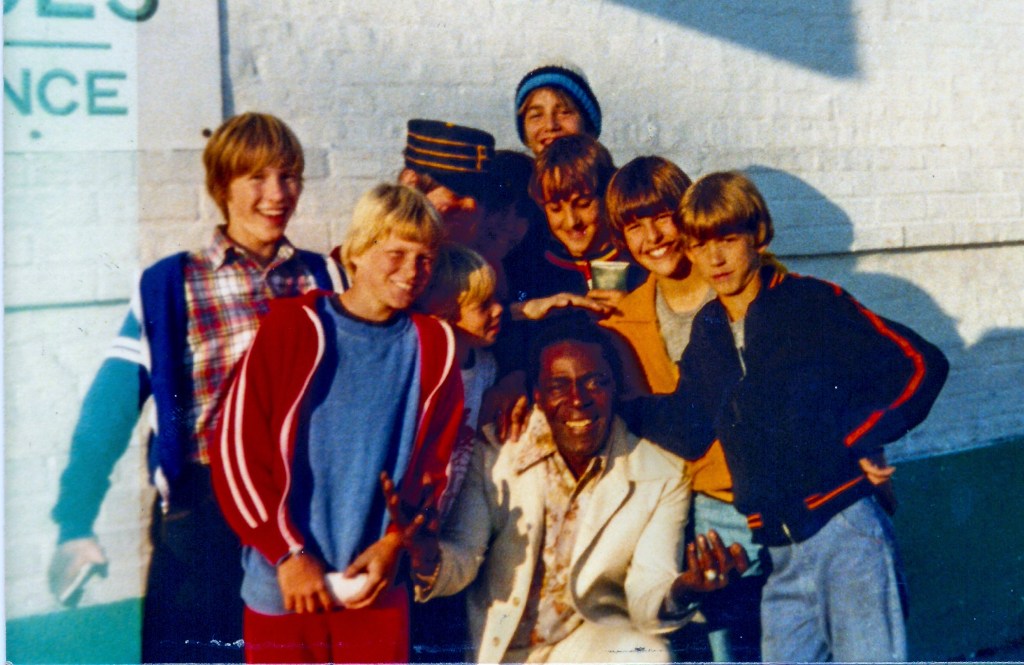
Our four boys would join other neighborhood kids (Todd, Steve, Sloan, and Chuck) for games that might have almost no time limit. These kids would take on the major league persona of their favorite team’s regular batting lineup. Interestingly, the stats and scorebooks that they kept accurately corresponded to the hitting abilities of each player. When it was Brooks Robinson batting, the young clone would hit well. When a .220 hitter came up, the kid would bat about the same.
They became their favorite players via this transformation.
By the mid-1970s, my four boys were avid baseball card and autograph collectors. We would go to card shows and baseball games (as far away as Detroit) in order to collect signatures and pictures with the players. Their collections would grow year after year, accumulating an equal number of great memories.
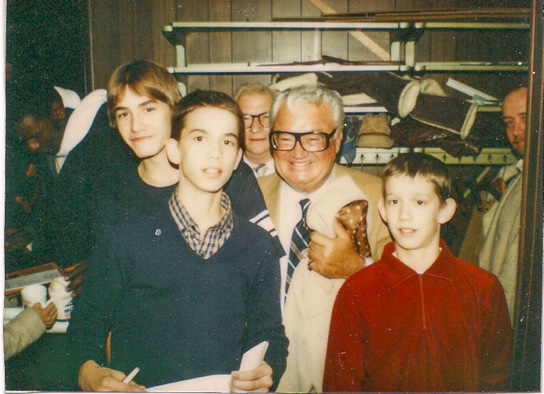
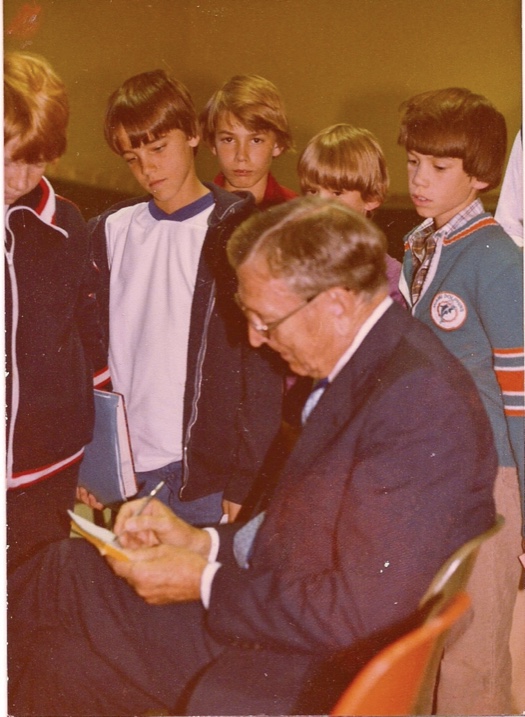
However, the only times when the kids could actually stand next to baseball players might be after a major league game (if you were really lucky) or at special events. Throughout the early and teen years, I was able to take a few pictures of those close encounters of a short time. Below are a few of those “short time” memories. (Many of the pictures were taken at the Coal City baseball old timer sponsored events.)
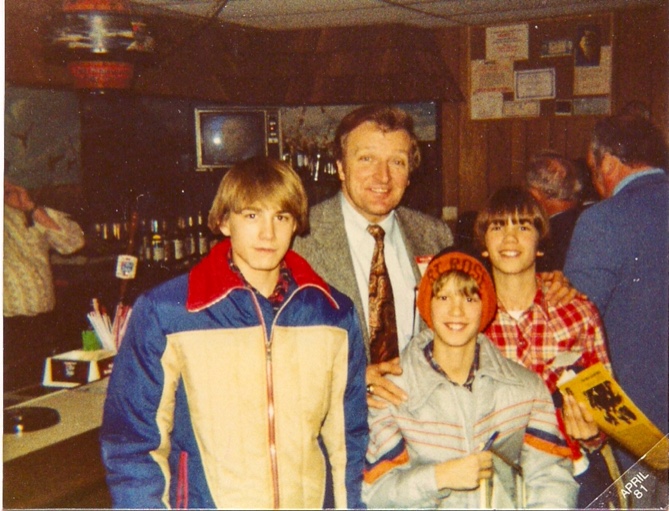
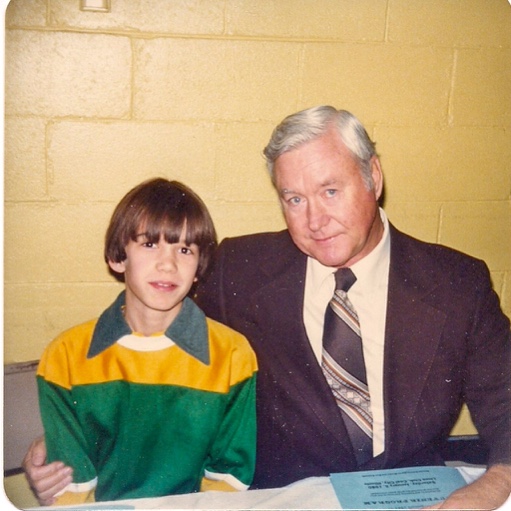
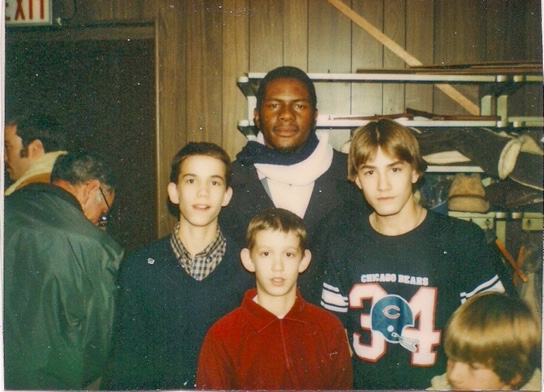
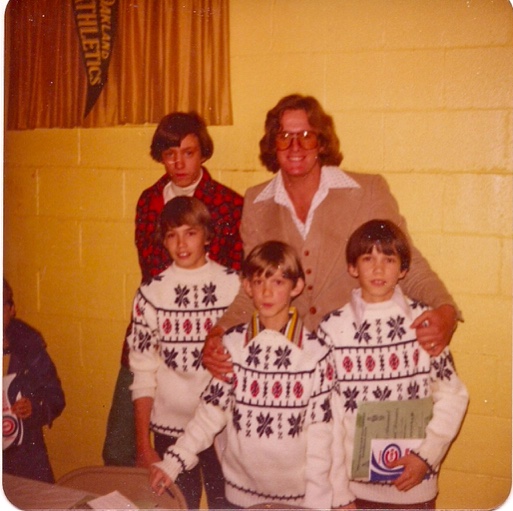
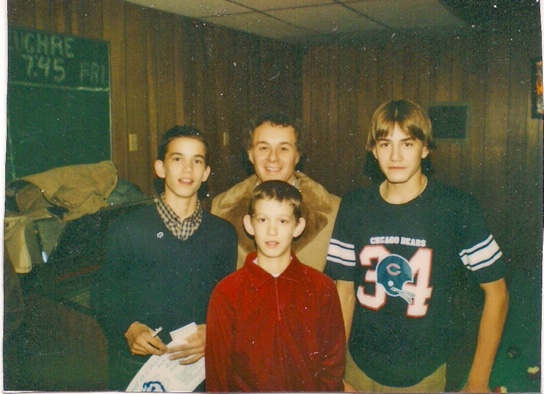
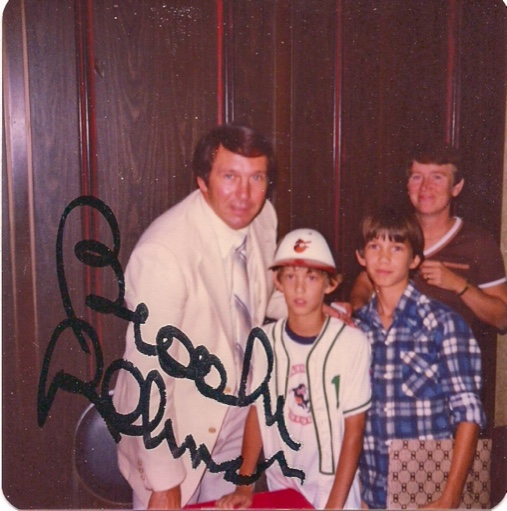
The most memorable event was at a baseball coaches meeting in Chicago with Ted Williams as the speaker. After he spoke, a group of coaches gathered in the lobby with Ted for an extended conversation. The greatest hitter of all time spoke at length about hitting to the small group which included sons John, Bob, and Eric. As he spoke, the kids continued to feed Ted baseball cards, baseballs, and 3×5 blank note cards for his autograph. He signed all of them as he spoke with only one interruption.
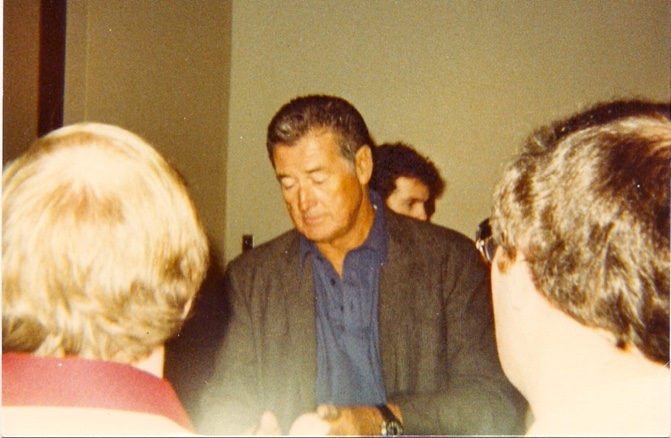
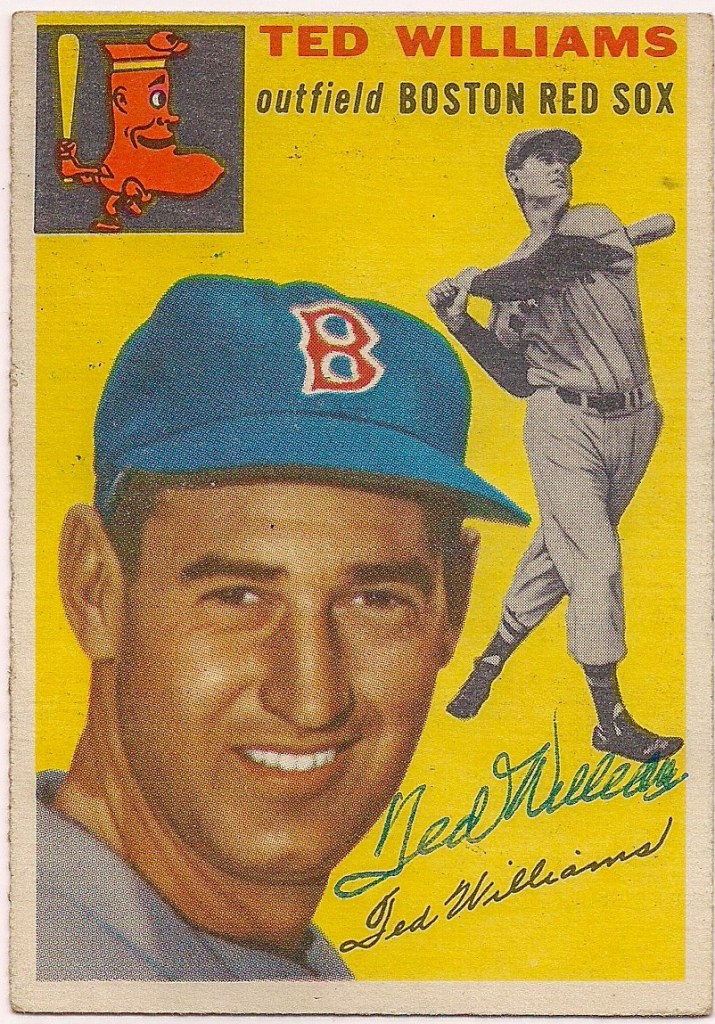
Taking one of his baseball cards in his hand, he started flexing the card, but not to the point of creasing it, much to the fear and trepidation of his youthful fans. The card survived as did all of the brand new, highly prized signatures.
Baseball in our family has continued long after my initial encounter at an early age on Braidwood’s Walker Street. I continued to play through college and into my mid-20’s, then coach kids, high school age, and in college. John, Bob, and Eric all continued playing through college. More recently, Bob was a high school coach for several years at a high school in Colorado. Currently, three Kennedy grandsons continue the baseball legacy by playing in college in Colorado, Arizona, and Kansas. If baseball has been a theme in America throughout its history since 1845, the same could be said in the Kennedy family since 1940.
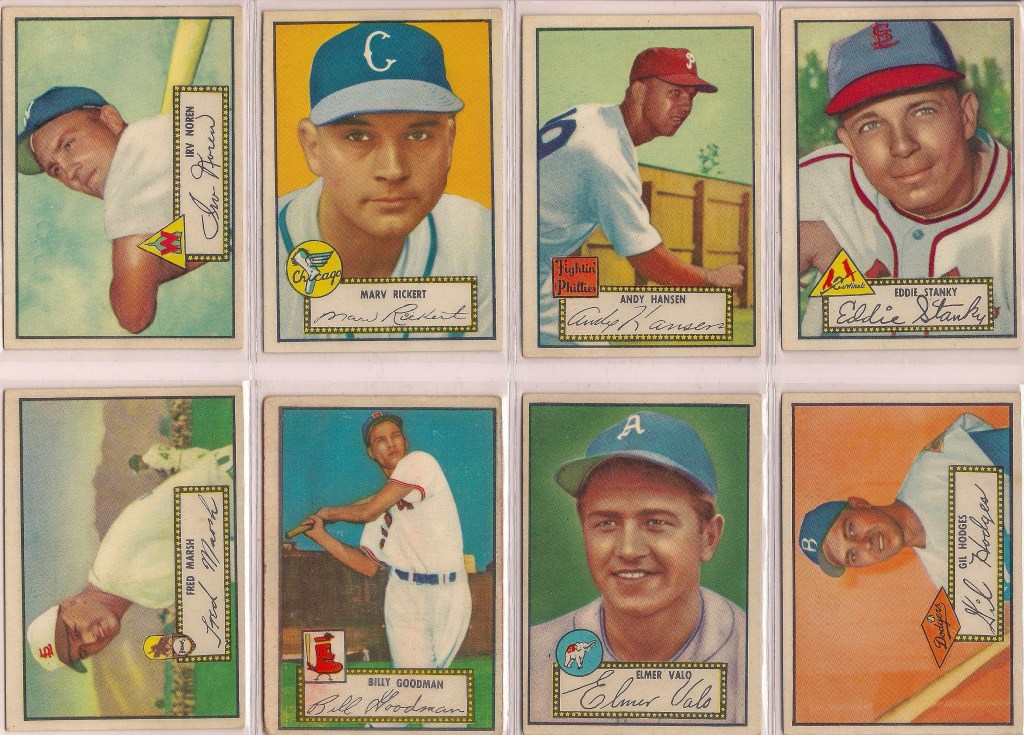
I selected the baseball cards below because, with the exception of Gil Hodges, there are no “star” or hall-of-fame players among them. But to their families and subsequent generations, there were plenty of happy reflections and memories. As you look into their faces, you might see a kid who was once a 10-year old and who fantasized about one day playing this great game.


Excellent read! I have many good memories of playing yard ball and collecting baseball cards with my best friend in Braidwood as well.
LikeLike
Tom: Enjoyed your essay. I know you’re a baseball guy. Isn’t one of your grandkids named Hovis or something like that. You can see that I don’t know my baseball as well as you. All the best to you, Roberta Sell
LikeLike
Thanks, Roberta. Sorry for the delay in responding. No Hovis, but Cal Homus is our first of our 14.
LikeLike
Thanks, Dennis.
LikeLike