“The only effective answer to organized greed is organized labor.”
Thomas Donahue
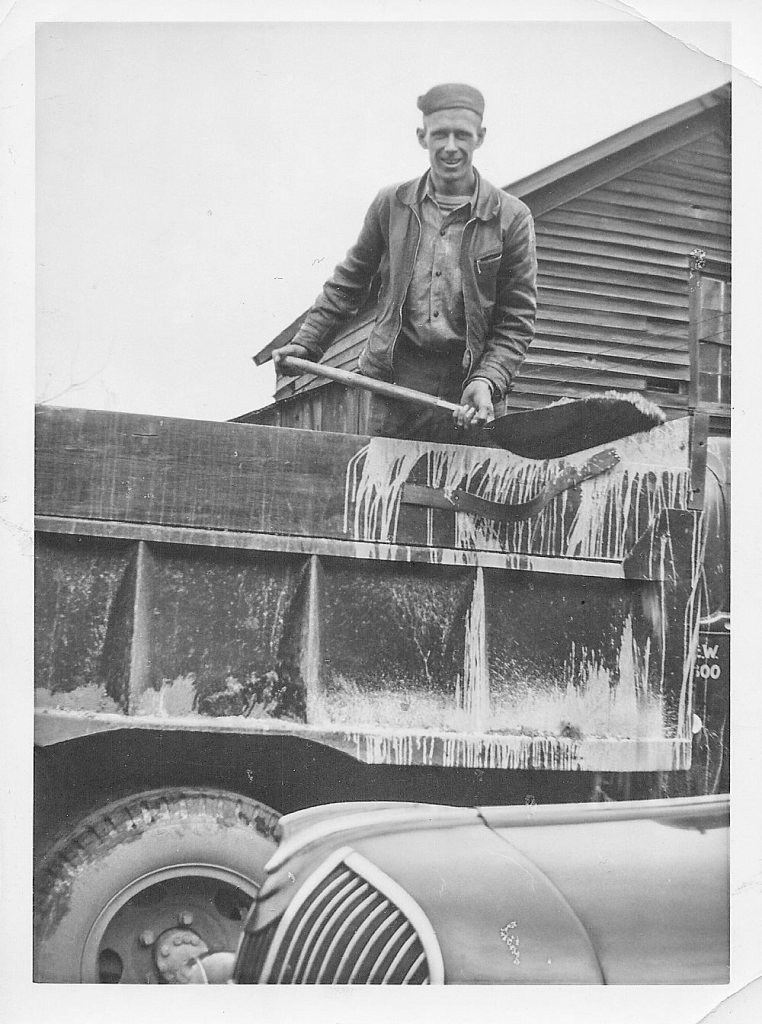
Dad was always proud of us kids. As an independent truck driver working in construction, he had his own way of doing things. He handled his operation by purchasing and maintaining equipment, estimating jobs, billing, marketing, and advertising. Customer feedback was immediate upon the completion of work. After my brother Kenny was born, dad’s truck was branded with the “T.J. Kennedy & Sons” sign decorated on the side, overstating the size of this one-man operation.
With the help of my seamstress mother, he amazingly sustained our family in the small-town environment through tough times and in competition with companies that had fleets of trucks.
Farmer, Laborer, Truck Driver, Equipment Operator
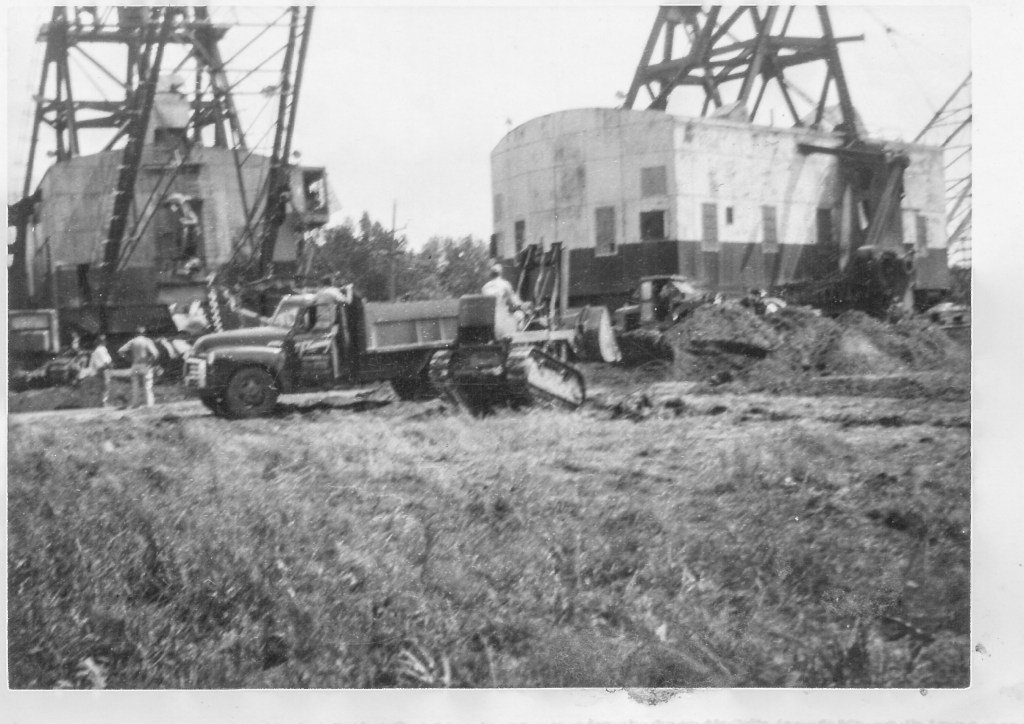
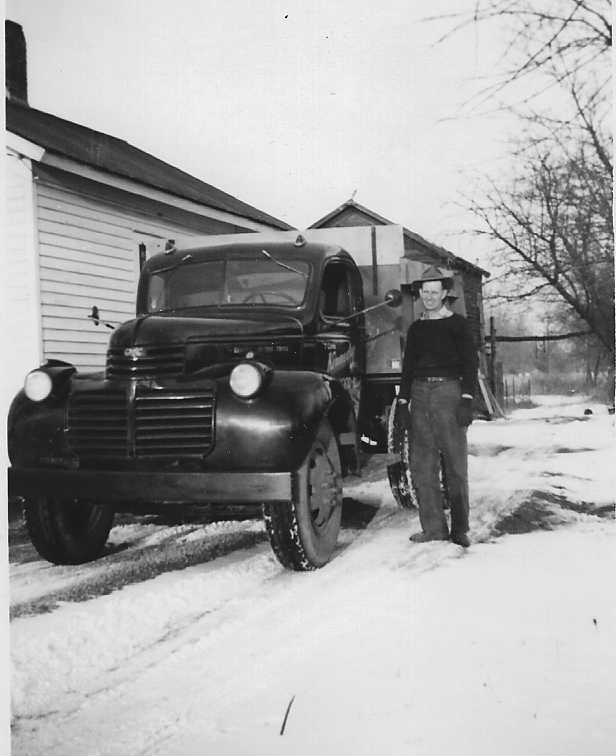
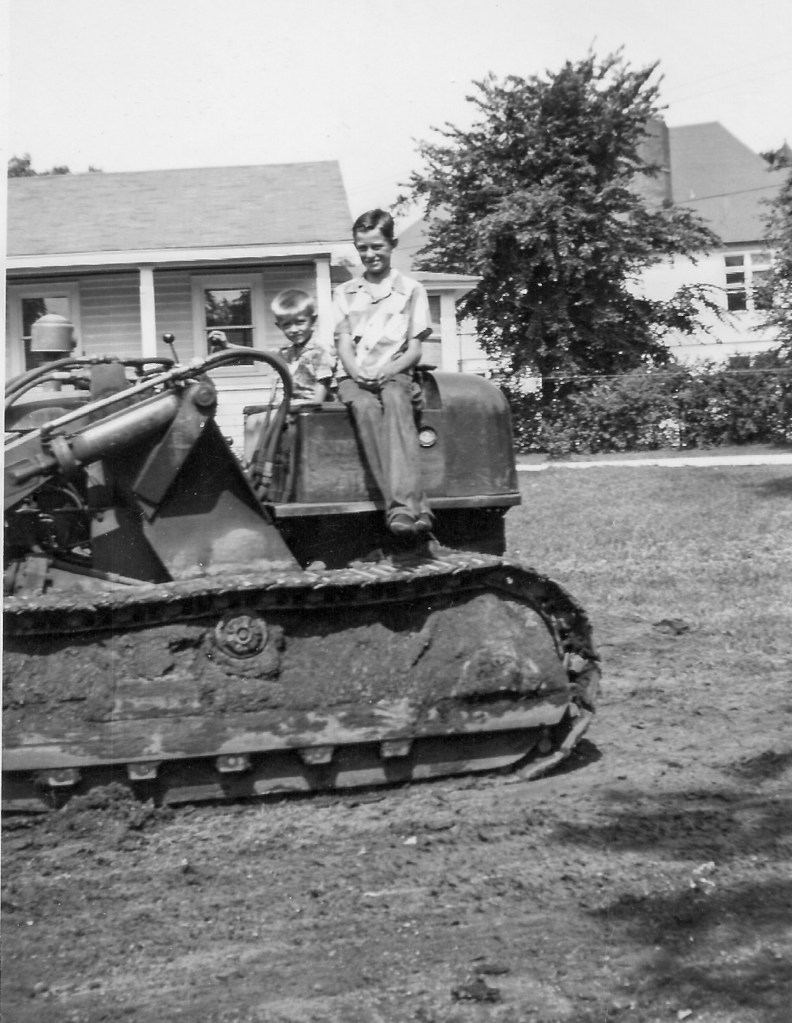
Before launching his own business, Dad had worked on farms and ranches in Illinois, Minnesota, and the Dakotas. After getting married, he worked on the pipeline in Oklahoma and Texas. Returning to Illinois, he drove an ice truck owned by Nick Van Duyne and then purchased his own truck. Over the years, he had different dump trucks, a cable lift TD12 crawler tractor, and a Ford tractor. In his later years, he was a heavy equipment operator, usually manning small cranes.
Union Member
Dad was always a union member, first with the Teamsters Local #179 and later with the Operating Engineers Local #150. The Teamsters, with headquarters on North Chicago Street in Joliet, was a tough outfit associated with some reputed Mafia types. There was no question about your membership with the Teamsters in the 1940’s and ‘50’s. If you drove a truck, you better belong to the union. You didn’t cross the line with other labor unions. There were many stories about “scabs” and broken arms. In many ways, these unions were similar to the mine workers’ union in early Braidwood.
Like Father, Like Son
Before I entered Dad’s construction world, my first job at about eleven was to be a paper boy in Braidwood. Equipped with a bicycle and a canvas delivery bag looped around and over the handlebars, I peddled the Herald-News to about 25 customers, delivering on weekday afternoons and weekend mornings. (Sunday mornings were the toughest because of the size of the papers, its weight and unwillingness to being folded.) The other paper boys and I, at age 13, tried to start our own union for 50 cent raise, but that stopped when our parents found out.
I worked with Dad helping load his truck with black dirt by driving the tractor sometimes, becoming quite proficient. I remember operating the TD14 when I was probably 12 or 13. It had a unique way of steering (hand levers and brakes on either side) and tripping and then locking the bucket. I had a much easier time operating the Ford end-loader.
Because of Mom and Dad’s work history, I naturally fell into the world of construction and laborers, carpenters, and drivers. My empathy, compassion, and understanding of this segment of our population made an indelible mark on me. Like my father, many of these men didn’t have the opportunity to go to school past high school or grade school, but I discovered that they could rival the intelligence of many of my college professors. Knowing and working with them was the beginning of my education.
Later, it was natural when I reached 18 to become a member of the Teamsters myself and driving dump trucks for Casey and Jim Klover as well as other construction companies. I worked on the laying of I-80 near Morris for the O’Connor Construction Company and Howard Wartenburg in Joliet and continued driving trucks during the summers through the ‘70’s when we had 5 kids.
“Too few Americans know labor history and how they have benefitted from the efforts of unions. We have a 40-hour work week, defined benefits, higher wages, paid vacations, and sick leave largely as the result of union activity in the 20th century. We built a middle-class society in the period after World War II, also a period when the work force, compared with today, heavily unionized.”
Ken Bernstein

 Braidwood Beginnings
Hi!
I found one mistake in the quote by Ken Bernstein. Add an “s” to American.
Love all your reminiscing with your dad by your side!
Dee
LikeLike
Got it. Thanks, Dee.
LikeLike
I still have a few of Dad’s Billings from his trucking company – I am amazed at all the math he could do with so little education. Dad was not only a hard worker, he was a very smart guy. I loved riding in the truck with him, waving at all the truckers he knew, felt so important!
LikeLiked by 1 person