“There lives more faith in honest doubt, I believe, than in half the creeds.”
In Memoriam, Tennyson
I suppose I inherited my parent’s attitude about religion in ways that surprised me in later life. Retracing my spiritual steps, it might be easier to look back over the past 60 years and see a reasonable, understandable evolution that might have been predictable.
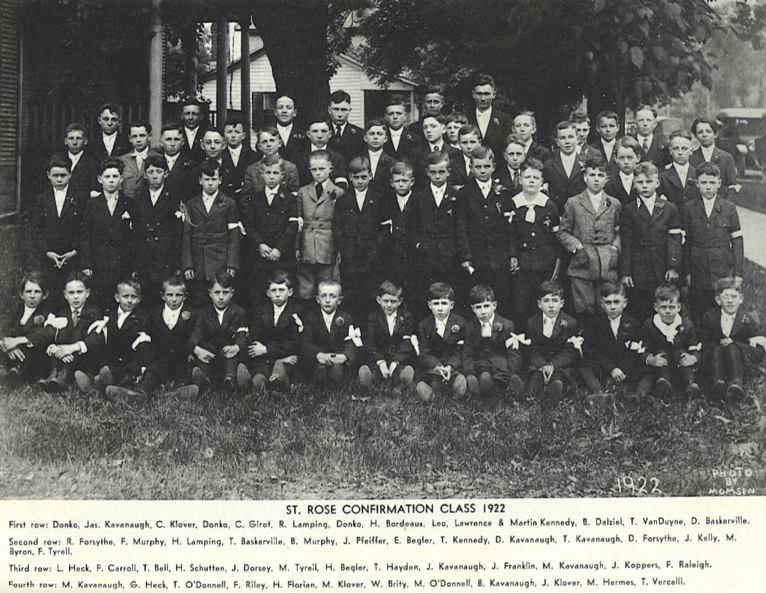
In the picture below copied from the “100th Anniversary of St. Rose of Lima Parish (1855-1955)” book, my father T. Kennedy (at age 8) is in the 2nd row. I believe that the location of the picture was in the front yard of the house that my family unknowingly would live in from 1972-1986. (603 S. Kankakee St.)
Mom and dad were both raised Catholic and stayed that way all their lives. Mom was more of the churchgoer, usually attending weekly at the earliest mass on Sunday and then, later, going to the Saturday night mass. Her siblings attended a variety of churches. Dad’s attendance was far more sporadic especially in his later years. When they were married in Missouri, it may have been a civil ceremony that was later blessed by the priest in Wilmington.
The only formal religious education in my two years of school was through a handful of catechism classes that were taught at Immaculate Conception Catholic church by visiting nuns. They told us what the questions were, the answers and prayers, and we repeated from memory. I attended the Braidwood Eastside School for first and second grades and, because we lived on the west side of town, mom usually gave me a ride, while I walked other times.
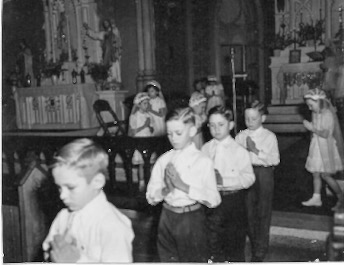
First communion at St. Rose. 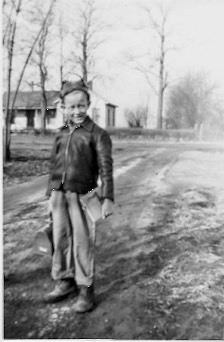
Walking home from school. 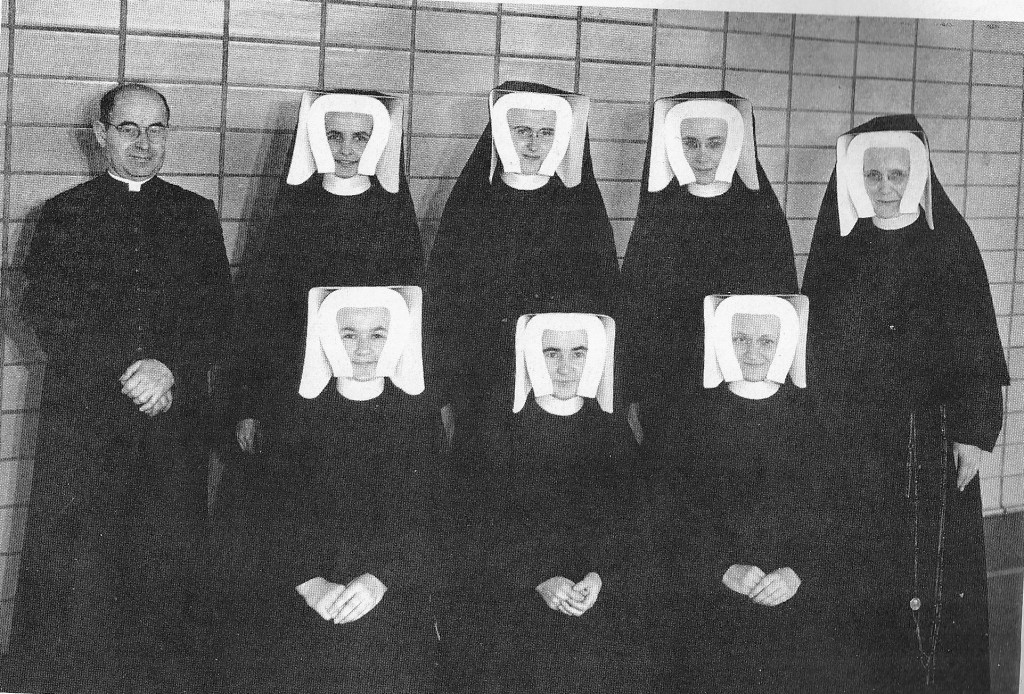
These brave nuns were challenged by the kids.
In 1948, a new Catholic grade school was started In Wilmington at St. Rose Parish. (See the BVM picture.) Mom and dad enrolled me and my sister for my third grade and her first grade. A bus was provided for transporting us to school. Graduating from St. Rose in 1954, that fall I started my first year at Joliet Catholic along with other kids riding the bus from Braidwood, Braceville, Coal City and Wilmington.
Twenty miles each way helped us create somewhat of a family on the bus, playing cards, reading assignments, and telling jokes and stories. I discovered many cliques in the all-boys high school with the Joliet kids seeming to look down on the country hicks who rode the bus every day and seldom participated in any extracurricular activities.
The Carmelite priests taught almost everything including religion, English, math, Latin, history, and social studies. Lay people were teaching music and P.E., and they comprised most of the coaches. As angry God’s representatives on earth, the priests were convinced that we were all sinners and we needed retreats, confessions, and masses on a regular basis. They taught us as they were taught, and I remember having a desire to die after making a confession at a retreat because my soul was really clean, and I would go straight to heaven. No purgatory needed. Get out of jail free card.
Now, dad never really bought into all of this. He was a skeptic, a cynic who seemed to know the hidden life of some priests who were drunks and had women in other towns. They cheated by taking money from the collection baskets and spending it on these activities. Priests were, after all, just men. It was only when I was older than I really grasped his perspective on the church and that he was right in very few cases. The vast majority of priests were good men trying to help people. (The best priest ever was Fr. George Kuzma.)
Mom, on the other hand, actually stayed with most catechism fundamentals. In individual cases, she would make exceptions to the church teachings, but she had a deep respect for the ceremonial church functions. Unlike dad, she seemed to need a structure for her spiritual thinking and poetry. Dad’s life experiences became his spiritual guide.
This is not to say that my ancestors and relatives lacked dedication to the church. My Irish, German, and Dutch ancestors did have family members who had religious vocations. Sister Anna Marie Becker and Fr. Michael Ginter were mom’s cousins and Sister DePaul (Klover) and Brother Honorius Alfred Shields were dad’s cousins. Both nuns taught at St. Francis Academy, Fr. Ginter was pastor in Peotone, and Brother Honorius was a Christian Brother at La Salle Academy in Mindanao, Philippines.
Vatican II: 1962-65
After the early effects of my Catholic education faded and Vatican II emerged, I began to seriously question some of the Church’s teachings. My adopted grandmother, Sarah Jeffrey, was Episcopalian and would not go to heaven? “Impure thoughts” doomed me to hell? What about those poor damned souls who ate meat on Fridays but now it was ok?
Vatican II did indeed open the doors and windows of my brain and change was in the air. I could actually think for myself and act according to the basic principles of ethics and morals that I inherited from my parents.
My sister, brother, and I seem to have incorporated mom and dad into our religious behavior and attitudes. Overall, I think it is fairly balanced: we don’t take the Bible literally; we hope there is a heaven; we think that while Catholicism is fine, it is not the only religion. We have serious doubts about the church teachings on birth control, only male unmarried priests, homosexuality, and the role of women.
Still Learning and Unlearning
My quest to better understand the nature of religion and to reflect on my place in the universe has continued into later years. By reading, observing the world, questioning, and exploring, I remain an active thinker and understand that the ultimate truths will always be elusive if not unattainable. If you think that you have found THE answer, you are wrong. But keep trying. The search is always worthwhile but totally unknowable with our tiny brains.
Over the past several years, I have had the opportunity to have weekly discussions with two of my closest friends who share in the quest to know more about the reason for our existence on earth. We have known one another for over 30 years and are constantly seeking more insights on religion, community, and spiritual life. Without these informal sessions, I doubt that reading alone would have been satisfactory. Not many people have the good fortune to discuss books and articles that provide different perspectives on religion.
My reading list over the years is quite extensive and includes diverse authors as listed below. The most recent and most important have been: Joseph Campbell, James Martin, Neil de Grasse Tyson, Ilia Delio, Richard Rohr, and Teilhard Chardin.
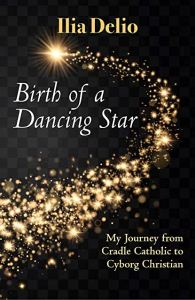
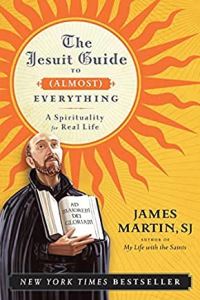
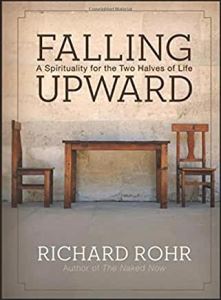
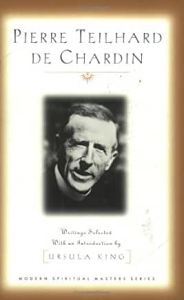
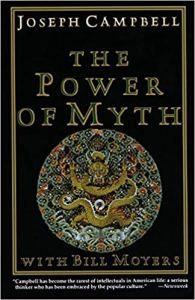
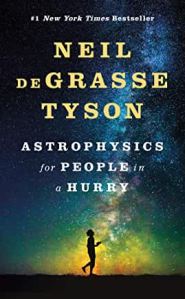
Earlier authors include: Karen Armstrong, Raza Aslan, St. Augustine, Wendell Berry, Marcus Borg, James Carroll, John Crossan,, Kenneth Daniels, Richard Dawkins, David Dungan, Bart Ehrman, Randall Fuller, Sam Harris, Steven Hawking, Christopher Hitchens, Elizabeth Kolbert, Bernard Lonergan, Robert McElvaine, Robin Meyers, Cullen Murphy, John Norwich, Stephen Prothero, Albert Schweitzer, The Bible, and Thomas Jefferson.
Evolving understandings of religion over the past 80 years does not, and should not, minimize or devalue the indoctrination and religious education of my early years. I inherited my Catholic faith from my parents and teachers, the same people who prompted me to think for myself and question everything. However, to remain as I was in the 8th grade or when I was 21 isn’t who I am now. And I believe that there is much growth to be made.
Whenever possible, my preference now is to attend mass at Catholic churches where the attendees include a cross section of the American population where all are welcome regardless of skin color, sexual orientation, income level, or citizen status. In Colorado, that would be St. Ignatius Loyola, and in Joliet, it is Sacred Heart Parish. Otherwise, it is my neighborhood Catholic church.
“I believe in the fundamental truths of all great religions of the world.”
Gandhi
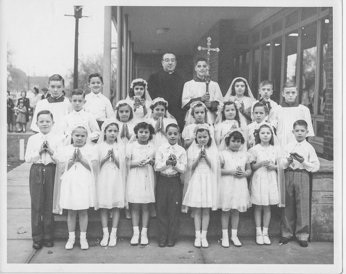
Young and impressionable first communicants. 
St. Rose church. 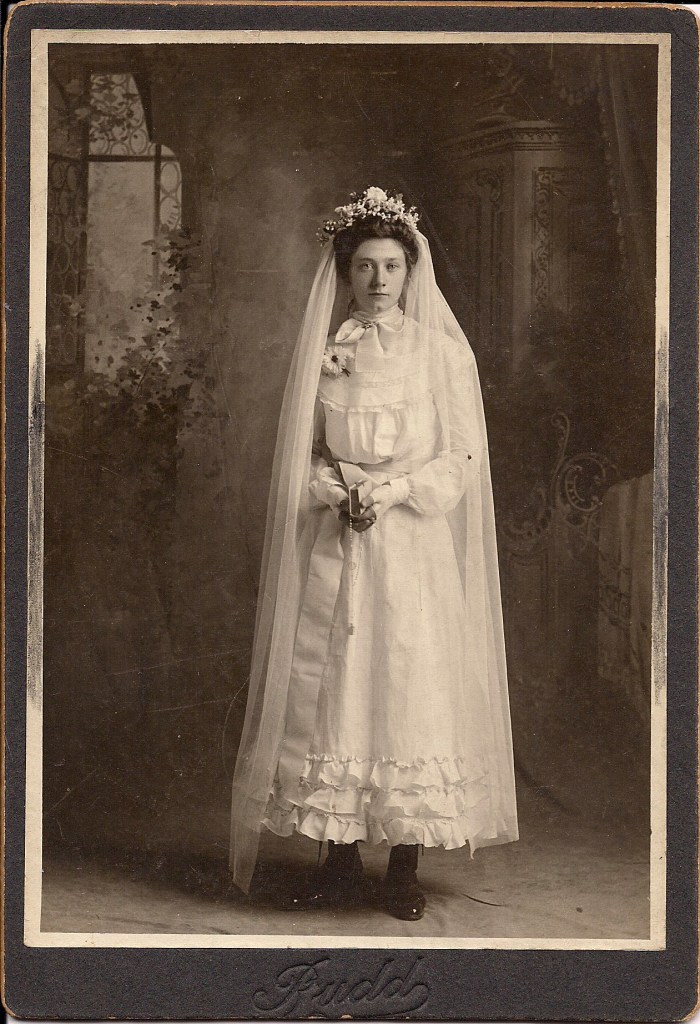
Grandmother Margaret Klover’s Confirmation

 Braidwood Beginnings
Enjoyable article on religion.
LikeLike
Tom, I had no idea your reading list on religion was this extensive!
Great blog ! Your writing is always informative and insightful.
LikeLike