“Belonging is our blessing; tribalism is our burden. Belonging is a crucial human need, but it can descend into dangerous tribalism.”
Saul Levine
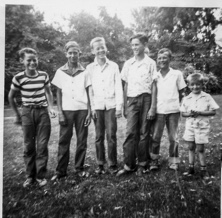
It wasn’t much of a gang. We didn’t even refer to ourselves as gang members, but rather a few friends enjoying life on East Main Street in Braidwood.
Shortly after moving to the East side of Braidwood, I met a new group of boys mostly my age. Now 13 years old, I was experiencing a new sense of freedom: delivering the Herald-News, playing Pony League baseball, and roaming the spoils hills of the Recreation Club to the north and the “Q” hill to the south.
The proximity of neighbors Colin and fellow newcomers Marty and “Killer” organically forged friendships that sought adventure. Two other neighbors lived on the block behind us. Roger and brother Billy seemed to have their own friends and seldom came into close contact with our group. A few other East side boys, like Jimmy and Jack, were either too old or too young.
It’s normal for a small group of friends to have fun in many ways, some harmless, some troublesome. Sports, swimming, card playing, snowball fights, and skating were typical activities, and we had plenty of opportunities with the recreation club practically in our backyard. Exploring the hinterlands of the hills where no roads existed, imagining savage animals, we might be away from home most of the summer days. Only the news delivery and chore responsibilities would restrict us.
Almost a Tragedy
But as upright as we were, there were also times when trouble seemed to happen. One such event happened when our small band of friends was confronted by the “other” East side gang during a trek in the hills. We had anticipated that a confrontation could happen, and we were prepared with hand carved wooden spears and sticks. Of course, we might yell, throw some rocks, and chase, but never intended to hurt anyone. You know, scare them and be triumphant in the game.
Rock throwing and name calling ensued with its anticipated effect. No harm, no foul. Until I launched my spear hoping to come close and strike fear into our opponents. The spear, however, flew like an unguided missile toward Roger and hit home. Roger went down screaming, we all stopped our mutual assault, and circled the victim hoping nothing was serious. His first words, “My eye! I can’t see.”
A sense of shock descended over us like a storm cloud. What if I had partially blinded a guy? We all went home, not telling anyone else about the incident but sleep came hard for me that night, overwhelmed with the guilt that I had seriously hurt someone.
Fortunately, Roger recovered nicely although he did go to a doctor to stitch the laceration above his eye. With our code of secrecy, the near tragedy remained a confidential matter. But what did matter was that we (I) had come close to actual unintentional violence.
My First and Last Fight
There was another incident when I was even younger that should have been a warning about fighting. In the 3rd or 4thgrade, and for an unknown reason, Mike and I accosted one another and wrestled during recess on the then-gravel playground near St. Rose church. The bell rang, we stopped, and walked back to class. It was then that someone noticed that my head was bleeding. Mom was called, came to the school, and took me home. I had my first fight and felt the shame that I brought on my mother.
What is it about youth that yields so easily to violence?
Tribalism
It is natural to form relationships and to join groups. Some people might call it tribalism, a natural response for protection when being isolated can be risky. We defend one another even when we know one of us is a troublemaker. We will even defend our jerk simply because he is our troublemaker. This aspect of tribalism plagues many otherwise principled “brotherhoods.”
Violent Culture
As youngsters on Walker Street, my sister and I read comics and stories about Jesse James, Roy Rogers, and Kit Carson as being heroes. Some killed the bad guys, and some were “good” bad guys. When Civil War hats were the rage, some of us had Union caps and others had Confederate hats with Johnny Reb being the underdog hero. It was only later that we learned more about the facts hidden behind these kid stories.
Labels
Even now, we find reasons to stigmatize groups and individuals while minimizing our commonalities and maximizing our differences. Skin shades, body weight and height, facial attractiveness, nationalities, languages, and political leanings become labels from which unhealthy rivalries generate anger, hate, and self-deprecation.
Lessons Learned
Fortunately, most of us emerge from our youth a little wiser, having heeded life’s lessons and accepting our own limitations. It wasn’t my nature and childhood training to engage in a physical contest other than through sports competition. My early near-violent experiences clarified my future path.
Relationships
I have found that getting to know others outside of my own sphere can mitigate the stereotypes ingrained in me. Maybe see people as people, not merely as labels. Labels will always exist. Roger and Mike were good guys. Johnny Reb was probably a good guy. They were people that I didn’t get to know and talk with. They were just like me in most every way.
Scientifically speaking, there is tribalism and group bias, but there cannot be any such thing as racism. We are all one.
Bill Nye

 Braidwood Beginnings
Love this story
LikeLike
we need to read “Talking to Strangers” by Malcolm Gladwell
LikeLike
I’m a bit bogged down, so I just reviewed this story. Two more to go, but likely not today. Where was/is the “Q Hill”?
Another super read!
Dee
LikeLike