“Do what you can, with what you have, where you are.”
Theodore Roosevelt
In the spring of 1967, I was hired part time at Lewis as the JV baseball coach and assistant to Coach Gillespie on the varsity level. In the fall of that year, Coach Gillespie asked me to work full time at Lewis with the following duties: co-director of intramurals and assistant baseball coach, as well as to initiate a new intercollegiate soccer program as the first coach. Following my experience and training with the Roncalli High School boys, I was to repeat the process of starting a new program, a ritual that would continue throughout my 50-year career in education.
Lewis in 1967 was a college going through another growing phase. The now all-male college experienced campus expansion and new buildings. Athletic Director Gordie Gillespie thought it would be a natural new venture to start an intercollegiate program: soccer. With my four years of coaching this sport, it would be natural to name me as the initiator of a soccer team with Christian Brother feeder schools providing student/athletes.
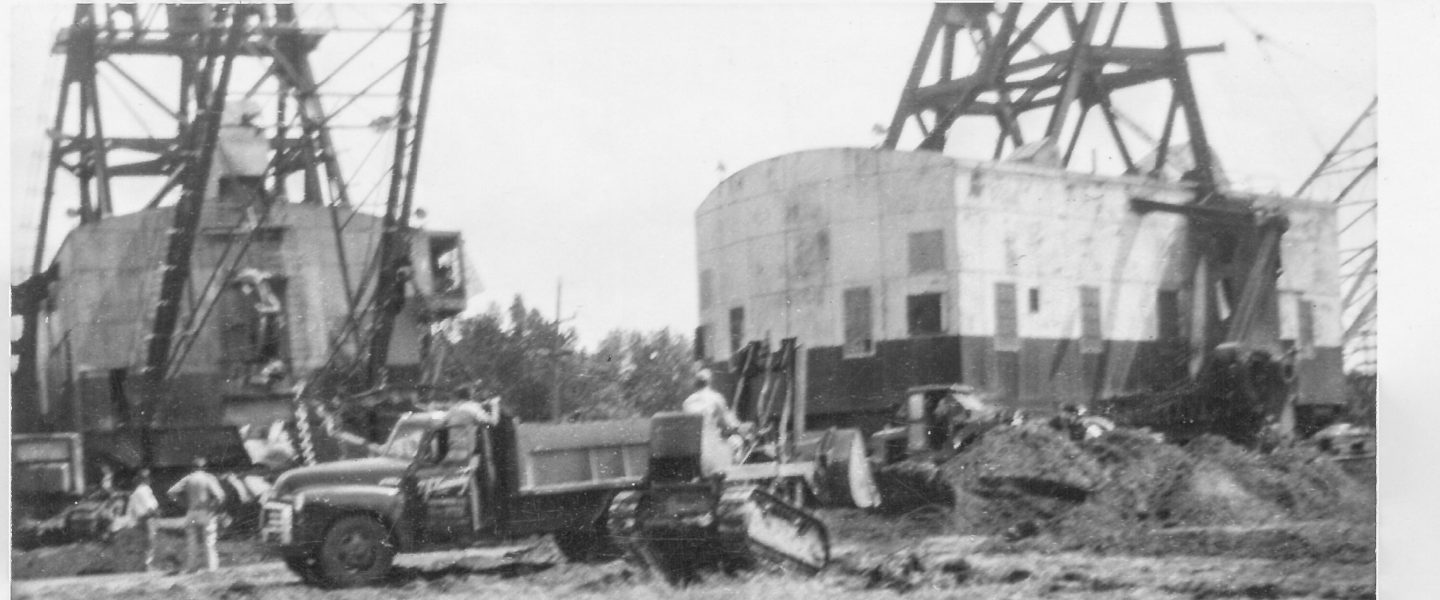
Starting a new soccer program would present a number of challenges that might have been more easily dealt with had we more time to plan the first year. As it was, we had about two months to recruit athletes, order equipment and uniforms, and put together a schedule. We did have the old football field adjacent to the baseball field, but it was ill-groomed, uneven, pitch-less, and too small to seriously accommodate soccer. More extensive soccer knowledge/experience on the part of the new coach also would have been helpful.
My life was also changing from being in front of the classroom everyday to a schedule that would include a new set of responsibilities. Intramural sports had its own routine and calendars that sometimes overlapped soccer coach duties. My co-director and good friend Paul Ruddy had been supervising intramurals by himself in the past while being head basketball coach. He and I devised a relationship whereby both of us would oversee the fall activities, I would take it during his basketball season, and he would take over in the spring when I was assisting Coach Gillespie in baseball. We also developed a better communication system between us and the student athletes with a weekly newsletter, “The Competitor.”
There was the thrill of not only starting a new job, but having the experience of initiating a soccer program with new players who seemed to enjoy being in the sport for the fun as well as the competition. Our team would not be the most soccer-talented at first, but enthusiasm and passion kept us in most games that first season.
Some of the more colorful events of our first three years
- Since there were no soccer scholarships; the team would initially consist of 100% “walk-ons.” Nearly half of the 20 or so players were seminarians or novitiates of the La Salle Christian Brothers, Irish Christian Brothers, or Joliet Diocesan seminary . Some student-athletes were out for the exercise, a good time, or to vent steam. Others were dead serious about playing and might be considered overly aggressive. (Not good for opposing teams that played with finesse.)
- There were a few superb athletes who roamed the field in a fearless style and could have been stars if they had had a supporting cast. (Think: Tony Lux, Dave Nowosielski, Tom Reiland, Gene Mroz.)
- Imagine the games being played with no line judges and one of our local Joliet referees who literally had one glass eye.
- Winning strategies, and we did win quite a few of our games during the first three years, included physical aggressiveness and obnoxiously rough play.
- Coaching at half-time consisted of instructions from our goalie, the center half-back, and the center forward to correct mistakes that were made and to identify adjustments for the second half. I mostly cheered and encouraged.
- A rather bizarre event occurred during one game when one of our defensive backs was apparently physically mistreated and his mid-fielder cousin (Joe Kelly from St. Louis) actually chased the suspected offender off the field across the campus and between buildings for a good 15 minutes. When both returned, the game resumed, and everything was back to normal.
- When a visiting team stayed the night before in a residence hall, I was confronted by the coach prior to the game that one of our non-player students had seen to it that their goalie had a really good time the night before and was not in good shape for the game. The coach tried to identify the villain student as a “Zeke,” but I had no idea, of course, of any student named Zeke. So, the game went on and we won by a goal, beating a foggy goalie.
- In another gesture of kindness, we offered yet another team accommodations for the previous night. Some of their team members returned the benevolence by stealing equipment and supplies from the visiting team’s locker room and enriching their duffle bags. Our alert manager and trainer discovered the theft during the game and “stole” back the equipment and supplies, placing them in more secure shelter.
The progression of the soccer program was guaranteed after three years with the succession of a new soccer coach, Steve Janczak. Steve took the soccer program to a more professional and competitive level, a level consistent with other Lewis teams. Under Steve (9 years) and his successors, Bob Graham (2 years), Leo Ley (1 year), Carl Ramcke (2 years), and Alex Hernandez (8 years), this sport had become an endeavor in which the University could take pride. Evan Fiffles, the current coach now in his 28th season, continues to advance quality standards that I could never have imagined in 1967.
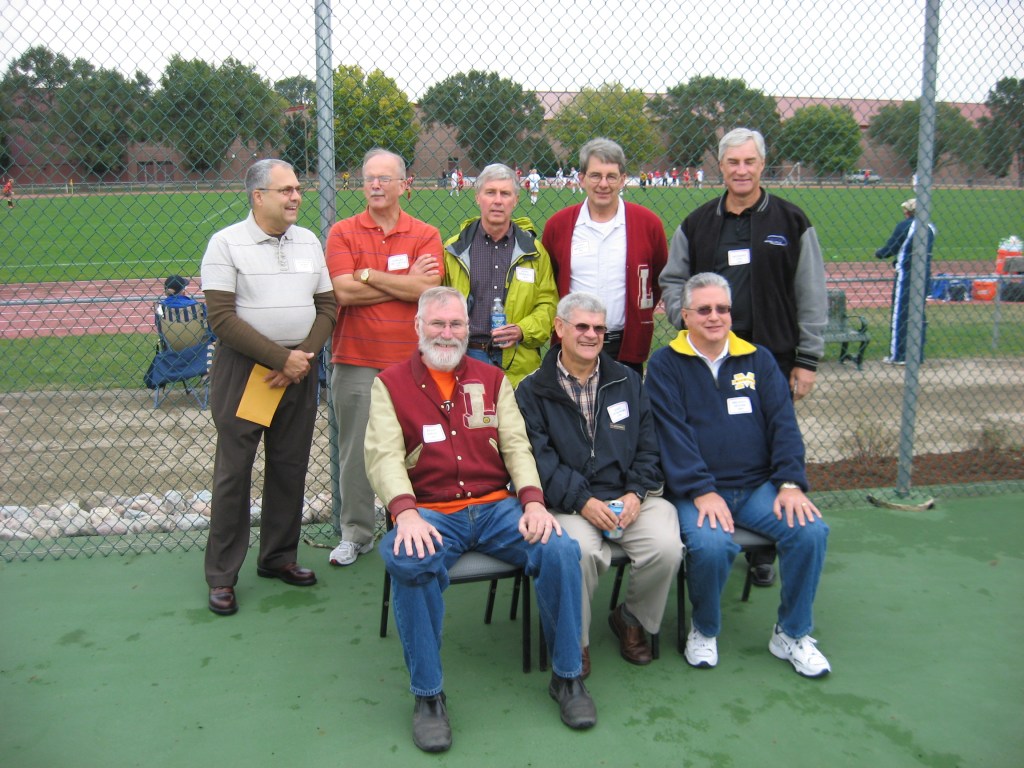
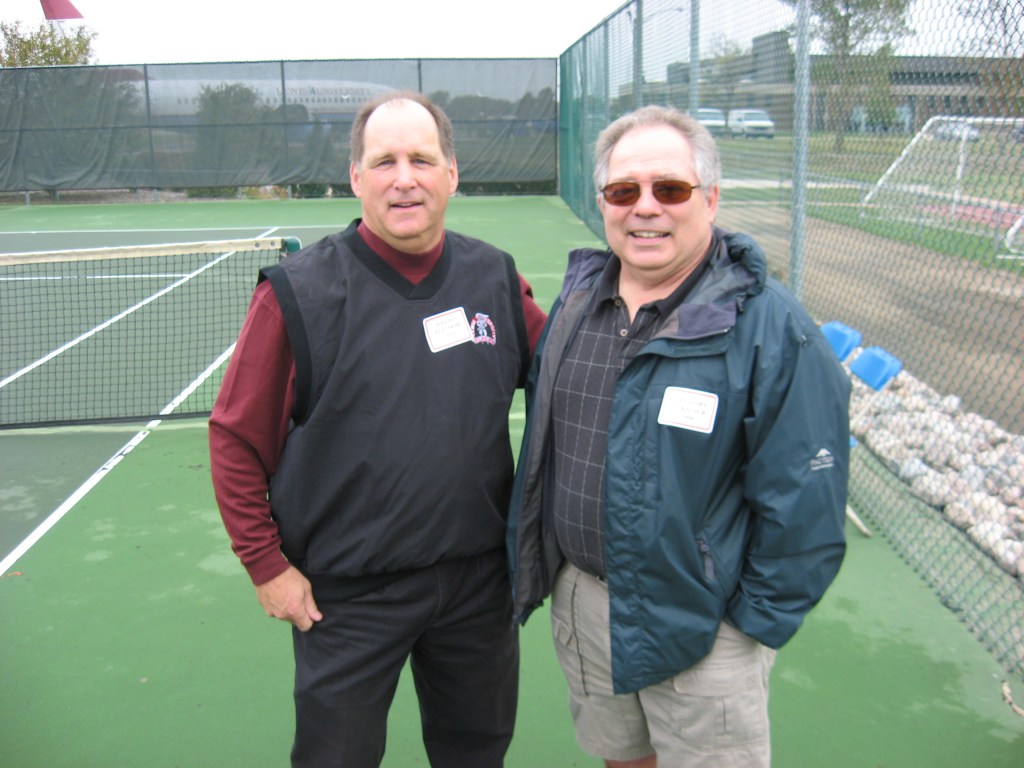
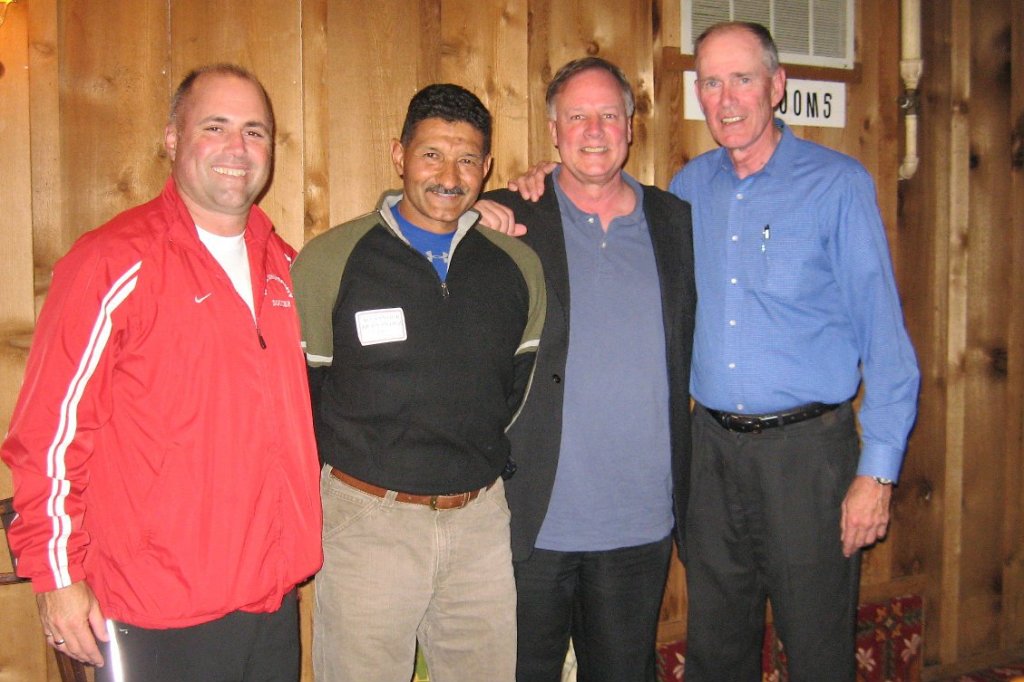
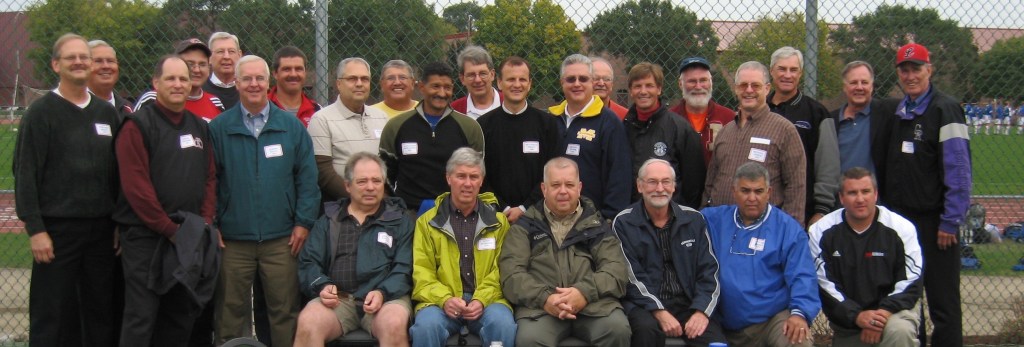
In 2007, Lewis celebrated its soccer history with a reunion of the first few years. Note the inclusion of former athletic directors, Paul Ruddy and Dan Schumacher, along with Irish O’Reilly.
Sunday, October 14, 2007