This is the first of a series of letters to my grandkids. I will try to convey my reactions and emotions to the world that I was encountering as I grew older, and why, at age 79, I have these convictions. I share these letters with the public with the hope that other grandparents consider something similar.
Dear kids:
You probably know that I have strong feelings about racism. My tolerance for discrimination, white superiority, and nationalism? Zero. Members of the human race are all equal in my eyes. There certainly are differences in cultures, customs, shapes, sizes, and skin complexions, but inside, they are all humans. There are no degrees of humanity.
Unfortunately, a significant percentage of Americans think of themselves as superior over anyone who is different. It comes in many names and titles, but it is basically tribalism. It amounts to the idea that “people like me are better than people who are not like me.” In order for you to better understand why I don’t agree, I am giving you some background information.
My First 18 Years – 1940-1958
My hometown, Braidwood, was similar to most small towns with populations fewer than 1,500. The town was populated with farmers and coal mine workers, a town where everyone knew everyone else. Dogs ran loose and many of us had outdoor plumbing (an outhouse). The majority of the population’s ethnic origins were European.
In 1940, Braidwood was different than surrounding small towns because there were some Negro families living there, descendants of some 300 imported miners who were hired during a strike in 1877. The surrounding towns had no African American residents.
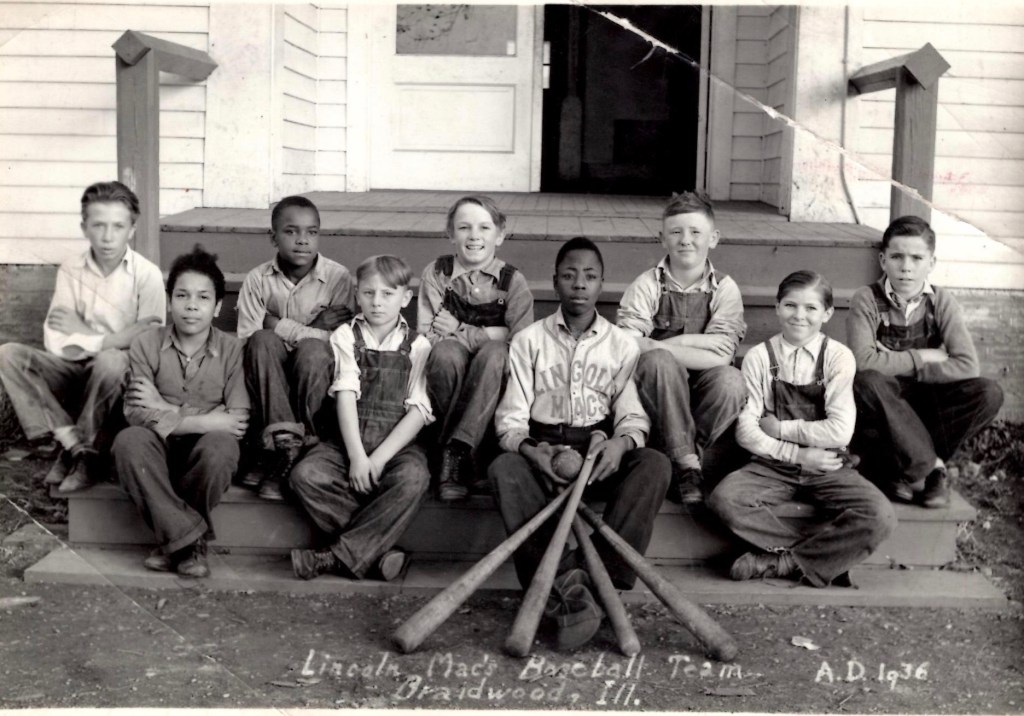
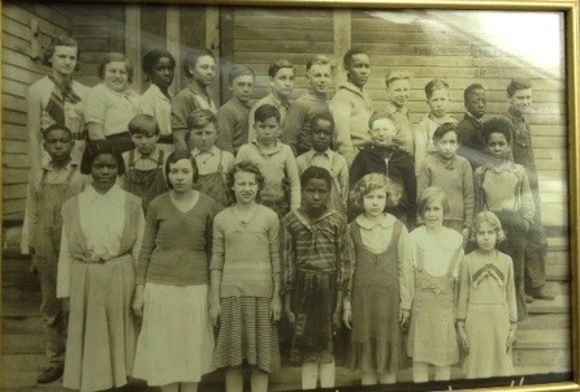
For you to get a feel for those times, I will use the terms “Negro” and “Colored.” These descriptions of African Americans were accepted by most people regardless of nationality. And I like the word “nationality” rather than “race,” although I will use the term “racism” at times.
A Negro gentleman from Braidwood, Ed Anderson, used it in a newspaper article some 30 years ago when he was quoted as “…people of my nationality.” There is actually no Black race or White race. Only the human race.
Until I was 13, we lived in a small, two-bedroom house on Walker Street that had the living space of the Joliet condo, minus the bathrooms. Kenny, Carole Ann, and I had a bedroom that would fit inside the second bedroom of the condo. Being 9 years younger than me, Kenny didn’t take up much space. In 1953, we moved to the East side of town in a larger house that had indoor plumbing.
Although our Walker Street house was small, it was a great location for a baseball fan. I could walk just a few steps and literally be at home plate of the only baseball field in town. The high school team and the “town” team played all their games there. There also were occasions when there was a pig roast gathering with Negro families from the greater Joliet area.
Most of the time, however, the field was a gathering place for kids like me to play pick-up baseball games. All that we needed was a glove since broken bats from the town team and the high school were left for us to tape together. We scavenged lost baseballs from the weeds and grape orchard next to my house.
After one afternoon pick-up game, two kids continued their on-field disagreement to a higher level with Richard calling Buddy a “Nigger.” The rest of us knew that Richard had said the wrong thing and Buddy wrestled him to the ground and demanded an apology. “Take it back, Richard!” “No, I won’t, Buddy.” Finally, Richard “took it back” and apologized. Argument settled and we all relaxed. It was my first experience with a racial conflict.
It wasn’t the first time that I heard the term “Nigger” because my parents had already alerted me to the word and told me not to use it because it was disrespectful to our Negro friends and their families.
My Braidwood experience with the Colored citizens was through sports and my paper route. Besides delivering papers to my customers, I also collected money on a twice a month basis. Knocking on doors and collecting money wasn’t my favorite job but it enabled me to see everyone and talk with them. Got to know them not only as subscribers but people who would scrape their money together, have a conversation, and give them a receipt.
On the surface, it seemed as though the residents of our town had a basic respect for one another and got along peacefully. But there was an undercurrent of discrimination that silently set the parameters of separation. Gradually, I learned what those parameters were. Negro families didn’t go to the Recreation Club in town because the board of the club refused them membership. The Negro kids and the White kids might socialize together but there was no “dating” between them. The norms of the greater society imposed unwritten social restrictions.
Attending St. Rose Grade School in Wilmington and then Joliet Catholic High School, I had no Colored kids in my classes. Joliet Catholic had a total of one Negro student, three years older, during my entire 4 years.
The groundwork had been established for me to appreciate the fact that people are people despite our uniquenesses, and it is the differences among us that I found most enjoyable and appealing. I still had a lot to learn, especially about inequality and injustice. The unspoken inequities I experienced in Braidwood would be minuscule compared to the world I would encounter in college and later.
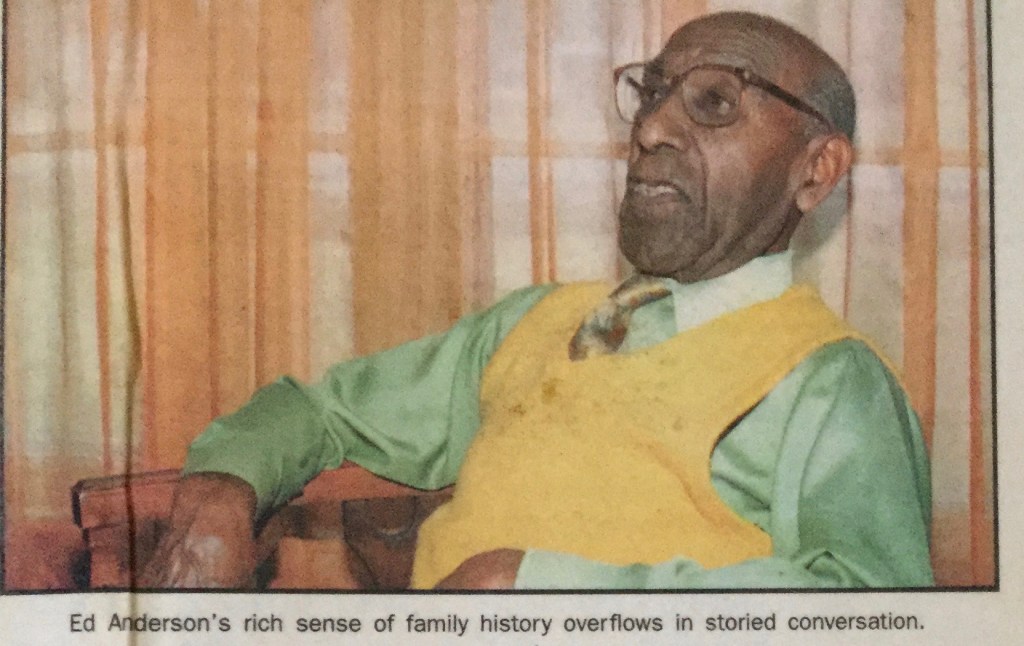
*Pictured above is a descendant of the African American miners from 1878, Braidwood resident Ed Anderson, a true gentleman. When I learned that he had used the term “people of my nationality” in a news article, I was struck by its appropriateness and description.
In subsequent letters, I will expand on this theme and many others.
Sincerely, your grandfather.

 Braidwood Beginnings
Thumbs Up *****
LikeLike
Your dad was quite a man.
LikeLike