“I really had no choice in the matter. My parents had made the decision to move from Roundhouse Street in Braidwood to Walker Street when I was three years old; from a normal small-town neighborhood to a house adjacent to the baseball field. It was only 90 feet from my bedroom to the field, the same distance as from home plate to first base. It was inevitable that I would view life within the framework of a baseball game.“
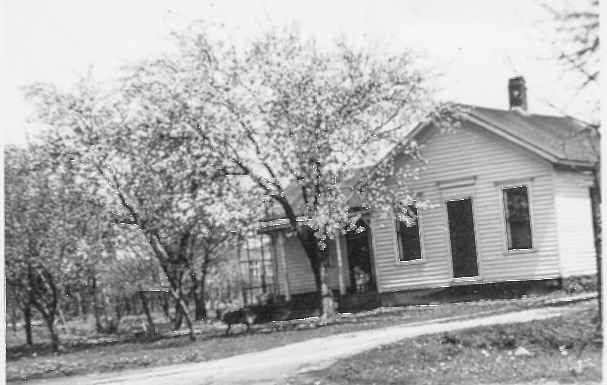
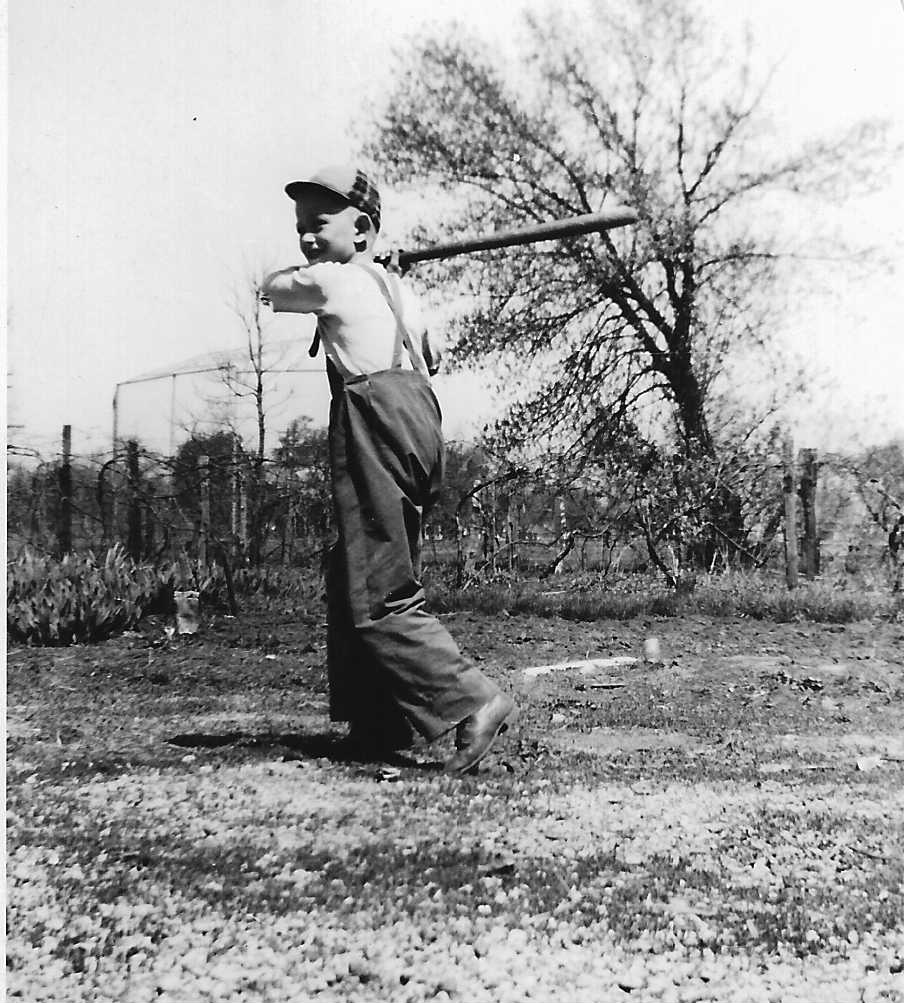
While most people would describe baseball as a team endeavor, my yard provided a singular training laboratory where baseball fundamentals might be cultivated. Throwing, catching, and hitting skills could be developed without the assistance of anyone else employing some ingenuity, imagination, and determination.
A lost game ball found in the grape orchard could be thrown in the air producing fly balls to be circled under and snared. A rubber ball thrown against the peak of the house might require a diving or backhand catch. Tossing a small apple or driveway rock in air allowed me to practice my baseball swing as I hammered the object into Wrigley’s left field stands.
Braidwood Summertime Activities
Keep in mind that the baseball field was one of the few locations for entertainment in the entire city. Wilmington, four miles to the north had a bowling alley and two movie theaters, the Mar and the Wilton. Coal City had one movie theater, the Rialto. The lone Braidwood summertime activities were the strip mine pits (later known as the Braidwood Recreation Club) and the baseball field.
By age 7, I would wander to the field to watch high school games in the spring. Although they were young, these big boys showed me how the game was played. Fans from the two teams crowded the field and cheered noisily as their team scored or won, but the sweetest sound was the wooden bat colliding with a ball.
During summer Sundays, I watched the older men playing against other town teams from Coal Valley cities: Wilmington, Coal City, Essex, Minooka, Gardner, and South Wilmington. Some players were just out of high school and others were in their 20s and 30s. The Braidwood team also practiced twice a week which enabled me to identify names and faces. By the age of 11, they let me shag down fly balls during their batting practice.
Meeting Bob Burke
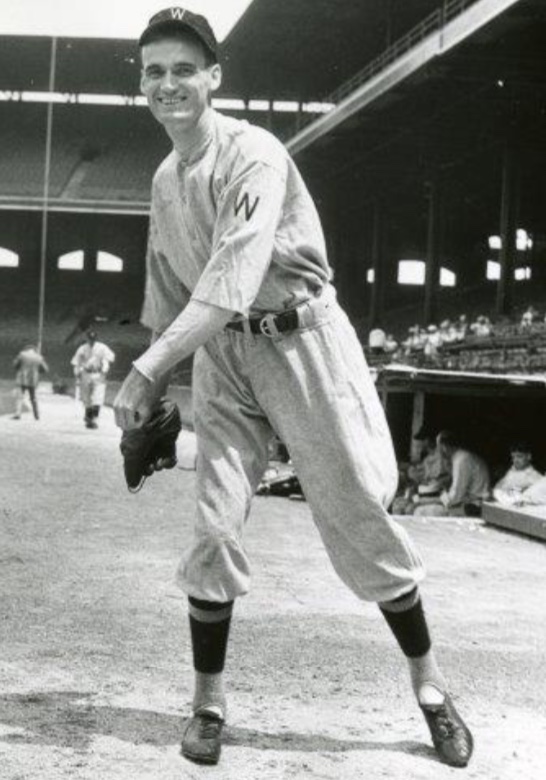
On one occasion while standing behind the backstop during a game, I met an old former player who explained the nature of the spitball. He explained that the downward flight of the ball was caused by moisture on the fingers, reducing its spin. He was Bob Burke.
Who was Bob Burke? I later learned that the Joliet native had pitched a no-hitter for the Washington Senators in 1931 against the Boston Red Sox. It wasn’t until 2014 that another no-hitter was pitched by a Washington team.
I was able to start playing pickup games with other kids approximately my age after school and during the summer. We learned the game, developed our skills, and competed without the interference of anyone else, including adults. With as few as 8 kids, a game could be played with our own rules. One pitcher, a courtesy catcher from the other team, right field was out (our version of the shift), and pitcher’s hands were out.
Coach Mary Bennett

It wasn’t until I was 14 when Braidwood started a Pony League baseball team that I actually was in an organized game. My family had just moved to the East side of Braidwood and the new residents of our old house provided a coach. Mary Bennett emerged as the only person in town who was willing to coach a group of 13-14-year-old boys. Mary soon gained notoriety as being the first female Pony League coach in the United States.
Had it not been for the Braidwood town team, my baseball experience would have stopped after Pony League. I was allowed to join the team as the lone 15-year-old player, a real rookie, playing with and against much older men. One of my teammates was pitcher Russ Nielsen from Joliet who had Braidwood connections. Another teammate was 30-year-old Johnny “Mac” McFarland, an outfielder who was raised in Braidwood. When Russ started his own team in 1957, Nielsen Mobil Gas in Joliet, he asked me and Johnny “Mac” to join this new team.
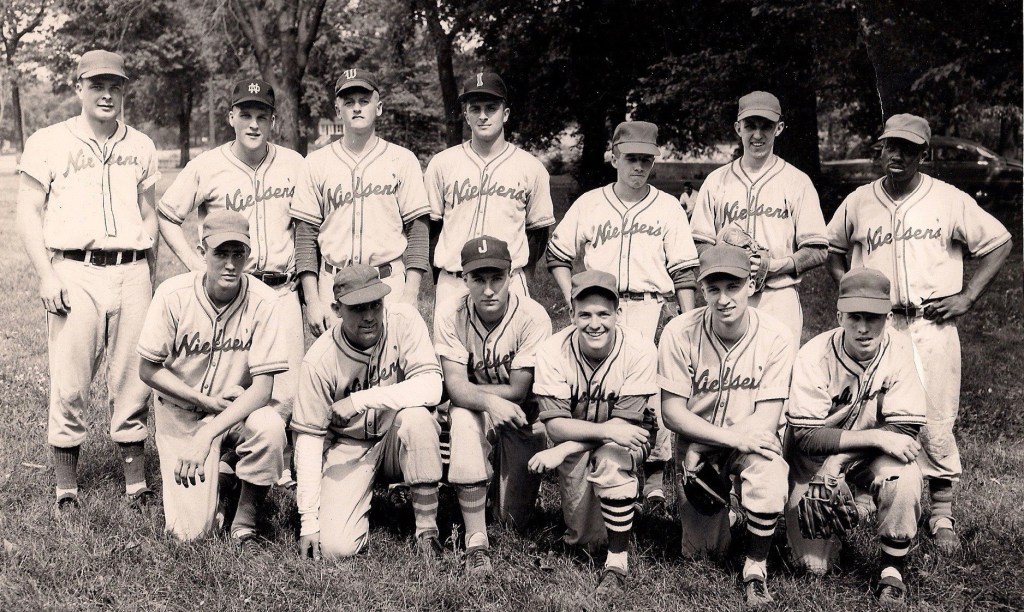
As a player in Joliet and living in Braidwood, the Nielsen team played against the Coal Valley town teams. Town team may now be gone, but they made life more enjoyable in our small towns. And it gave a great start to a young boy’s athletic career.
It should be noted that the Braidwood coal mines attracted many fine ball players throughout history. The Grays and the Cubs were outstanding teams in the early 1900s and featured familiar Braidwood names.The Braidwood Cubs were considered one of the most successful semi-pro teams in the midwest. They played between 1902 – 1912. The Grays were a little later, between 1922 – 1926. They were also known as the “Nahas” team as the team was comprised of four Nahas brothers.
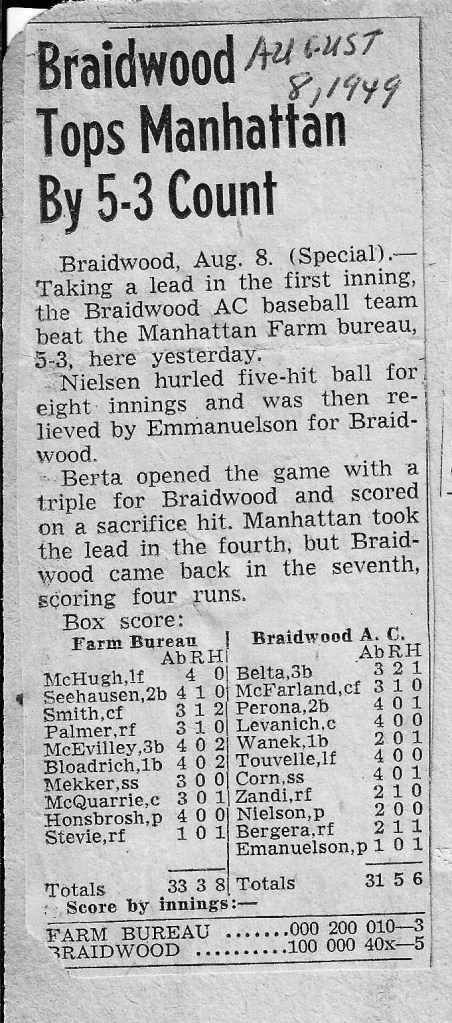
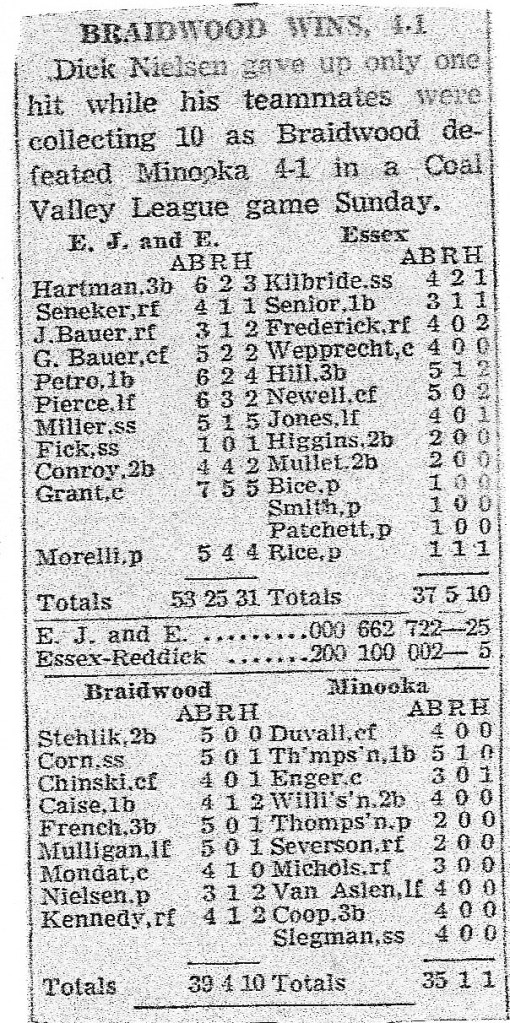
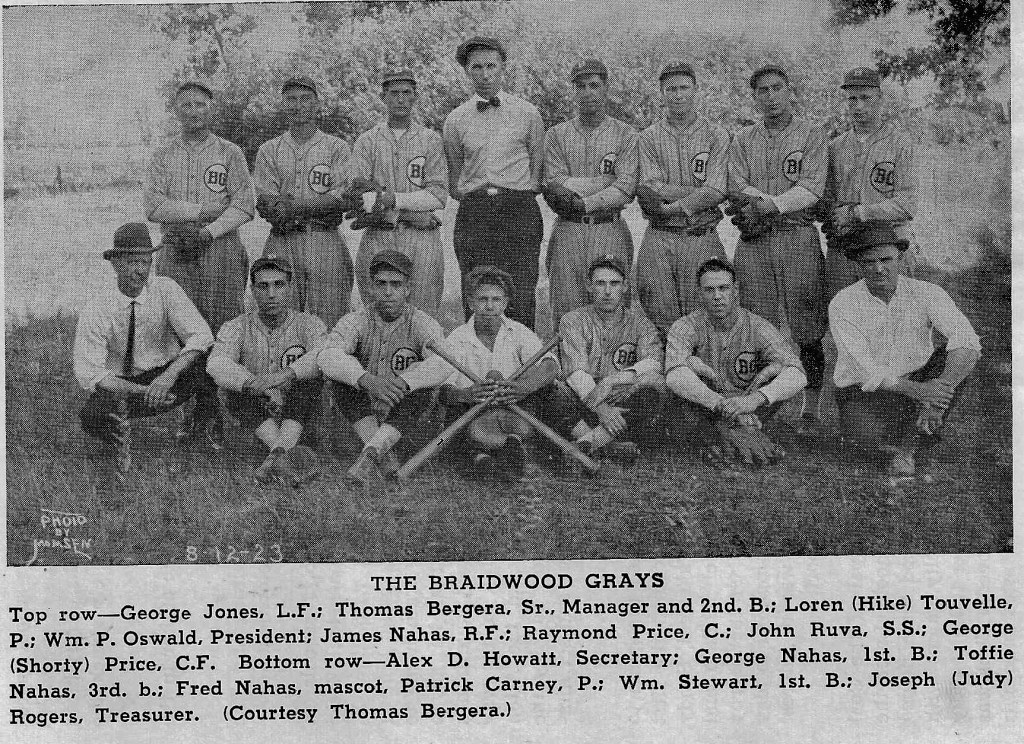
Credit to M.J. Donna’s book, The Braidwood Story, for the vintage pictures and history notes of the Braidwood Grays and the Braidwood Cubs. This book is a valuable reference for many interesting stories and pictures about Braidwood. (Copies may be purchased at the Braidwood Area Historical Society at 111 N. Center Street, Braidwood, Illinois 60408.)


 Braidwood Beginnings
Here’s to Mary Bennett! Great story.
LikeLike