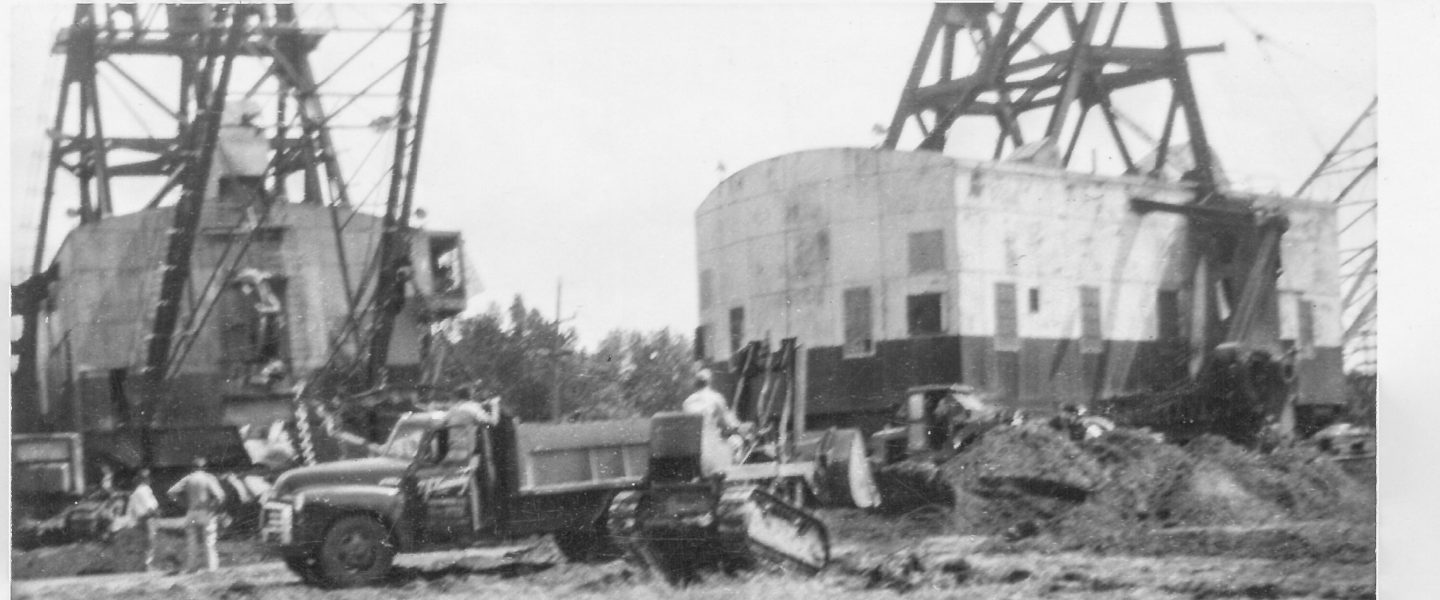
Spending a considerable part of my early life in a truck cab gave me a perspective that was vastly different than most of my colleagues in education. Professional educators like faculty and administrators live in an antiseptic, intellectual environment absent physical labor and grungy human sweat. Dust builds on bookshelves while brains give birth to bytes of brilliance. Conversations intended to impress devolve into lectures that depress.
Teaching and truck driving create alternate avenues to distinct destinations over roads plagued with hazzards, curves, detours, delays, U-turns, and stop lights. Sooner or later accidents will happen. Some never reach the speed limit; others accelerate.
A Trucker’s World
The world of road construction is in a different galaxy from the academic planet. Teamsters wave when passing, signal when danger lies ahead, and gather briefly at loading and dumping stations. Colorful metaphors are unrestrained, and directions are plain-spoken lest there be confusion.
For various periods of my life between age 17 and 28, I drove trucks while either attending college or working in education. Earlier in my life, I grew up riding in my father’s trucks and on tractors while soaking up the tavern and truck stop atmosphere.
Until you have sat in the cab of a radio-less GMC dump truck during a hot summer day on a construction site while you sweated with dust in your nose and eyes, you cannot grasp the sensation. The cargo might be hot asphalt loaded at the plant, gravel from a stone quarry, or a batch of sand, gravel, and cement.
In all honesty, I envied well-dressed men with brief cases in their slick, air-conditioned cars passing my truck on their way to important meetings. Their cars seemed to glide smoothly over the roughest of roads while my truck jarred me on even the smoothest highway in Illinois. My dream was to someday cruise down the road in my own slick car, briefcase beside me, to my own important meeting.
During the construction of a two-mile stretch of I-80 near Morris, Illinois, I drove a truck for O’Connor Construction Company. There was a crew of about 8 drivers responsible for hauling sand, gravel, and cement (all in one load in three separately gated sections) to the machine that would lay the concrete. I backed into the machine guided by hand directions from a laborer, raised the box, dumped the first section, and then pulled ahead briefly while the machine consumed one-third of my load. After repeating the process two more times, I departed to the plant to start the process of loading once again.
Hauling asphalt was simpler but hotter and dirtier. Asphalt will stick to the interior of the truck box unless you spray it with kerosene. Once loaded at the plant, a tarp was unrolled to keep the load hot. At the destination, roll back the tarp and secure it, back into the paving machine and dump the load. The machine does the rest after you pull away and repeat the process. The dirty part is rolling and unrolling the tarp and spraying the box interior. I always accumulated a layer of oil on my work clothes.
Hauling gravel from one of the Joliet quarries was even simpler than concrete or asphalt construction. There was also the opportunity to change the scenery from job to job. My favorite driving jobs were for Casey and Jim Klover as well as for Howard Wartenburg. My usual pay was about $2.35 per hour.
Appreciating the Differences
Higher education faculty and administrators might have a tendency to depreciate and dismiss the blue-collar aspect of driving a truck while my fellow teamsters might resent academic snobbery. Fair enough. But my history straddled both worlds.
Nostalgia
Driving from Denver to Joliet on Interstate-80, I see road construction signs ahead and reflect on my early days. Passing the signs and slowing, I glance at a young, baseball-capped truck driver, shifting to gain speed on his way back to the plant for the nth time over the same route, and think that I see myself. He glances down on me and perhaps he feels a little envy, while I look up and think, “I know exactly how you feel. I would love to switch places for an hour.”
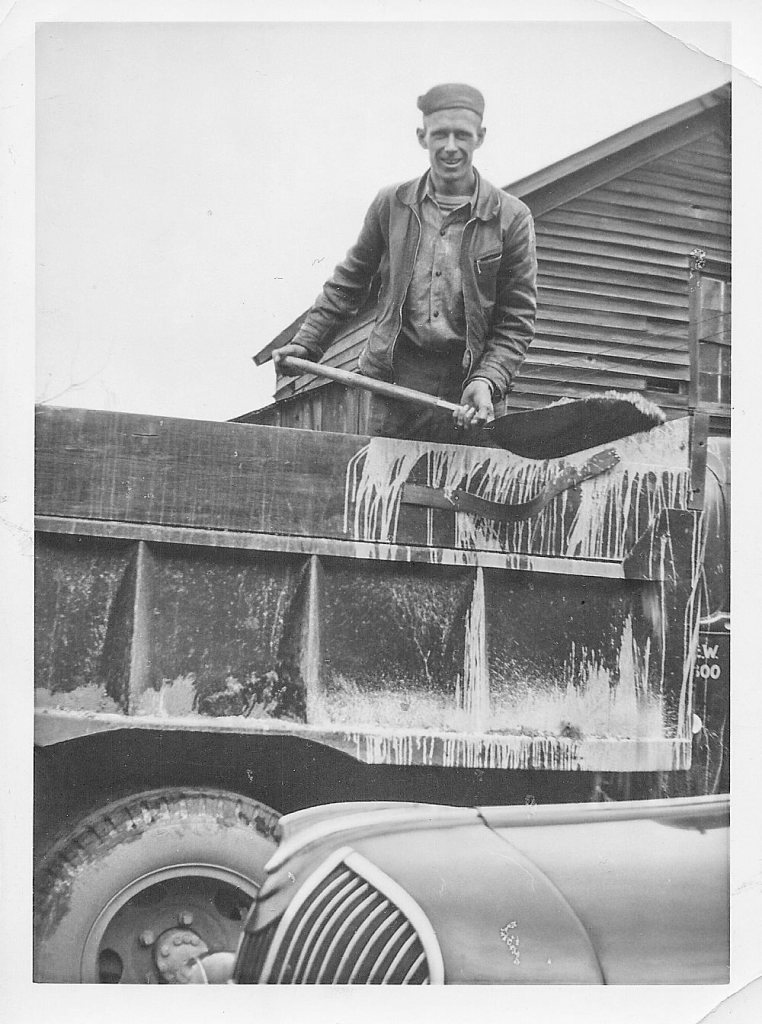
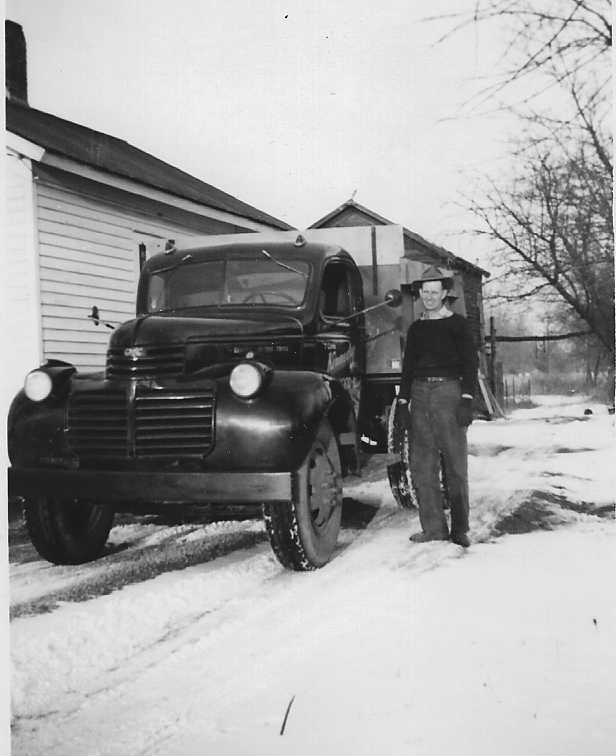
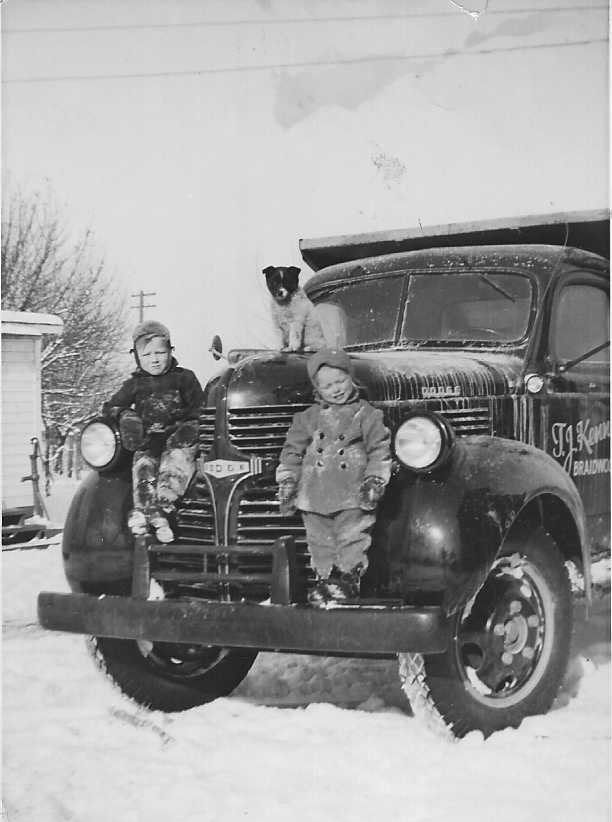
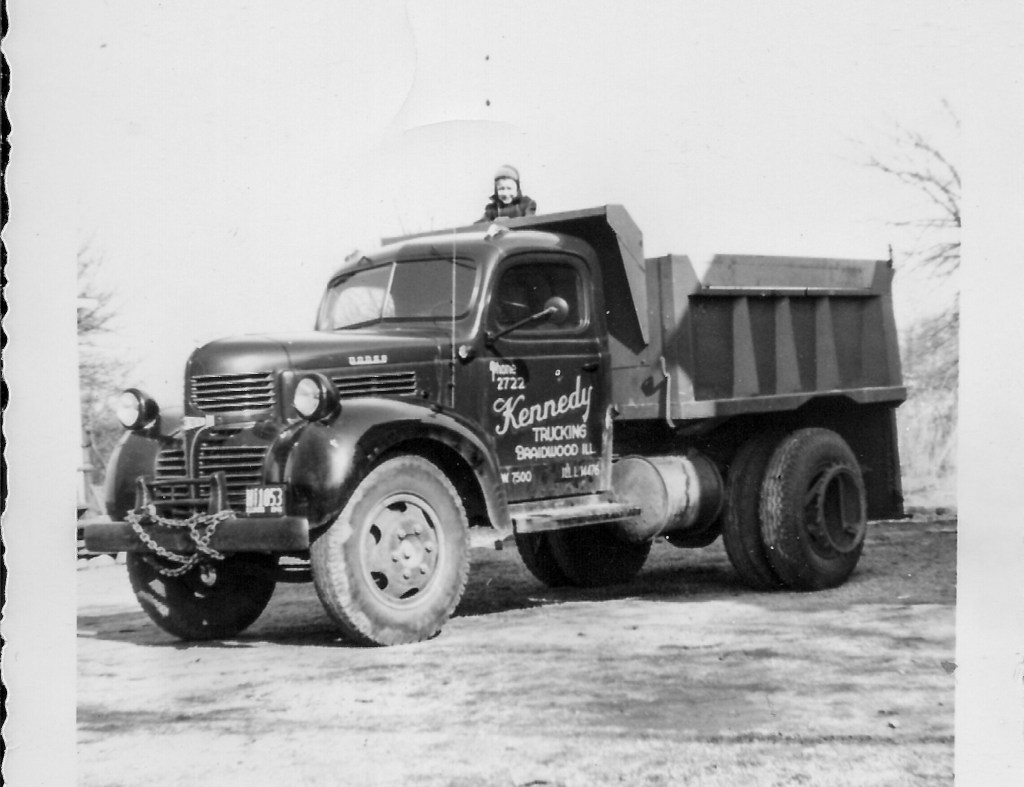


My grandfather drove truck for a place out of braidwood. His name was Bill Long. Did you know him?
LikeLike
Was he from Braidwood? What year would that have been?
LikeLike
He was from Wilmington. Also ran the farm. Lived on Warner bridge rd. Off peotone rd. I’m not sure of exact dates but I know he drove truck in the 70s and early 80s. Great man. Drive truck all day and farm all night sometimes.
LikeLike
I know the name. Lawyer Ed Long also owned a farm near there and there were many Longs who knew or were related to the Kennedy family. I drove mainly in the late 50s and in the 60s. Thanks for reading the article, Larry.
LikeLike
Thank you for taking me back for a minute 🙂
LikeLike