Reflections on a Time Past: 1967-1972
Over the course of five years as Intramural Co-director at Lewis, I can truthfully reflect on that time as the absolute highlight of my 50 years of higher education experience. For all of the stressful, problem-laden times that we endured – and we had those societal problems – there are hundreds of rewarding episodes that overshadowed the negative episodes. Even the negative aspects, like racial unrest, proved to be highly educational in the long run. Most of us now have a better understanding and appreciation of cultural and ethnic differences as a result.
My Intramural experience was focused primarily on the fall and winter activities. My colleague and friend, Paul Ruddy, and I were co-directors in the fall. I took responsibility in the winter, and Paul directed the spring programs. Throughout those five years, Paul was an invaluable resource and collaborator for all Intramural activities. (Mike Quirk directed intramurals shortly after me and Paul until 1980. Mike did a great job in continuing the intramural tradition.)
Throughout that time, our mentor Gordie Gillespie, was most supportive of the program and carried the flag for us with the Lewis administration. What can I say about Gordie that hasn’t already been said and actually understated?
Whether on the football field at dusk, in the gym at midnight, or in the “catacombs” in the evening, intramural activities would have been nothing if it weren’t for the desire and enthusiasm of the Lewis students. Regardless of race or economic background, they had a competitive bent that expressed itself every evening. Sportsmanship was almost always superb. Play was clean. Dedication and loyalty to their teams was outstanding. And it didn’t really matter how athletically talented and skilled they were.
I should point out that Paul and I were the only Lewis full-time staff involved in the program. Not so apparent were the Intramural student directors, the student organizations’ athletic directors, the scorekeepers, and the game referees.
The student directors were given a small stipend and were assisted by other students who were being groomed for director positions. Scorekeepers and game officials were usually paid a minimal amount – $5 per game – in cash, a practice that later conflicted with University business practices that required students being paid by check at a later date. We all know that $5 in cash (1968) meant a lot more to the average Lewis student than a check for $5 a week later.
Underlying I.M. Principles
The underlying principles, or critical success factors, of Lewis Intramurals were few and simple, but absolute.
- It was always imperative that we had activities for all students, regardless of athletic skill and talent.
- We needed teams and individuals to compete at their respective skill levels, and teams were not allowed to “load up.” We needed rules for team membership.
- Communication among students and organizations needed to be current, interesting, and congratulatory. The “Competitor” provided a communication vehicle that included schedules, standings, box scores, and leading scorers. The Prognosticator’s Predictions supplied teams not only with the weekly schedule, but also point spreads using “creative” verbs.
- We needed “rival” student organizations and housing units to compete in a healthy, respectful way.
- Intramurals provided an educational activity that existed outside the classroom and taught sportsmanship, physical activity, leadership, loyalty, teamwork, and a training ground for performance under pressure situations. This was also the intent of Intercollegiate athletics, but for a very few students. Intramurals were available to nearly all students.
How big were Intramurals between 1968-1980? At its peak, there were 28 football teams and 68 basketball teams. There were usually 25-30 different activities per year, and it was estimated that 90% of the resident students participated in at least one activity.
Some highlights
- Freshman Billy Scholl physically taunting an intramural icon, senior Pat Higgins, on the wrestling mat.
- The Teke-Phi Kap championship football game. During the game, one of hundreds of spectators remarked, “Look! The Library’s on fire!” The spectators glanced for a second before someone asked, “What down is it?” And all eyes and interest reverted back to the game.
- The Mole lighting up a victory cigar, a la Red Aurbach, in the final seconds of his team’s impending victory.
- Cocky Fitz scoring a basket.
- Any football game in the late October twilight.
- 6’ students going all out to qualify for the 5’9” basketball tournament.
- The Friars kicking field goals with their fists in knee tackle football.
- A tug-of-war between the novitiate Brothers and the Irish Christian Brothers.
- Olympic Day activities on a Saturday.
- A dejected John Morrey asking to be removed from officiating because of pressure from his fellow student athletes. I refused to accept his resignation.
- The “Frog” commenting on his team, the Pacers: “We’re small, but we’re slow.”
- Basketball games between Black students and White students at midnight before a packed gym during the days of racial unrest. At the end of the game, no problems.
- Brothers Tony Lux, Mike Cunningham, and Johnny Ostrowski leading a “Band of Brothers” to many victories.
In many ways, the egalitarian aspects of intramural activities exceed the value of intercollegiate sports. It might be argued that there are more intrinsic social, educational, and learning outcomes that are derived from intramurals. Since no “professional” coaching is involved, participants become more self-directed and democratic; teamwork is critical; pre- and post-game events are relaxed; and relationships/bonding may be temporary or life-long.
There are many more highlights and selected memories that live within each of us. We all have our stories. They are beautiful, they are meaningful. No one can take them from us. And they are meant to be shared. They are links that connect us to Lewis and to one another, and I feel privileged to be one of those links.
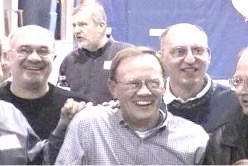
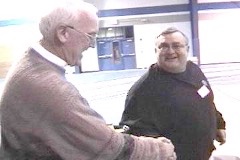
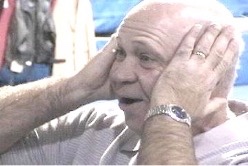
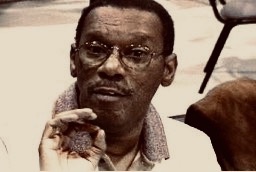
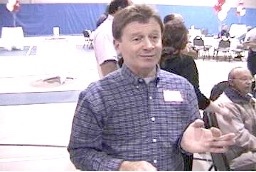
Pictures below are from the first Lewis Intramural reunion in 2002.

 Braidwood Beginnings
What a great insight of what intramurals meant to the overall growth of the Lewis students.
Looking back from the distance of 53 years, I appreciate what bonds we made and continue to this day. Example, after the passing of my wife a few months ago, I was heartened by the outreach of many of my “band of brothers ” from Lewis. It’s the thing I appreciate most from our Lewis life of which intramural played a very big part.
Thank you for putting a great program together!
LikeLike
Sorry to hear about your wife, Joe. I think that our appreciation for life, and in particular our lives at Lewis, grows as we get a little older. It was a very meaningful time for me as well as for so many others.
LikeLike
I loved every second of the intramural experience at Lewis. I respected every competitor I played against.
LikeLike
As with you, Smitty, I enjoyed all 5 years. Thanks for you comment.
LikeLike