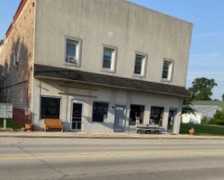
I have invited a few former Braidwood residents to share a some thoughts about their experiences in growing up in my hometown. It has always been interesting to hear different perspectives from people with similar backgrounds.
My acquaintance with Richard (Dickie) Shaw was limited as he was a little older than me and we attended different schools. I do remember delivering the Herald-News to his mother’s apartment over the old 13 Club. Lately we have been corresponding via emails since he lives in Chicago.
Please note that Richard is solely responsible for writing the article below. I made minor cosmetic changes, but the content is totally his.
Braidwood 1950-1960
By Richard Shaw
Braidwood in the fifties. What was it? Was it Charles Dickens’ opening line in Tale of Two Cities? “It was the best of times; it was the worst of times.” Was it Happy Days, the Golden Globes winning TV sit com? Or was it American Graffiti the Golden Globes winning movie? It certainly was some of all the above. This is a glimpse of Braidwood in the fifties as seen through the eyes of a former resident.
The principal employer by far was Grinchuck’s Pants Factory. The Grinchucks were the wealthiest family in Braidwood. Was Grinchuck’s the company that gave jobs to otherwise unemployed people or was it the traditional textile “sweatshop” of the times? The owner Jerry Grinchuck did come from New York City which was the birthplace of this cruel industry. The post war 50’s were relatively prosperous. There were other local jobs available. The Rossi Macaroni Factory, the Joliet Arsenal, Joliet Caterpillar Company, Coal City and Wilmington Paper Mills and, of course, the local mines to name just a few. Unfortunately, as this was the 50’s the good jobs went to the men. Grinchuck’s work force was nearly all women and the large brick building itself was not air conditioned so…sweatshop it was.
In the fifties, the Chicago Motor Club advised its members to avoid Braidwood as it was on the main route to California, Route 66, and was a so-called speed trap. Actually, the traffic signal had nothing to do with speed but was a blinking red light. Or was the speed designation simply due to the fact that impatient Westbound drivers simply did not want to stop “out in the middle of nowhere” and disregarded the blinking red light? The policemen from the fifties were Louie Ferrari, Keetzie Davito, Tootie Pomato, Jack Gustafson, and Don Barnes.
Braidwood was known for its spectacular 1938 trip to the Illinois State High School championship game. It had been the only team to advance from the District level to the top game. At that time and into the fifties there was no school division based upon enrollment. Big, small, and tiny were all lumped together. Reed-Custer occasionally got recognition during the Illinois Sweet Sixteen Tournament for this accomplishment. The Reed-Custer “fight song” was the Notre Dame “fight song” word for word with the exception the name Braidwood was substituted for the name Notre Dame. Jimmy Touvelle was the top Braidwood athlete during the fifties. In basketball, he was the Coal Valley Conference top player and went on to become a member of Loyola’s NCAA Championship squad. Jimmy was also the teenage starting pitcher of the town team baseball team. The 4th of July Baseball Tournament brought many entries from nearby communities. And packed stands.
Braidwood was the only town that had a black population. I cannot think of a single town in our Coal Valley Conference (Wilmington, Coal City, Gardner, Mazon, Seneca, South Wilmington, and St. Paul of Odell) that had a black player or a black in the student body. As these folks were brought in as coal mine strikebreakers in the late 1880’s these families were amongst the oldest in town and deserved the respect that they got. Blacks were accepted in few other local communities in the Joliet and Kankakee area at the time. In Braidwood, in the fifties, blacks were simply our neighbors and friends.
The Braidwood Recreation Club started out as just an idea generated by a few local businessmen. Went door to door asking for startup donations. By the close of the fifties, it was by far the best recreational site in the area. Members flocked from Joliet and Chicago…but wisely all the Board of Directors positions were constitutionally held by local residents. Good thinking, great club.
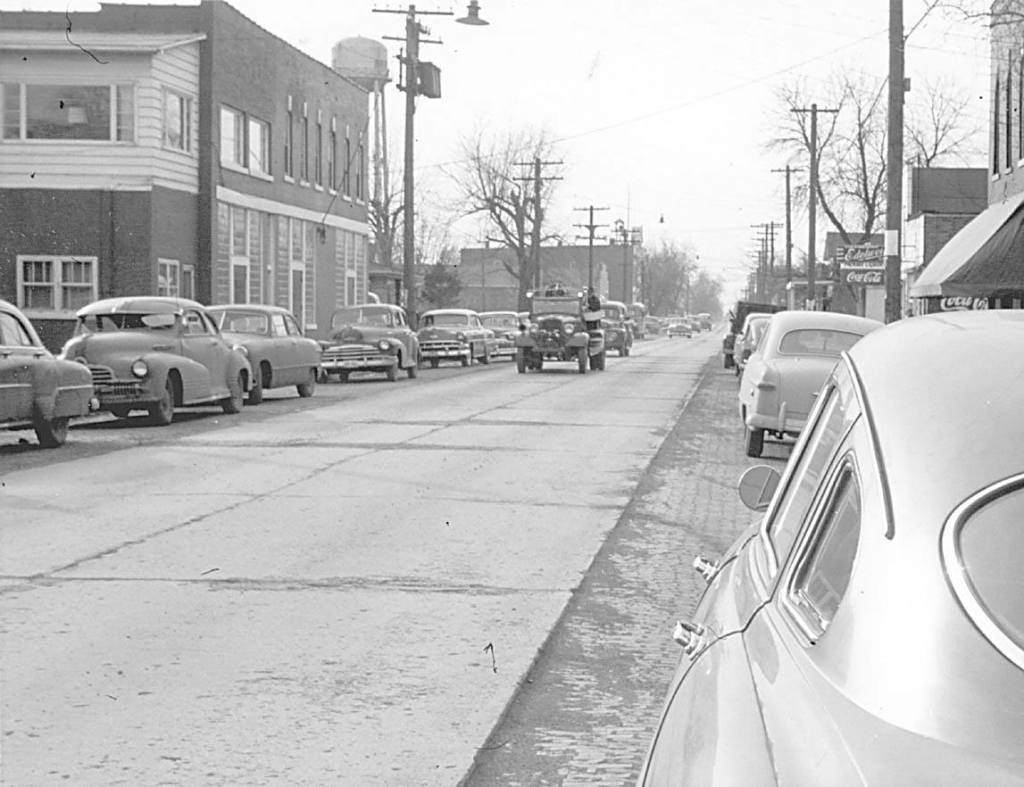
Main Street, Grinchuck factory on left 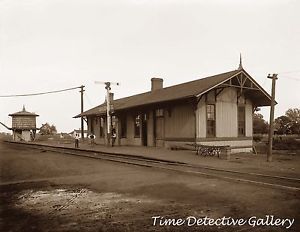
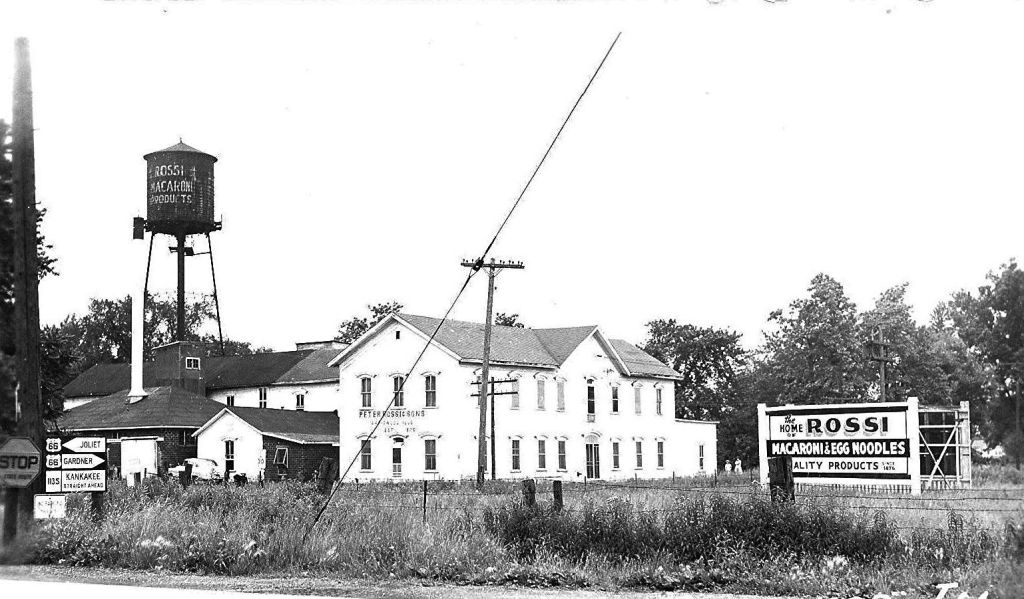
Rossi Macaroni Factory 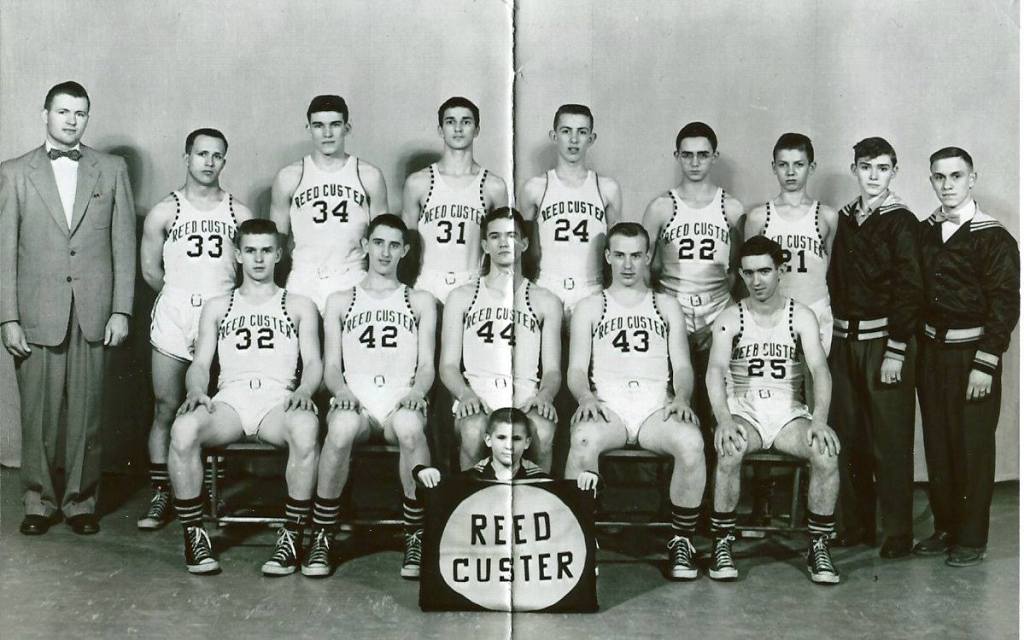
1953 Reed-Custer Team
The pictures can be seen on the Braidwood Area Historical site. https://www.braidwoodhistoricalsociety.org

 Braidwood Beginnings
Great article. Blacks could not belong to the Braidwood Recreation Club however.
LikeLike
That’s correct, Karen. Key board members (you can probably guess who they were) were racist. Remember that admission to membership required a personal interview. Their charter probably didn’t include a restriction based on race, but the effect was the same. Braidwood residents were would considered first, but not if you were black. I wonder if there are any blacks who are members now. Interesting how that all works. The only time that Bill Pinnick went to the BRC was when he was helping save drowning victims with the fire department.
LikeLike
Great article. I grew up in Wilmington in the 60’s. My dad ran the pheasant farm. I wouldn’t want to grow up anywhere else than the area I did. Good people.
LikeLike