“Eenie, meanie, miney, mo…“
I was 6-years old, a first grader at the Braidwood East Side School, when I learned that this little ditty contained an offensive word, a word that should not be repeated. One of my classmates corrected me while we were waiting for school to start that day. The word: “nigger.”
Obviously, my parents had used the word in our house, probably without considering the possibility that I would repeat it on the playground where African American kids would be present. But that day would be etched in my memory for the rest of my life. I remember is as if it were yesterday, some 76 years later. It was my introduction to racism in America.
When I review my journals written over the past 50 years, it is obvious what my true interests are. Most topics include family, education, sports, travel, religion, history/genealogy, and my hometown of Braidwood. I suppose most journal writers might have similar topics.
Where I seem to differ from other writers (who look like me) is the recurrent theme of social justice, especially racism. This thread is subtly woven into many of these topics. I have often asked myself, “Why?” Why has concern over racism been embedded in the essence of a man who has never directly suffered instances of racial prejudice?
I can think of four factors over a lifetime that have conditioned my thinking.
- Growing up in Braidwood
- Teammates and colleagues
- Travel
- Reading and Writing
Growing Up in Braidwood
During my critical formative years between birth and adulthood, Braidwood’s modestly diverse population was an anomaly compared to its neighboring towns. Predominantly inhabited by European Americans, our town also included 11 African American families.* Out of a population around 1,200 people, Braidwood’s Black community was fairly significant.
(*African American family names that lived in Braidwood during the 1940s and 1950s: Pinnick, Turner, Anderson, Erickson, Dillard, Carter, Tops, Wells, Williams, MacFarland, and “One-armed” Frank. #Special thanks to Karen Anderson for her help.)
With the possible exception of South Wilmington, the neighboring towns of Gardner, Wilmington, Coal City, and others had zero Black populations. (And many of them had unwritten “sun down” reputations.)
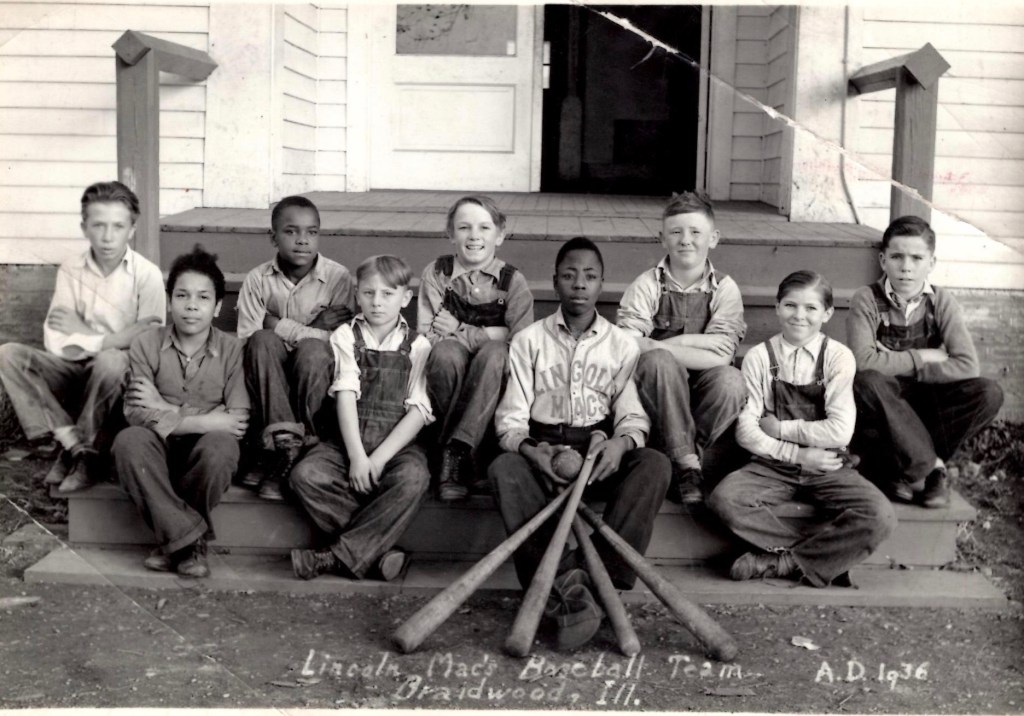
My paper delivery job enabled me to interact with African American families on a regular basis. Playing baseball was a way for many of us kids to see one another as teammates. Regardless, our small town’s environment formed a basis for knowing, understanding, and appreciating one another. It was the foundation for seeing African Americans as neighbors, friends, and teammates.
Barney Faletti, a life-long Braidwood area resident, and I had similar experiences. Over the years, we shared racism stories that would not have been possible had we not been raised in Braidwood. When we were 10, Barney and I witnessed our first local racist incident, an example that would be repeated the rest of my life.
After a pick-up baseball game, two of our teammates, one Black and one White, were bantering to the point that Richard (white) and Buddy (Black) exchanged words with Richard calling Buddy a “nigger.” The two wrestled to the ground and Buddy finally convinced Richard to “take it back,” which amounted to an apology. The rest of us silently agreed that Richard had crossed a line.
Teammates and Colleagues
In School
Joliet Catholic High School, located in a heavily populated diverse community, was a “white” institution. I believe that in my four years (1954-58) there, only one Black guy was enrolled. It wasn’t until I matriculated to Lewis College that fall that I was in school with African American students.
During the first semester, I had had the chance to play for a Joliet basketball team that played park district leagues in the Joliet and Lockport. Both leagues had Black, integrated, and white teams.
In the second semester, I was asked to join the Lewis basketball team. My new team had two Black students, Bob Thayer and Gordie Kendall. Bob and I were not only teammates, but also roommates for a year. I witnessed several instances where my Black teammates endured racially motivated actions. (In Memphis, Bob had to take a colored taxi and couldn’t stay in the same hotel with us. In Joliet, I was with him in bars on Joliet’s west side that would not serve him.)
Bob and I have remained friends even today. I can still picture my friend being separated from the team in Memphis, riding away in the “colored” taxi to an unknown destination. In later years, Bob told me that coach Gillespie had informed him as to what to expect. But I was shocked to see my friend a blatant victim of systemic racism. I hurt for him.
Working at Lewis
After teaching and coaching for five years at the high school level, I became a coach and administrator at Lewis College, first in the Athletic Department and then as Dean and VP for Student Affairs. Remember, this was between 1967 and 1978, an eleven-year period of social and racial unrest. (Some would call it turmoil after assassinations of MLK and RLK in 1968, Viet Nam, etc.)
Looking in the rear-view mirror, I think that I navigated through that time with a reasonable amount of stability and credibility. However, much of the credit I owe to some remarkable Black colleagues and students* who helped guide and educate me on that journey. Building on the foundation laid in Braidwood, my Lewis teammates, graduate school, and extensive reading, I had learned a lot about race relations by age 38.
(*Lewis College colleagues: Kathleen Bolden, Charles Kennedy, Charles Jones, Yvonne Smith, and many Black students.)
Travel
Until this time, nearly all of my education about non-White Americans was about African Americans. It was during the next chapter in my career that I learned about cultures and people outside of Illinois. Colorado, a state with far fewer African Americans, became the vehicle that took me farther away.
Regis University in Denver, Colorado hired me to use my skill set to establish a “New Ventures” unit. This unit was designed to enable private institutions of higher education to establish new academic programs to serve adult learners who had previously been denied access to degrees. My mission was to assist these colleges to open doors to this new student population.
I lost track of the number of colleges and universities across the country where I either consulted or had long-term working relationships. Each one had a special mission that I could relate to. Over a period of 27 years, I became good friends with many of the administrators and faculty members. Their dedication to their students and institutional mission was astounding …and I still marvel at the jobs they were doing.
Seeing no real geographic boundary, New Ventures then expanded its scope to include Puerto Rico, Ireland, and the Philippines. It was my 25-year relationship with Ana Mendez University in Puerto Rico (and Florida and Texas) that had the greatest impact on me. Puerto Ricans have long been the object of discrimination in the United States. Previously, I had limited knowledge and appreciation for the Puerto Rican culture and obstacles. But my friends taught me well.
I also learned a lot about the Filipino people through my new friends and colleagues in Manila. Regis associate, Bill Husson, and I also had the chance to spend a little time in the Republic of China where we were considering further expansion.
International travel served as a reminder that there are other parts and people of the world that many of us don’t know about. I was fortunate to know and learn about a small fraction of the world.
Reading and Writing
My parents had instilled in me an insatiable desire to read. In order to better understand the challenges and history of racism, I have read many books about the Black experience. History tends to be written by members of the dominant culture, so it was important to read stories and experiences as seen through the eyes of African Americans as well as other respected historians.
Writing my journals and blog posts has also helped to clarify and better understand my own thoughts, as a white guy, about the fundamental issues of racism. I confess my confusion about why my peers can think so differently than me. My failure to understand their views on racism continue to plague me, and tempered dialogue remains minimal.
Concluding Remarks
Social and legal justice for all continues to be a worthy goal for our country. There is no denying that we have made progress toward that goal but a significant segment of America refuses to accept the idea that racism still exists. That black and brown people are treated differently. That there is only one race. The human race includes all of us.
There are two reasons why I needed to write this article.
- To better understand my own reasons for being passionate about racial issues.
- To inform readers why my perspective may not align with others’ perspectives.
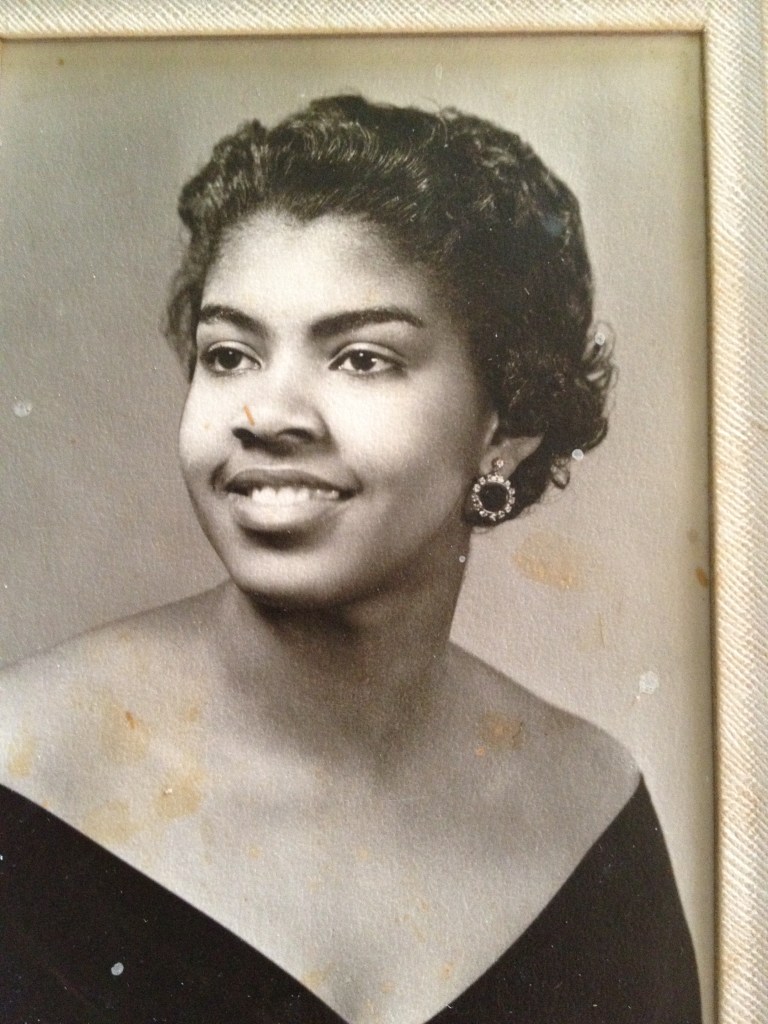
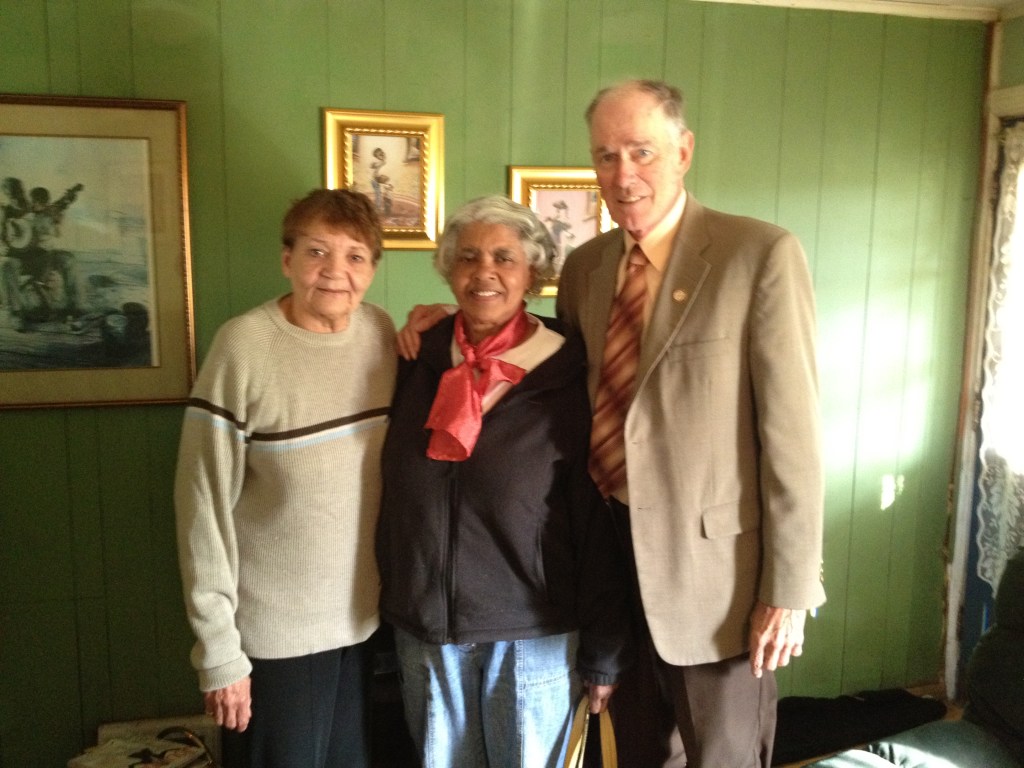
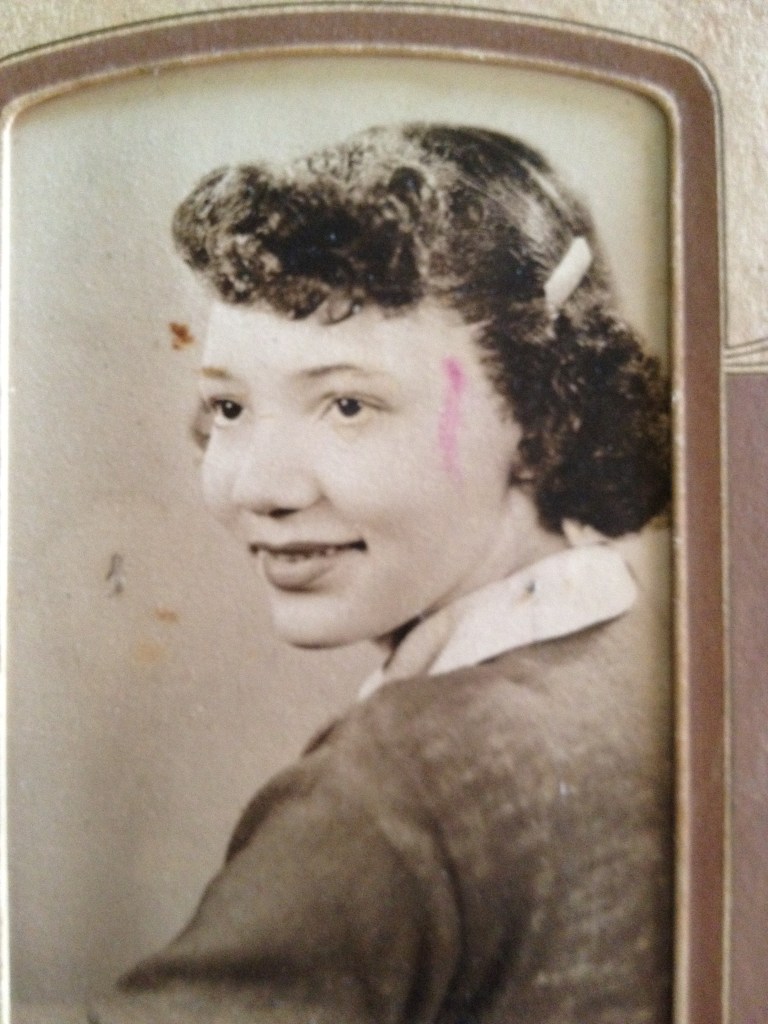
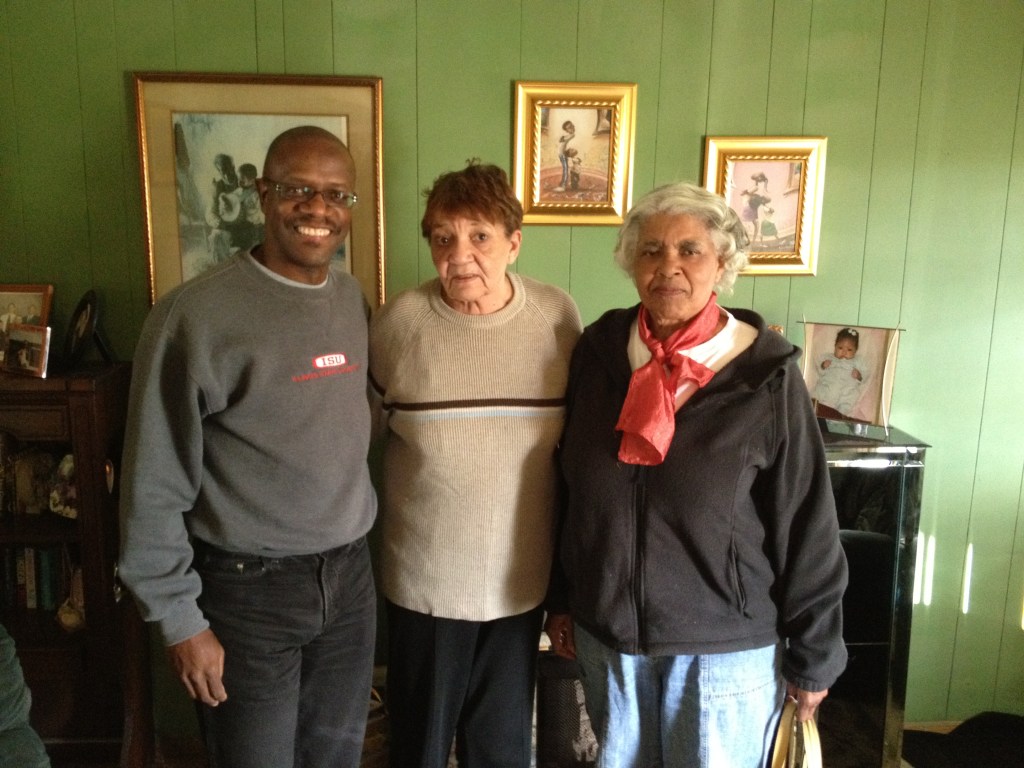
Tim Pinnick introduced me to the two ladies above, both relatives of Tim’s and natives of Braidwood. They both spent their childhood years in my hometown. I learned a lot about their experiences, both good and bad. Thanks to Tim, Gladys, and Evelyn.

 Braidwood Beginnings
Excellent read TK!
LikeLike
Thanks, Dennis. You can probably relate to our Braidwood experiences.
LikeLike
Evelyn Pinnick Chester is still with us. She is my first cousin. Gladys Pinnick has passed, don’t know if you know that.
LikeLike
I would love to see her again, Karen, and to see you again.
LikeLike