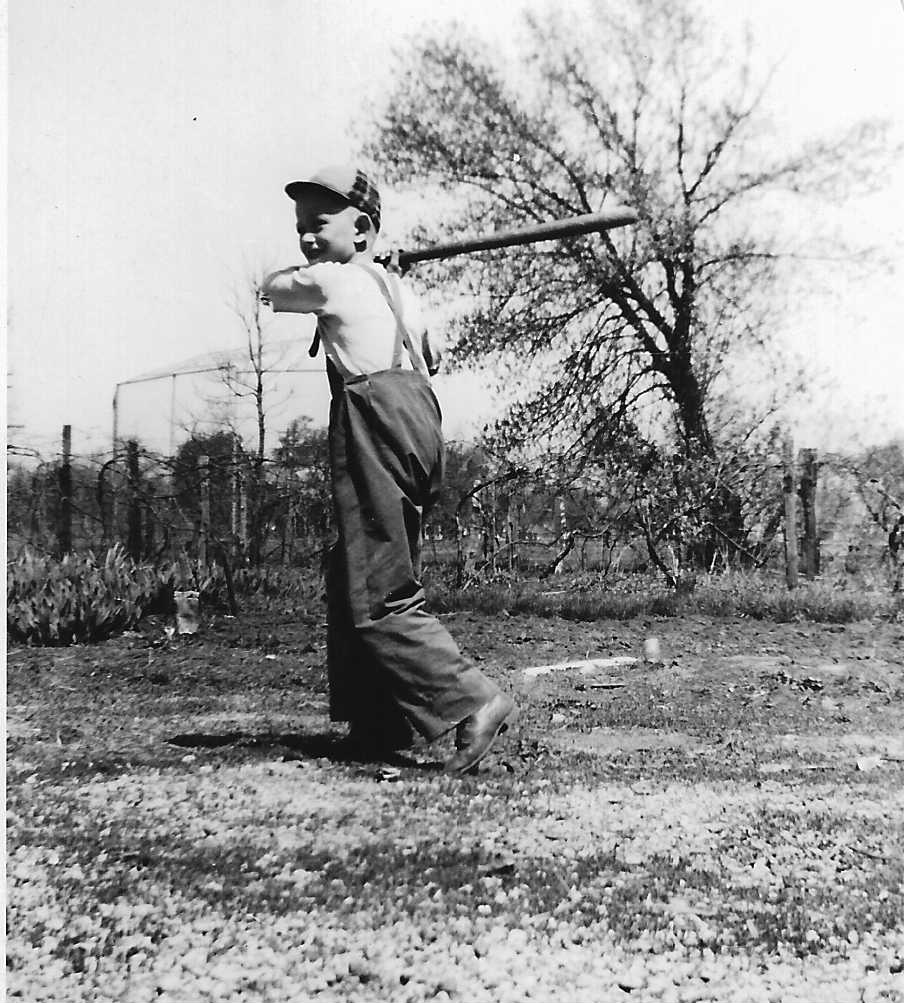
Until one traces his steps backwards, starting with his current state and then patiently walking toward the beginning of his life, only then can he comprehend the “plan-less plan” that evolved. As if it had been designed at the moment of conception and crawled directly to its destiny. Each step had rested on ADAPTING TO CIRCUMSTANCES beyond his control. Upon unknown people, whims both societal and environmentally.
For most of us, our careers become what we are known as. Our identity is associated with our work. My dad was known as a truck driver or heavy equipment operator. My mother was “the seamstress lady.” My brother’s vocation and hobby was, and is, a “car guy.” This one-dimensional label sticks with us as if we are cardboard cutouts, not multi-dimensional human beings. But the questions remain: “How did we choose our profession? Did the profession choose us? What was the process in selecting a work life that provided a living for us and our families?”
A better question might be, “Was my future work life determined by a series of happenstance occurrences? People I met? Quirks of timing? Inadvertent decisions with unintended results? Chance?”
I, for one, cannot find any reasonable explanation for how my journey in higher education was capped off as leader of an entrepreneurial organization within a Colorado Jesuit University. Or as a governing board member (chair) of a dual-language program with a Puerto Rican university.
The Foundation
Two events, many years apart, laid the groundwork for a half century career in higher education. The first was a coal miners’ strike in 1877 in Braidwood, Illinois. The second was being recognized and shaped as an athlete by legendary Coach Gordie Gillespie. Let me explain.
Braidwood
I was born and raised in this small town in 1940. It was a time when the Great Depression was coming to a close and a new threat lay on the horizon. That threat became real in December, 1941 when the United States entered World War II. Braidwood, population 950, was the center of my universe for the first 21 years of my existence and provided a foundation for my life.
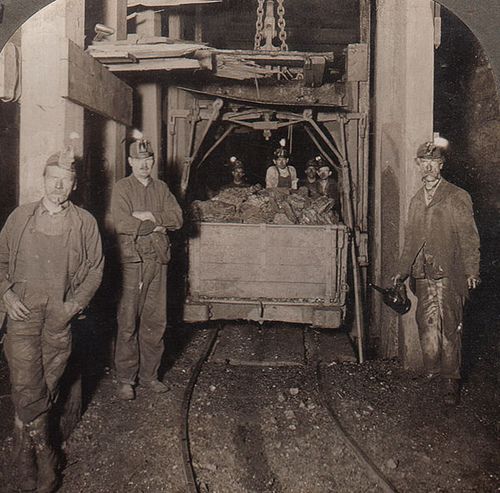
Braidwood was unusual for small towns in the Midwest. Coal mining and farming were the major industries, but the mines made the major impact on what made this small town unique. Discovered in 1864, coal would provide the fuel for homes, businesses, and factories in Chicago and northern Illinois. In a short period of time, there were several “shaft” mines scattered throughout the area that employed hundreds of miners.
Confrontations were common between these miners and the owners of the mines, since the owners attempted every means to keep salaries low and avoid safety measures. In 1877, the miners decided to strike for better wages and conditions. The owners knew how to play this game. Bring in African American strike breakers. Within a short time, riots broke out and the Illinois governor brought in the military to establish peace.
It was only 12 years after the end of the Civil War and former African American slaves were in the desperate mode of finding employment other than the plantations. Deprived of formal education and skill training non-existent, almost 4 million Blacks sought any employment that would help them and their families survive. They had started with nothing even though their slave owners were compensated by the government up to $300 per freed slave.
My family and I had adopted a town that included citizens with European as well as African roots. Some descendants of these Black miners, about 11 families in the 1940s, continued their lives in Braidwood.
My formative years would be schooled by having Black people as friends, neighbors, and fellow humans. I would learn later that most other white kids, whether they grew up in a small town or in a large city, didn’t have that advantage. And that advantage would loom large later in life.
Basketball
I learned about Coach Gordie Gillespie in 1954 when I was a freshman at Joliet Catholic High School. But it wasn’t until May of 1958 that he and I became acquainted during a Catholic High baseball scrimmage against Lewis College players in Lockport. Coach Gillespie saw enough raw athletic ability that he offered me a small baseball scholarship. I would attend Lewis that fall.
Commuting from Braidwood, I attended my fall college courses and joined a basketball team that played in the Joliet and Lockport Park Districts. It was pure joy playing a team sport that I hadn’t had the opportunity to play during grade and high school. I had thought of myself exclusively as a baseball player.

By the end of the first semester, I had evolved into a raw basketball talent, good enough to be seen by the Lewis assistant coach, Pat Callahan, as more than a baseball player. The timing was as fortuitous for me as it was unfortunate for two varsity basketball players who had become academically ineligible. I was recruited to join the Lewis College basketball team in the second semester. At that point, I became a 2-sport athlete at Lewis and would continue through my senior year.
For the remainder of that freshman year and next three years , Coach Gillespie doggedly molded me into a basketball player who would become a Small Catholic College All-American and a 1962 draft pick of the Chicago Zephyrs NBA team. In fact, basketball fit my athletic ability better than baseball.
Had I not played basketball on the college level, and not gained a bit of notoriety, it is doubtful that could have become a multipurpose coach and teacher. After graduation, I coached baseball, basketball, and soccer on the high school and collegiate levels and was co-director of Lewis intramural athletics. Of course, any successful involvement in athletics was directly related to the mentorship and coaching of Gordie Gillespie.
The Confluence of Braidwood and Basketball
Fast forward to the late 1960s and the early 1970s. This was a time of three assassinations (John F. Kennedy, Martin Luther King, and Robert F. Kennedy), the Viet Nam conflict, and riots in Chicago.
Personal relationships in my formative years with people of color, both in Braidwood and later at Lewis, became increasingly relevant during the social and racial issues of the 1960s and 1970s. Unlike many of my peers, I was in a better position to empathize with, and understand the challenges facing, the newly emerging angry young Black populations. Now my challenge was to understand the angry young white population.
Lewis had Black students who were from the inner city of Chicago and White students from the suburbs. Given the times, having these two broad categories of students — living in the residence halls, competing in intramural sports, sitting in class with one another, and eating in the same cafeteria– meant that there were ample opportunities for physical and verbal confrontations.
Higher Education Administration
My record of credible relationships with African American populations plus athletic administration at Lewis was recognized and appreciated by the Lewis upper administration. I was asked to take on a more comprehensive position at the University. That position would be Dean of Students.
In order to be offered the Dean position, everything had to be in order. The social upheaval in the 1960s and the early 1970s in the United States provided the landscape that was fertile ground for someone with my background to be a coach in a different role. Having demonstrated how I could handle a diverse student population with some level of tact, diplomacy, and trustworthiness, I had entered the world of higher education administration, a role that continued for the next 50+ years.

 Braidwood Beginnings
Enjoyed the journey .
LikeLike
Enjoyed the journey, will share with my s
LikeLike
Thanks, Karen.
LikeLike
Thanks, Tom. It was nice to read your notes this morning.
Keep it up!
<
div> I have saved all th
LikeLike