“It wasn’t the Nazis that we feared. It was the Soviets.”
John Valaitis
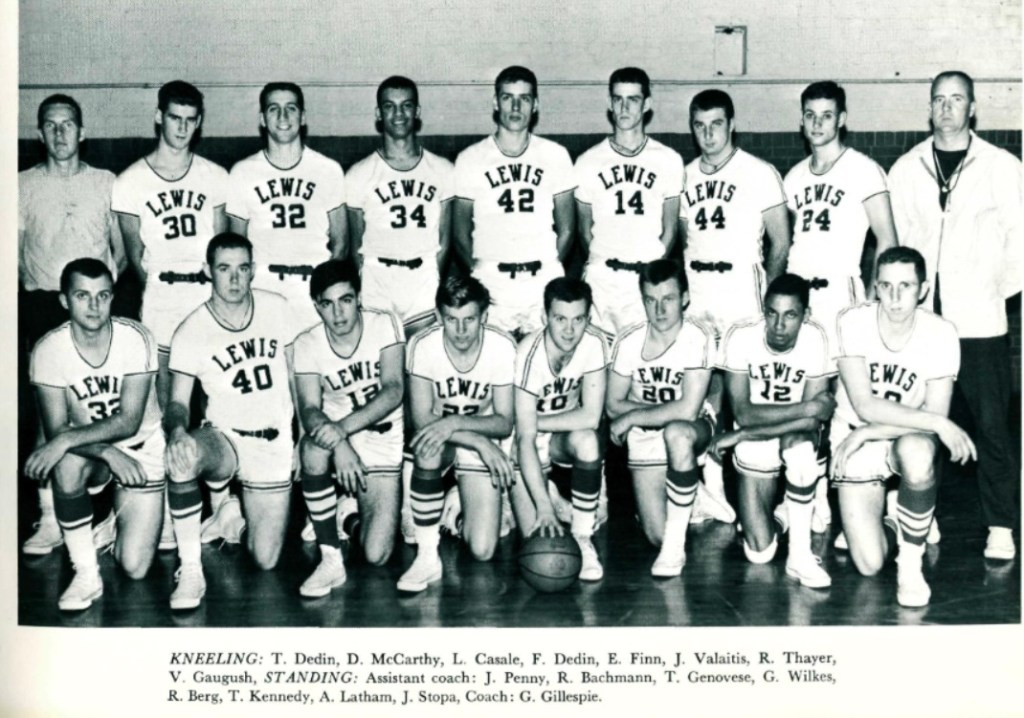
His story was unknown to me until many years after our playing days at Lewis College. Our 1959-60 team was comprised of teammates from Chicago area high schools, one from Peoria, and one from Braidwood. Other than their schools, I knew little about them.
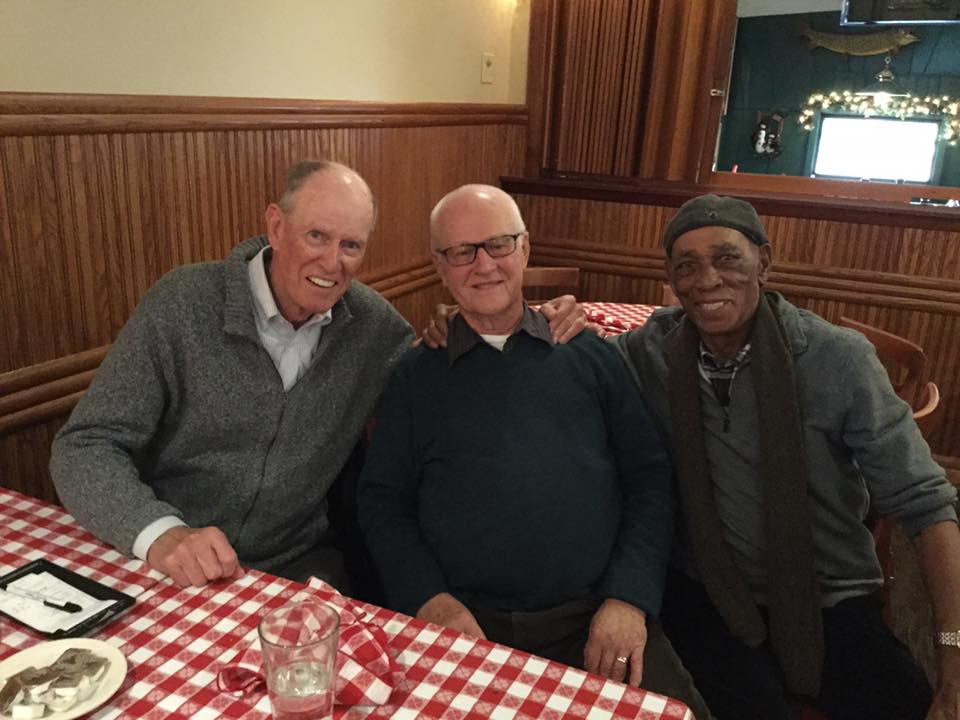
As the years passed after graduation, there were times that many of us would gather together, usually at Merichka’s, our favorite restaurant during our college days. As we relished our “poorboy sandwiches,” we would reflect on how we arrived at Lewis. Our starting point and prime connector was coach Gordie Gillespie.
Gradually, we learned more about our families and backgrounds, how Gordie melded us together, and how our lives were altered because of our common Lewis experience. I thought that my background was singularly different because I was from a very small town and my teammates were from big cities.
Then I learned more about John Valaitis.
Lithuania
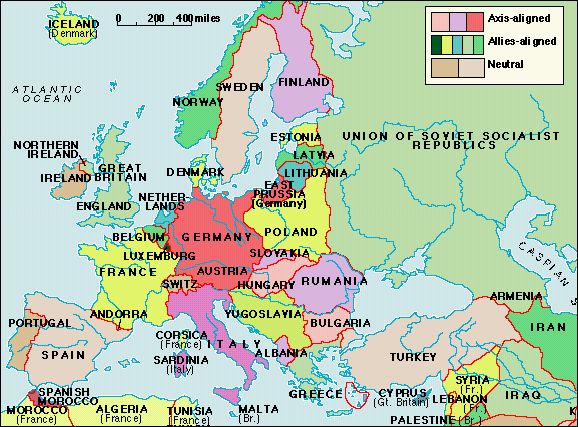
John was born in 1939 on his family’s small farm in Lithuania. Lithuania, along with Latvia and Estonia, form the Baltic states. This was the year that Lithuania was taken over by the Nazis and later by the Soviets. John’s family was in the middle of WWII, squeezed by two aggressive military countries.
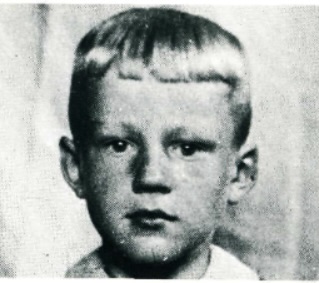
Under the Soviets, Lithuanian farmers were being assessed exorbitant taxes, put on trial, and sent to Siberia. It was evident to John’s father that they couldn’t exist in their own country and must leave. John’s dad hooked up two horses to a wagon, packed some belongings, and started his family of two adults and three children on a southwestward trek across Europe. Along the way, they were helped by some Nazi soldiers, but it was the encounter with the U.S. army that helped them survive. My teammate, John Valaitis, was 4 years old at the time. The year: 1943.
The United States Army and the Allies evidently helped the Valaitis family survive through the end of the war, but it wouldn’t be until 1947 that they would be able to briefly relocate to a grape farmer’s family in Michigan. Within a matter of weeks, John’s dad’s brother invited the family to move to the Chicago Bridgeport neighborhood. (Near 32nd & Halstead.)
Living in Chicago
How did they survive in Chicago? John’s dad got a job as a janitor and his mom worked at a meatpacking company.
Schooling in America for John began in 4th grade at St. George Grade School. English was a second language for him, but he learned quickly and soon picked up the game of basketball. John’s academic and sports ability enabled him to attend St. Rita High School.
Lewis College
After he graduated in 1957, from St. Rita, John was recruited by Coach Gordie Gillespie to go to college and play basketball for Lewis College. As a freshman, I joined the basketball team during the 2nd semester of 1958-59 and became John’s teammate.
John was a starting guard for 3 of his four years, graduating in 1961 from Lewis. Soon after graduation, John got a job with All-State, a company that he worked with for 37 years. Yet, it would be many years later when I would know about his remarkable story.
Refugees: Common to All
John’s story was particularly relevant to me for several reasons. 1. It gave me an account of a WWII refugee that I never would have had the chance to hear. 2. John’s story made me appreciate the sacrifice that he and his family made to live in the United States. 3. My ancestors had to make similar decisions many years ago.
I imagined how fleeing one’s homeland was so difficult, but necessary. My ancestors had to make the same decision many years ago. John Kennedy and his son, James, leaving Ireland during the potato famine. Jobst Gunter emigrating from Germany. John Van Duin and Pieter Claver leaving Holland during severe political unrest. Tony Delgado’s father, Frank, risking everything to cross the Rio Grande from Mexico. As with John Valaitis, these relatives and friends voluntarily decided that leaving their homeland was a decision they had to make.
In historical terms, human beings live the story of migration; with the first humans in Africa and spreading globally. People migrate for survival, and for the prospect of better lives for their families.


I am reading a book right now . The Warsaw Orphan. More about WWII and movement within Poland but a good book about families being separated and refugees. Anyway, it is a good book.
LikeLike
Thanks, Karen. The world can be a hostile place when love is missing. All we can do is to care for one another in our own way. What is the name of the book?
LikeLike
The Warsaw Orphan
LikeLike
on another note: Jannette Pinnick Green, who was the principal at Joliet Central High School at one time, and decendant of Herbert Pinnick from Braidwoood, passed. The obituary is in the Herald News.
LikeLike
Thanks, Karen, I will take a look.
LikeLike