Dear grandkids:
As I write this letter to you, eleven of you grandkids are 23 years and older. Emme is 16, Claire is 11, and Lily is 9. Cal, you are the oldest at 29. I point this out in order for you to get a perspective on a story about my mother, Adele, who was born in November of 1918. She is one of your 8 great grandparents. Adele Margaret Kennedy was probably 17 when she married and 21 when I was born. (Who are your other great grandparents?)
My First Memory
What was life like for her when she and my dad started a family? My first memory occurred about Sunday, January 10th, 1943, the occasion when dad parked the car at St. Joseph Hospital in Joliet. Dad left me in the car and returned a little later with mom carrying a one-week-old baby in her arms. At first, I didn’t know it was a baby until she got in.
I refused to even look at mom at this point. After all, she had abandoned me for a week, a long time for a boy that was only 27months old and still recovering from a broken leg. I quickly forgave her as she took me in her arms and I resumed my position as number 1…at least for a while.
Our House
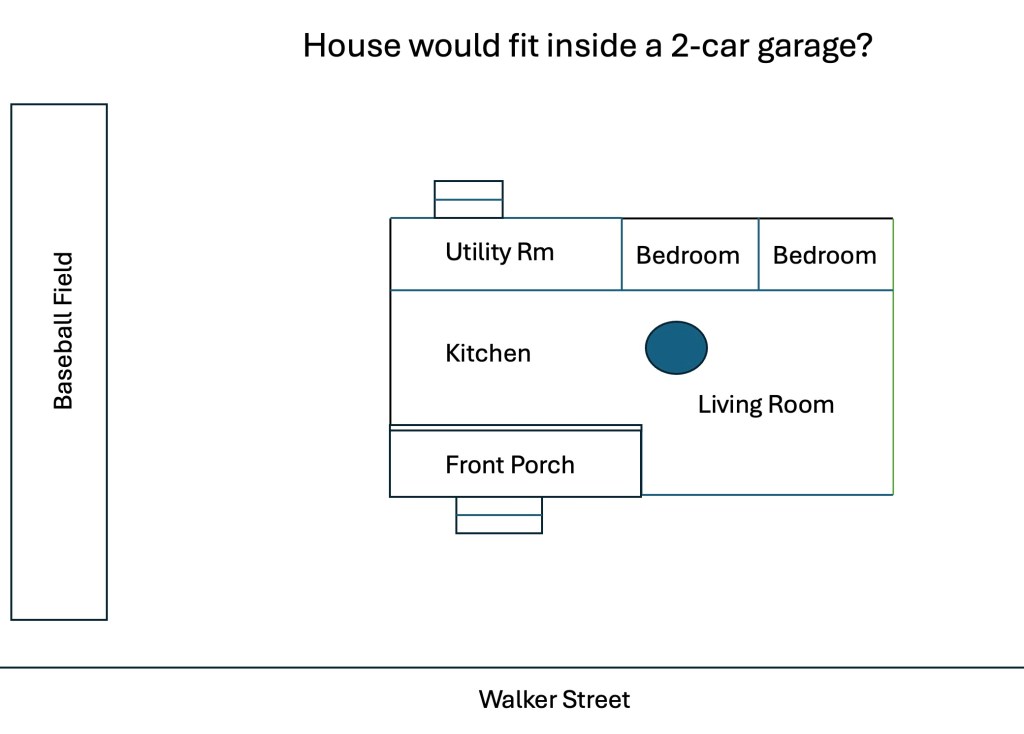
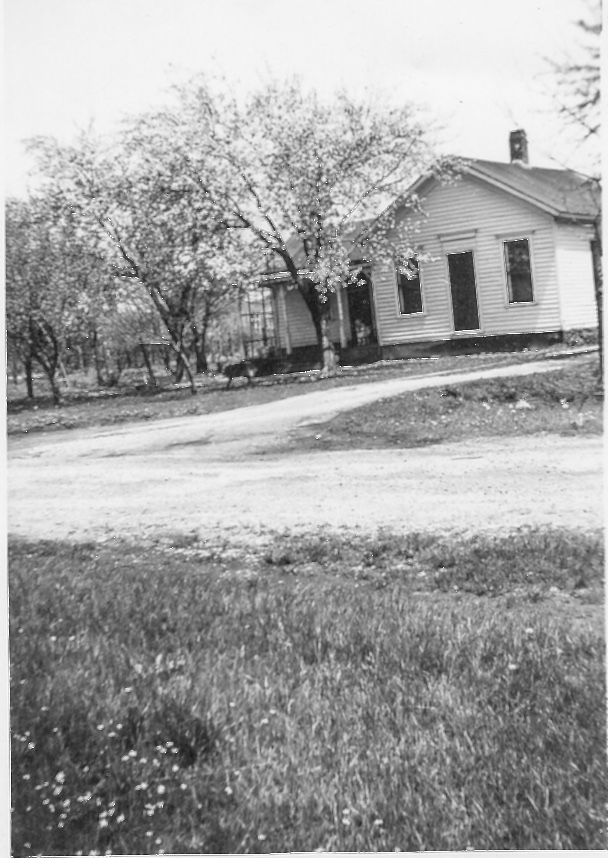
Our family moved into the house on Walker Street about 1943. The size of the house? About 800 square feet. Picture a large 2-car garage. Inside the garage are: a kitchen, two bedrooms, and a living room. In the living room is a pot belly stove that was the source of heat for the entire house. The kitchen sink faced the north wall. The front door and porch were on the west, off the kitchen, and the back door and utility room to the east.
You notice that there was no bathroom in the house. Instead, there was an “outhouse” about 70 feet out the backdoor, near the barn. During the day, that was the facility we used when nature called. At night, there was a “chamber pot” with a lid which was placed behind the stove in the living room. During the day, the pot was placed underneath the bed in my parents’ room.
Bathing for us kids was once a week, usually on a Saturday either in a round tub (while we were young) or a “sponge bath” by the sink. Of course, the water would have to be heated on the stove. (As mom said, “One day we wash down as far as possible, the next day as far up as possible, then the 3rd day wash “possible.”)
Mom’s Role
Mom was 23 years old, the mother of 2 children, in charge of meals, the budget, and maintaining the house while dad was trying to make enough money to provide for us. All of this was during WWII with government restrictions on sugar, meat, and gasoline. Rent for our house was $15 per month, government regulated until after the war.
Cooking was done on a coal fueled stove which had to be lit every morning. A stove pipe provided an escape for the smoke through the ceiling into the outdoors. A similar process for the pot belly stove in the living room during the chilly days and evenings. Since Dad hauled coal as one of his jobs, we always had enough for heat and cooking.
Water for cooking and drinking was pumped by the sink or outside in the back of the house. If water were left in the sink overnight, it might be frozen during the winter. Refrigeration was provided by an “ice box” that had a block of ice, delivered or available at the store.
Within a few years, propane tanks supplied the fuel for a refrigerator replacing the ice box. The pot belly stove continued to provide the sole heating source for the house.
Surviving Hot Summer Evenings
There were times in the summer when sleep was difficult because of the extreme heat. The solution for us kids might be to take our pillows and plant them on the floor in front of the living room screened door where a gentle breeze might be available. We had one portable fan that might also be employed, but flipping the pillow usually provided a little relief until the cool of the late night kicked in.
Closets, Electricity, Telephone, and Washing Clothes
Other than a small dresser for underwear, socks, etc., in my room, there were two beds until my brother was born. When he arrived in 1949, we had a third bed. In order for my sister to go to sleep, she climbed over two beds.
Telephone poles along Walker Street carried electricity to our house through one outlet per room and connected our telephone with 2 or 3 neighbors via a “party line.” We could use the telephone as long as no neighbor was already using the line.
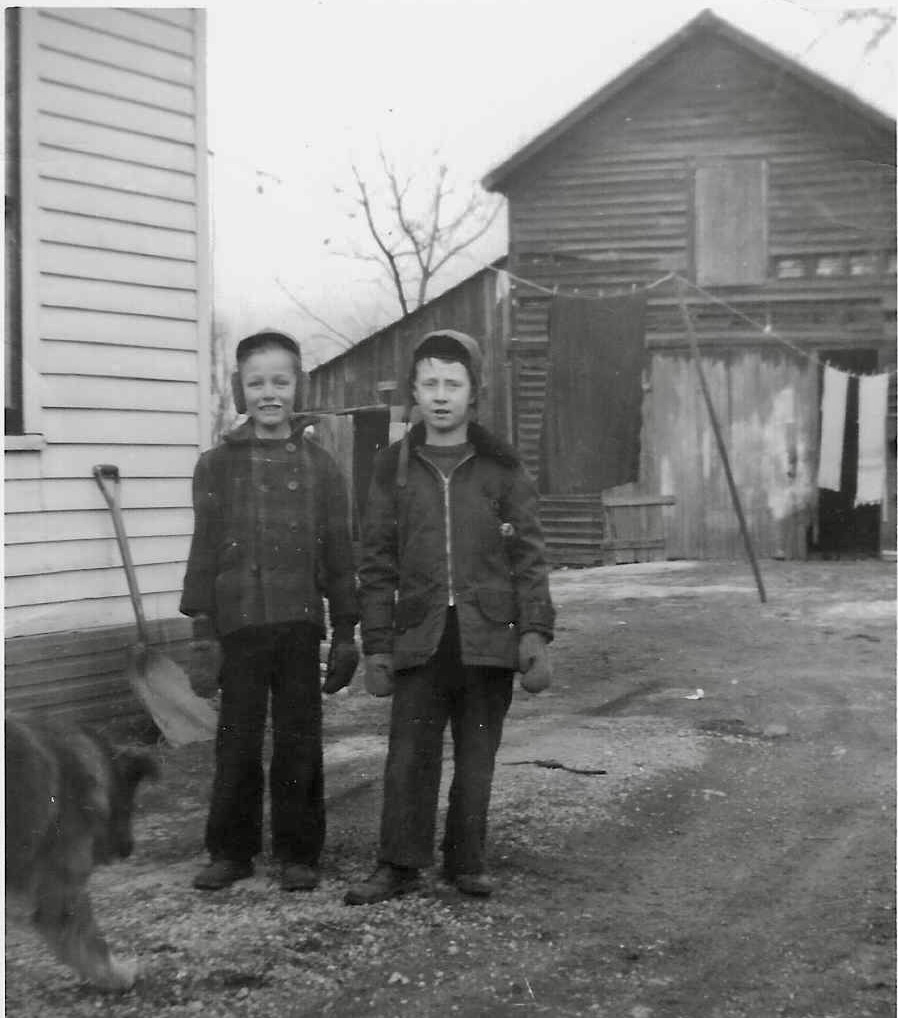
Mom washed clothes in the washer located in the utility room off the kitchen. The washer had a wringer which removed much of the water, and then the clothes, regardless of the weather, were hung out on the clothes line between the barn and the house.
Sewer and Garbage
There was no city sewer during our time on Walker Street so the folks who had indoor plumbing had pipes or tile connected with septic tanks located outside their houses. Those of us that had outdoor toilets would move that facility periodically over a new hole in the ground.
Our house had a “burn barrel” where we would dispose of our garbage. The barrel was metal with holes drilled near the bottom so that rain water would escape and oxygen could facilitate the fire. Every so often we would empty the contents – like cans and bottles – into another container and take them to the city dump. There was one fellow, Adie Koca, who could be hired periodically to take the remaining garbage to the dump located at the East end of Cermak, at Fahey’s pits, now a housing area.
We Buy Our First House
We lived on Walker Street until I was 13, Carole Ann was 10, and Kenny was 4. We were now paying $20 per month for rent. Moving to the East side of town was a big deal because would have indoor plumbing for the first time. But mom and dad were frightened at the prospect of making larger house payments. (Cost of the house? $8,500.)
Concluding Remarks
So, kids, I hope that you have a better appreciation for the life of your great grandmother, Adele Margaret (Ginter) Kennedy. She was probably excited to have a rental house for ten years after living in an upstairs apartment on Roundhouse Street in Braidwood. Mom and Dad also were happy to have their first house on the East side.
That house had only one bedroom, but we kids never complained at temporarily sharing a large dining room that served as our bedroom. Within two years, Dad had built an addition that had two bedrooms.
There are two take-aways that you might reflect on. One, my family in the 1940s struggled to find jobs, raise a family, and afford housing. You grandkids probably struggle in a similar way. But secondly, my family faced far fewer complications and enjoyed simpler lives than yours. Hang in there. You will do just fine, just like we did.
With all my love,
Grandpa K

 Braidwood Beginnings
I clearly remember the day Mom and Dad got the notice from the landlord, th
LikeLike
Thank you for sharing your family stories with us. I enjoy every word! Dee
Sent from Yahoo Mail for iPad
LikeLike
So cool to read. Feels like we were there. I grew up on Walker street. I would really love to know when my dad and your dad met. Your dad was a big part of my childhood.
LikeLike